
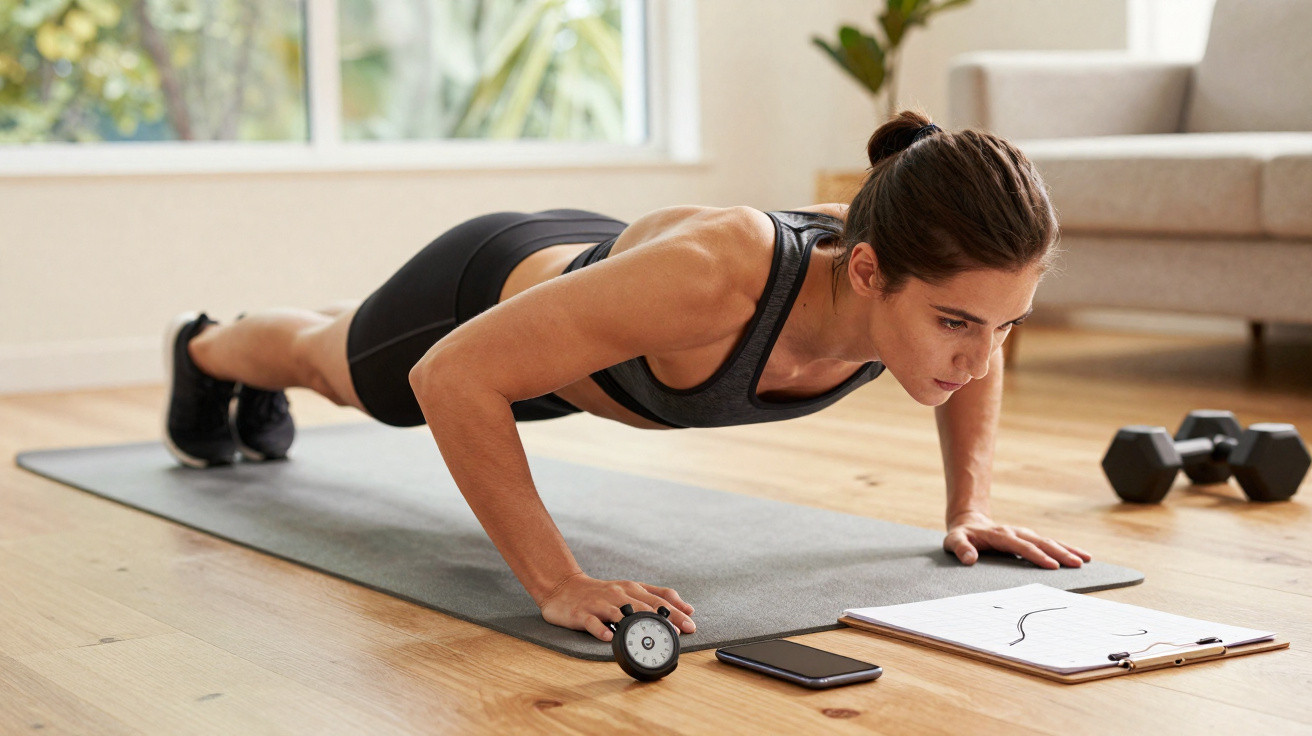
The press-up has been viewed for decades as one of the most practical ways to check upper-body strength. In just a few minutes, without equipment and in virtually any setting, it can give a snapshot of conditioning in the arms, chest and the central trunk area-so long as you factor in technique, body weight, training background and any possible joint limitations.
How many press-ups are considered good at each age?
The question “how many press-ups are good” varies widely depending on age, biological sex, training habits and body weight. In formal fitness assessments, the total is usually only one indicator among several, rather than a final judgement on overall fitness.
For adults in their 20s, sets of around 20 to 30 continuous press-ups are often taken as a good level of trunk and upper-body strength. From the 50s and 60s onwards, figures in the region of 8 to 15 repetitions-performed with solid technique-tend to be seen as appropriate; however, the most useful comparison is nearly always your own progress over time.
Is the press-up a good fitness test?
Counting press-ups helps gauge strength and muscular endurance in the chest, shoulders, triceps and core muscles. That said, the test says little about cardiorespiratory fitness, leg strength or flexibility, which is why it is typically used as just one part of a broader fitness picture.
To get a more accurate view of overall fitness, press-up counts can be paired with a brisk walk over a set distance, squats, balance checks and simple mobility measures. Body weight also affects the result, because anyone who weighs more is moving a greater load with every repetition.
How to do a press-up with good technique
For repetition numbers to be meaningful, the press-up needs to be performed in a consistent, standardised way. This includes stable shoulder blades, hands firmly planted, and alignment from head to torso to legs, keeping a neutral spine and the abdominal muscles engaged to support the body.
On the way down, the chest moves towards the floor under control, without “collapsing”. On the way up, the body should rise as a single unit, rather than the hips lifting first. A few practical cues help keep the movement efficient and comparable from one session to the next:
- Neutral posture: keep the spine aligned, avoiding excessive arching through the neck or lower back.
- Solid base: place the hands close to shoulder-width apart, in a comfortable position.
- Continuous movement: avoid long pauses at the top or bottom of the press-up.
- Controlled tempo: lower and lift at a steady speed, without excessive momentum.
Are press-ups enough to track physical progress?
Repeating the same press-up test at regular intervals makes it easier to spot progress trends, such as more repetitions, improved postural stability and a reduced sense of effort. In structured assessments, the count is commonly stopped as soon as technique starts to break down, and only properly completed press-ups are recorded.
On the other hand, relying on this test alone can obscure meaningful improvements in mobility, cardiorespiratory endurance and leg strength. The current consensus is to treat press-up numbers as a simple, accessible indicator-best interpreted alongside other health information, clinical checks and, above all, the real-world demands of each person’s day-to-day routine.


Comments
No comments yet. Be the first to comment!
Leave a Comment