
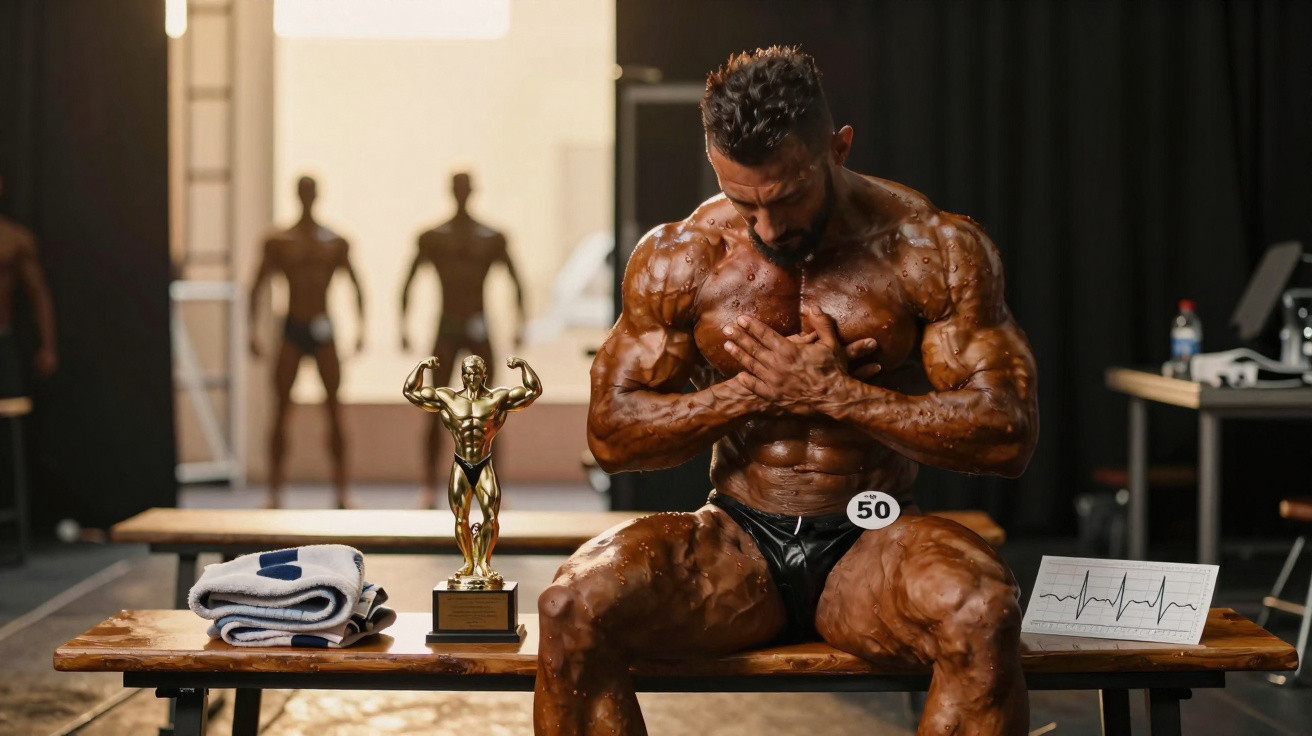
In 2021, the bodybuilding community endured a devastating year. In the space of 12 months, more than two dozen professional competitors died unexpectedly, drawing international attention.
The youngest of those athletes was 27.
Although a substantial body of evidence indicates that top-level athletes generally outlive the wider population, a run of early deaths among bodybuilders in recent years has prompted renewed concern about how safe this sport truly is.
University of Padova study on sudden death in bodybuilding
A new investigation led by scientists at the University of Padova in Italy is the first to examine sudden-death risk in a large group of male bodybuilders.
The results point to a worrying pattern that, according to the authors, should no longer be overlooked by athletes, medical associations, or sports organisations.
Researchers followed over 20,000 bodybuilders for an average of 8 years. Across that period, 73 sudden deaths were recorded, with a mean age of 42.
Causes of death and the sharp rise among elite professionals
A portion of the fatalities were linked to steroids or other performance-enhancing drugs. Others resulted from a vehicle accident, murder, or suicide. However, the single most frequent cause was sudden heart failure, accounting for 46 cases.
For bodybuilders overall, this represents a low absolute risk. Yet the picture changes markedly at the very top end of the sport. Among the most elite professionals, the risk of sudden heart failure was found to be more than 14 times higher than in amateur athletes-suggesting that as bodybuilding becomes more serious, it may also become exponentially more hazardous.
Mr. Olympia ‘open’ category: an “alarmingly high” rate
When the analysis focused specifically on competitors in the world’s highest-ranked international bodybuilding event-the Mr. Olympia 'open' category-the researchers identified what they described as an "alarmingly high" death rate.
Of the 100 elite athletes who had competed in that category over the years, 7 died from sudden causes.
More striking still, five of those deaths were suspected or confirmed sudden cardiac deaths, occurring at a mean age of just 36.
"Current data are alarming," the international author group concludes, "and sufficient to call for the development of specific recommendations for the prevention of sudden death/sudden cardiac death among bodybuilders, including the systematic implementation of bystander automated external defibrillators."
What the limited autopsy evidence suggests
One constraint of the work is the shortage of definitive evidence: post-mortem examinations were available for only about 10 percent of sudden cardiac deaths. As a result, there are limited specifics on the mechanisms behind many of the individual cases.
Even so, the study team-led by sports medicine researcher Marco Vecchiato of the University of Padova-suspects that extreme training, strict dietary routines, and repeated misuse of performance-enhancing drugs may be compromising the heart health of the most high-level professional bodybuilders.
"These approaches can place significant strain on the cardiovascular system, increase the risk of irregular heart rhythm, and may lead to structural heart changes over time," explains Vecchiato.
In the autopsies that were available, findings repeatedly included thickening of the left ventricle and enlarged hearts in bodybuilders.
This is consistent with an earlier autopsy study, which reported that bodybuilders had a mean heart mass nearly 74 percent heavier than standard reference values and, on average, left ventricles that were 125 percent thicker than those of the average man.
Further research is required into bodybuilding’s specific cardiovascular effects, including among female athletes, but Vecchiato argues the takeaway is straightforward.
"While striving for physical excellence is admirable, the pursuit of extreme body transformation at any cost can carry significant health risks, particularly for the heart," he explains.
"Based on this data, the medical associations cannot ignore this health problem anymore and should collaborate with the respective federations and policymakers to promote safer participation."
The study was published in the European Heart Journal.




Comments
No comments yet. Be the first to comment!
Leave a Comment