
His shirt is a little creased and the coffee in his mug has gone lukewarm. He fixes his eyes on the monitor, rolls his shoulders, and you can just catch the slight wince. Almost without thinking, about every 20 minutes, he gets up, rests against the wall and eases into a hip-flexor stretch, while one ankle quietly circles under the desk as if he’s sketching clouds you can’t see.
At the start, his co-workers laughed. “Training for a marathon or for retirement?” Now a handful of them do the same, trying to shed the stiffness that arrives well before lunch. No yoga mat, no kit bag-just a low-key habit woven between emails and meetings.
His diary didn’t change.
His joints did.
And so did the fear of waking up one morning unable to move without pain.
Why your joints are begging for daily stretching
Joint mobility rarely vanishes overnight. It isn’t like a sprained ankle you can point to and swear at. It shows up as the gradual tightness when you swing your legs out of bed, the small crack in a knee on the stairs, or the shoulder that needs a second attempt to reach the top shelf.
Mobility doesn’t shout-it murmurs. Then, one day, it’s louder than your alarm. We often pin it on getting older, “poor posture”, or that sports injury from a decade ago, yet a big slice of the problem comes from repeated, almost perfect stillness. Joints are built to slide, turn and rotate. Leave them parked for hours and they reply with something that feels like rust.
A large study of office workers found that people seated for more than 8 hours a day reported up to 2 times more joint pain than those who moved regularly, even without structured exercise. The gap wasn’t created by long gym sessions or punishing HIIT classes. It came from small movements dotted through the day: quick stretching pauses, walking meetings, and a few minutes on the floor at night.
On a building site near Lyon, a foreman introduced a 5‑minute stretching “circle” before the shift after two of his lads tore their hamstrings lifting awkward loads. Six months later, strain-related accidents in the reports had fallen. The routine was basic: ankle rolls, easy squats, shoulder circles with helmets in hand. No frills-just steady, daily, unremarkable mobility.
Here’s the idea that changes everything: joints work like door hinges that stay smooth when they’re used regularly-but not slammed. Gentle stretching encourages synovial fluid to move around and lubricate cartilage, helping tissues stay fed and responsive. When you don’t move, muscles gradually tighten around the joint and tug it slightly off its natural track.
Given enough time, that small shift becomes your “normal”. Then your body starts to compensate. Hips rotate, the lower back takes over, and knees absorb forces they weren’t designed for. That’s where many avoidable injuries begin-not in the dramatic second you “pull something”, but in the long run-up of quiet stiffness.
Daily stretching won’t miraculously wipe out arthritis or eliminate all risk. What it can do is increase each joint’s safety buffer. So when life demands an awkward lift or a sudden sprint for the train, you’ve got enough range and resilience that you’re less likely to break down on the first unexpected move.
Simple daily routines that actually fit into a real life
The stretches that look the least impressive are often the ones that protect you most. They slip into the gaps in your day and almost disappear there: 30 seconds at the bathroom sink, a minute while the kettle boils, two minutes on the bedroom floor before you start scrolling.
Begin with a quick “joint check-in” that takes under 5 minutes. While the coffee is brewing, do ten slow neck circles, ten shoulder rolls and ten hip circles. Then sit on the edge of a chair, straighten one leg, and flex and point your toes ten times-then swap sides. In less time than it takes to read an email, you’ve nudged your neck, shoulders, hips, knees and ankles awake.
Even on the busiest days, you can link stretches to triggers you won’t ignore. After each bathroom break, add a 20‑second calf stretch against the wall. After a video call, stand and do a gentle quad stretch, using the back of your chair for balance. Before dinner, lie on the floor briefly and draw each knee towards your chest. No heroic motivation required-just quiet routines stitched into places they’ll actually stick.
Let’s be honest: hardly anyone does this every single day-at least not to begin with. This is where many people drop off: they picture a flawless 20‑minute routine, miss two days, and decide they’ve “failed”. Real life isn’t that tidy. Some evenings you manage three stretches before bed. Other days it’s one shoulder roll in the lift and a long reach to the light switch.
On a tram in Brussels, I saw a woman in her 60s subtly flexing and pointing her ankles while scrolling on her phone-barely moving, simply keeping her joints fluid. That’s the standard to aim for: stretching that blends into everyday life, not a separate, intimidating ceremony that requires candles and perfectly matching leggings.
One rule helps: any stretch you dislike won’t last the week. Choose “nice stretch, slight pull, no grimacing”. If you can breathe normally and chat while you hold it, you’re probably in the right zone. If you’re clamping your jaw and counting seconds like it’s punishment, ease off. You’re not trying to impress your hamstrings-you’re trying to stay on good terms with them for the next 40 years.
As one physiotherapist from Manchester put it to me during a clinic break:
“If your stretching routine needs more discipline than brushing your teeth, it’s too complicated. Think hygiene, not performance.”
When you’re exhausted after work, it helps to keep a tiny cheat sheet in your head:
- Morning: 3–5 minutes of neck, shoulder, hip and ankle circles while the coffee brews.
- Daytime: tie one micro-stretch to bathroom breaks or calls (calf stretch, chest opener, gentle twist).
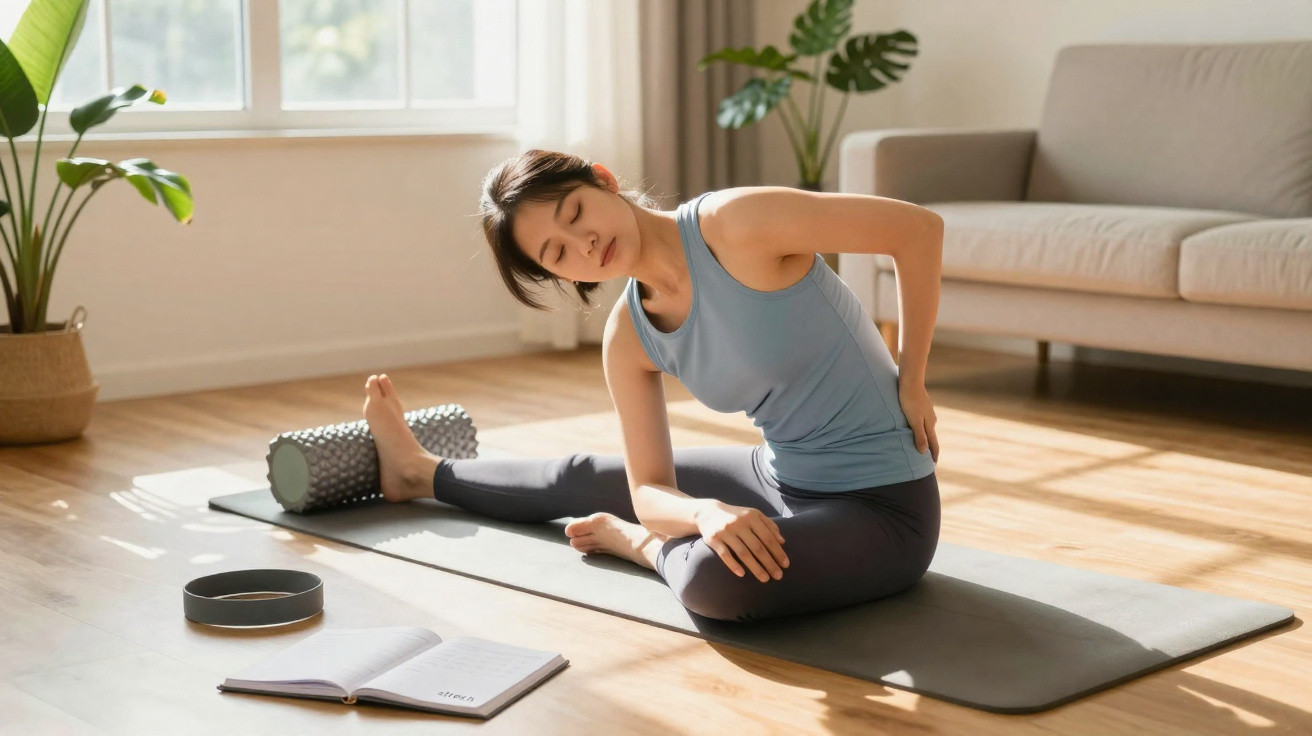
- Evening: 5 minutes on the floor for hips and lower back (child’s pose, glute stretch, lying hamstring). No timer-just slow breaths.
Listening to your joints long before they complain
The biggest protection isn’t flawless posture or the newest routine. It’s the quiet ability to notice what your joints are telling you before they start yelling. The near-twinge in your shoulder when you grab your bag. The knee that feels a bit “sticky” after two hours at the desk. The neck that tightens when stress hits and your typing speeds up.
Physically, daily stretching helps your nervous system feel comfortable with your available range. When your brain registers safety, muscles are less likely to clamp down defensively. That’s why light, frequent stretching tends to do more for injury prevention than occasional, aggressive sessions. Movement stops feeling like a threat and starts feeling familiar.
There’s an emotional side too-the one we don’t often talk about. On a rough day, a 60‑second stretch on the living-room floor is a small way of saying: “I’m still here in my body, not only in my head.” On a good day, the very same movement is a quiet appreciation of everything that doesn’t hurt yet. In a screen-heavy world, that isn’t indulgence-it’s upkeep.
| Key point | Details | Why it matters to readers |
|---|---|---|
| Use “habit anchors” to stretch | Attach 30–60 second stretches to existing routines like brushing your teeth, boiling water, or ending a call. For example, calf stretch while brushing, shoulder rolls after every second email. | Makes stretching automatic instead of relying on willpower, so joint care happens even on chaotic days. |
| Prioritise 3 key zones: hips, shoulders, ankles | Rotate and lightly stretch hips (figure‑4 on a chair), open the chest and shoulders against a wall, and do ankle circles or heel raises daily. | These joints dictate how you walk, lift, and sit; keeping them mobile reduces stress on knees and lower back. |
| Stay in the “gentle discomfort” zone | Hold each stretch 20–30 seconds, 2–3 times, without bouncing. You should feel a mild tug, no sharp pain or numbness. | Protects you from overstretching and micro-tears, while still improving flexibility and reducing injury risk over time. |
FAQ
How long should a daily stretching routine last to help my joints?
For joint mobility and injury prevention, 5–10 minutes spread across the day tends to beat a single, infrequent 30‑minute session. Aim for three or four small blocks of 2–3 minutes, attached to habits you already have-waking up, lunch break, and before bed.Is it safe to stretch if I already have knee or back pain?
Gentle, pain-free stretching is usually useful, but begin with smaller ranges and skip anything that causes sharp or shooting sensations. If pain lasts longer than a week or worsens, a physio or sports doctor can tailor specific stretches to your situation.Do I need to warm up before stretching?
For deep flexibility work, a brief warm-up helps. For light daily mobility, simply move first: walk around, take a few stairs, or circle your joints for a minute before holding any static stretch.Can stretching alone prevent sports injuries?
Stretching can reduce risk, particularly around overused joints, but it’s only one part of the picture. Strength training, balance work, good sleep, and gradually increasing training load all play a major role in keeping tendons and ligaments resilient.What’s better: stretching morning or evening?
Morning stretching is ideal for easing night stiffness and getting joints ready for the day. Evening stretching helps you release tension from work or training. The best option is the time you can repeat most reliably, without resentment.Should I stretch on days when I don’t work out?
Yes. Rest days are a great time for very light mobility work. A few easy stretches keep blood moving, prevent that “rusty” feeling, and help you recover faster after hard sessions.






Comments
No comments yet. Be the first to comment!
Leave a Comment