
Her phone vibrates again: a fitness app pinging to tell her she hasn’t moved “enough” today. She sighs, slips the handset into her pocket and leaves the house anyway. No gym session. No training programme. Just errands to run, plus a small, private decision to pick up the pace between each stop.
On the way to the post office, she walks through the park rather than hopping on the bus. She tackles the long hill instead of taking the easier cut-through. At the supermarket, she lifts and carries the heavy bags rather than pushing a trolley. None of it resembles a formal workout. Still, her heart rate climbs, her legs wake up, and her step counter is racking up numbers in her pocket.
Somewhere between the dry cleaner and the bakery, a thought lands: what if this chaotic, everyday dash is the workout she’s been trying to find?
Why errands might be your most realistic workout plan
Stand on a busy street at 6pm and the picture repeats itself: people in activewear spilling out of gyms, while others in everyday clothes stride towards supermarkets, chemists and nursery pick-ups. On the surface, those lives look separate. In practice, both involve bodies moving, lungs working, and muscles doing their job in the middle of ordinary life.
We’ve somehow created a hard line where “exercise” counts only if it happens on mats, on machines, under bright lights. Everything else gets waved away as “just” living. But watch someone carrying a toddler up three flights of stairs, or someone dragging multi-packs of water and cat litter across a car park, and you’re essentially watching strength work that simply wasn’t scheduled.
The real difference isn’t the movement itself - it’s the story we attach to it. That shift in perspective can change everything.
A survey by the American Council on Exercise found that more than half of respondents said their biggest obstacle to working out was time rather than motivation. They didn’t dislike exercise; they just couldn’t see where it would go. So they held out for the perfect 45-minute slot that almost never appeared, while passing up countless small chances to move every day.
Take Mia, a 38‑year‑old accountant from Manchester. She gave up on the gym after her second child. “By the time everyone is in bed, I’m done,” she says. One day she switched to walking the children to school instead of driving, then taking the longer loop home. Later, she started using a backpack for the food shop rather than relying on deliveries.
After four months, she hadn’t dropped a dramatic amount of weight. But she could get up the stairs without stopping to catch her breath. Her smartwatch quietly logged an extra 4,000 steps on most weekdays. There was no “workout” written into her diary - yet her body could tell something was different.
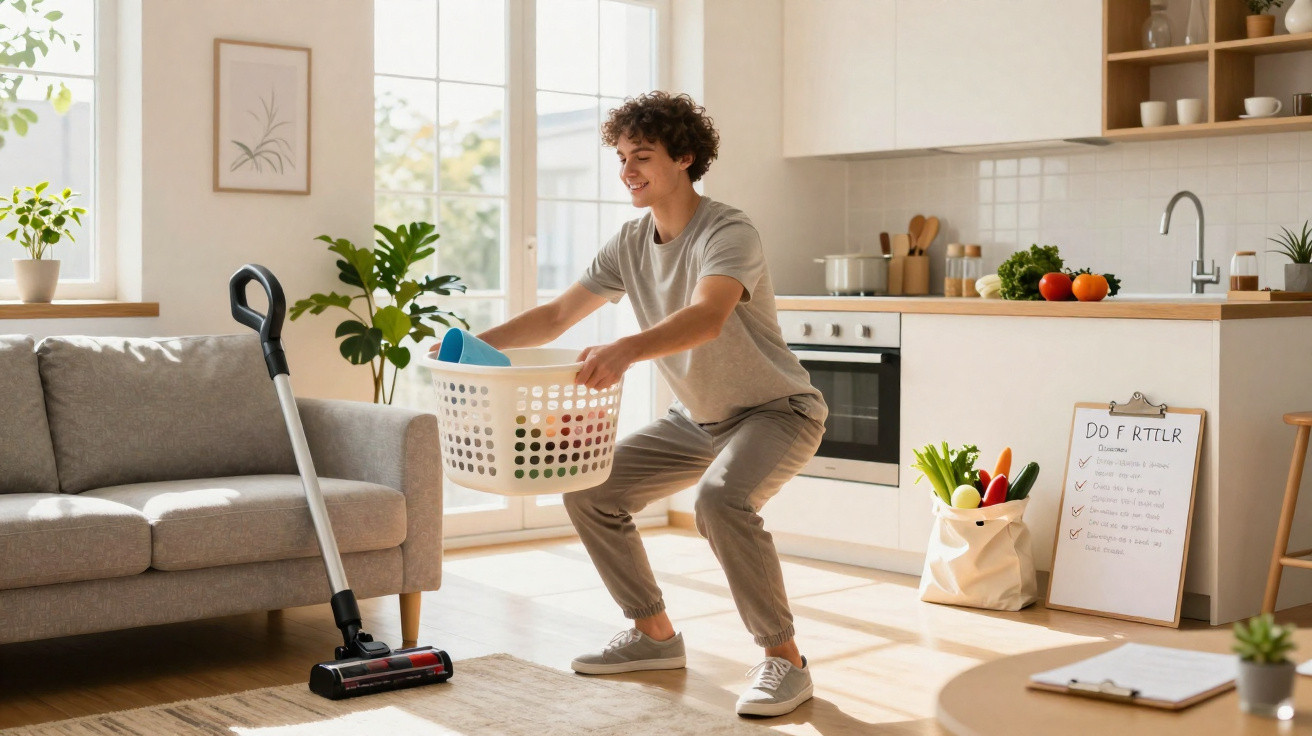
What’s going on here isn’t only about burning calories; it’s about reshaping the default settings of a day. Exercise stops being a separate box you must tick and becomes part of how you move through your environment. Waiting in a queue turns into a chance to roll your shoulders. Two shopping bags become a short farmer’s walk. Walking the dog turns into interval training if you add a couple of brief, brisk bursts.
Once you start treating errands as the raw material for movement, the city becomes a calm, low-key gym - and you don’t need a membership.
How to quietly turn your to‑do list into a fitness routine
The simplest place to begin is walking - not a “power walk” or a dramatic challenge, just making the trips you already take slightly more active. Replace one short drive a day with a ten‑minute walk. Get off the bus one stop earlier. Take the stairs for one floor, then use the lift for the rest. Small, almost invisible tweaks add up quickly when they’re attached to tasks you’d be doing anyway.
Then add a bit of load. Choose a backpack instead of a shoulder bag. Split your shopping into two smaller walks rather than one big car journey. Carry bags evenly in both hands and slow down a touch so you can feel your grip, upper back and shoulders working. That’s strength training - camouflaged as “just popping out for a few bits”.
You can also make use of dead time. By the printer, circle your ankles and shift your weight from one foot to the other. While the kettle boils, do a slow set of press-ups against the kitchen counter. It doesn’t need to be obvious. This is movement tucked into the gaps of the day, not a performance.
There is a common pitfall, though: trying to turn every errand into an Olympic event. You decide you’ll always carry everything, always sprint upstairs, always hit 10,000 steps. Three days later your back is aching, you’re irritable, and the car becomes your default again.
A body-led pace is far more sustainable. On low-energy days, taking a slightly longer route might be enough. On better days, you might add an extra hill or carry one more bag. Treat it like seasoning, not a second job. Movement should add to your day, not take it over.
Emotionally, this approach helps too. Many people carry a quiet guilt around traditional workouts: miss one gym session and it can spiral into “I’ve failed again”. When movement is blended into errands, that all-or-nothing pressure eases. You stop chasing a flawless routine and start experimenting with how many small wins you can tuck inside an ordinary Tuesday.
“If I told my patients they had to find an extra hour, most would walk away,” says London-based GP Sara Malik. “When we talk about adding movement to what they already do-shopping, commuting, housework-you can almost see their shoulders drop in relief. Suddenly, it feels possible.”
To keep it practical, it can help to carry a tiny mental checklist - nothing elaborate, just a few prompts to run through as you’re about to leave the house.
- Can I walk at least one segment of this trip?
- Is there anywhere on this route where I could use stairs rather than a lift or escalator?
- Could I carry something instead of wheeling it or driving it?
- Do I have any “waiting time” when I could move gently instead of scrolling?
- What’s one small upgrade I can manage today, given my energy and mood?
Let’s be honest: nobody does this perfectly every day. You’ll forget, some days will be crammed, and the weather will be dreadful. That’s alright. The point isn’t perfection; it’s gradually shifting what “normal” feels like for your body, one errand at a time.
From quick wins to a quiet lifestyle shift
At first, the changes are subtle. You reach the top of the stairs and realise you aren’t puffing. You catch yourself choosing the longer way on foot without thinking. For a moment it surprises you - then you recognise it for what it is: consistency, even if nothing looks dramatically different from the outside.
There’s a deeper change as well. When movement isn’t chained to willpower and spare time, it stops feeling like punishment. You start using it to solve everyday problems: “How will I get this home?”, “How do I make it there on time?”, “How do I come down after that meeting?”. Your body becomes useful again, rather than a project that always needs fixing.
In a world where stress runs high and energy feels scarce, that’s quietly radical. You’re not chasing a transformation montage. You’re choosing a life where your heart and muscles take part in the errands, the school runs, the late-night trips to the chemist. And even without a before-and-after photo, that can feel like a win worth noticing.
| Key point | Detail | Benefit for the reader |
|---|---|---|
| Change your journeys | Swap a short car trip for a walk, or get off the bus one stop earlier | Easily increase steps without blocking out a dedicated “workout” slot |
| Add some load | Use a backpack, carry shopping by hand, split purchases into smaller trips | Build strength and improve posture using actions you already need to do |
| Use the in-between moments | Micro-movements in a queue, at the kettle, or at your desk | Boost circulation and reduce tension with almost no mental effort |
FAQ:
Is this kind of “errand exercise” enough to get fitter?
For many people, yes - particularly if you’re starting from a mostly sedentary routine. Walking regularly, carrying bags, and using stairs can improve cardiovascular health and basic strength. If you have specific athletic goals, you may eventually add more structured workouts on top.How many minutes should I aim for each day?
Public health guidelines often point towards about 150 minutes of moderate activity per week. When built into errands, that might look like 20–30 minutes of purposeful walking or moving on most days, broken into smaller chunks.What if I work from home and don’t have many errands?
You can invent a few “fake errands”: walk to a café that’s further away rather than the nearest one, take a loop around the block before lunch, use the stairs in your building, or spread household tasks into multiple active trips instead of doing everything in one long, static stretch.Will people notice if I do exercises while waiting in line?
Most people are focused on their phones and rarely look up. Small, subtle movements - ankle circles, gentle calf raises, shoulder rolls - are almost unnoticeable. And if someone does spot you, they typically won’t mind; some might even copy you later.Can this replace strength training at the gym?
It can meet many everyday strength needs, especially if you carry loads often. For bigger goals - such as building significant muscle mass or training for a specific sport - gym-style sessions can help. Over time, many people find a blend of both works best.


Comments
No comments yet. Be the first to comment!
Leave a Comment