
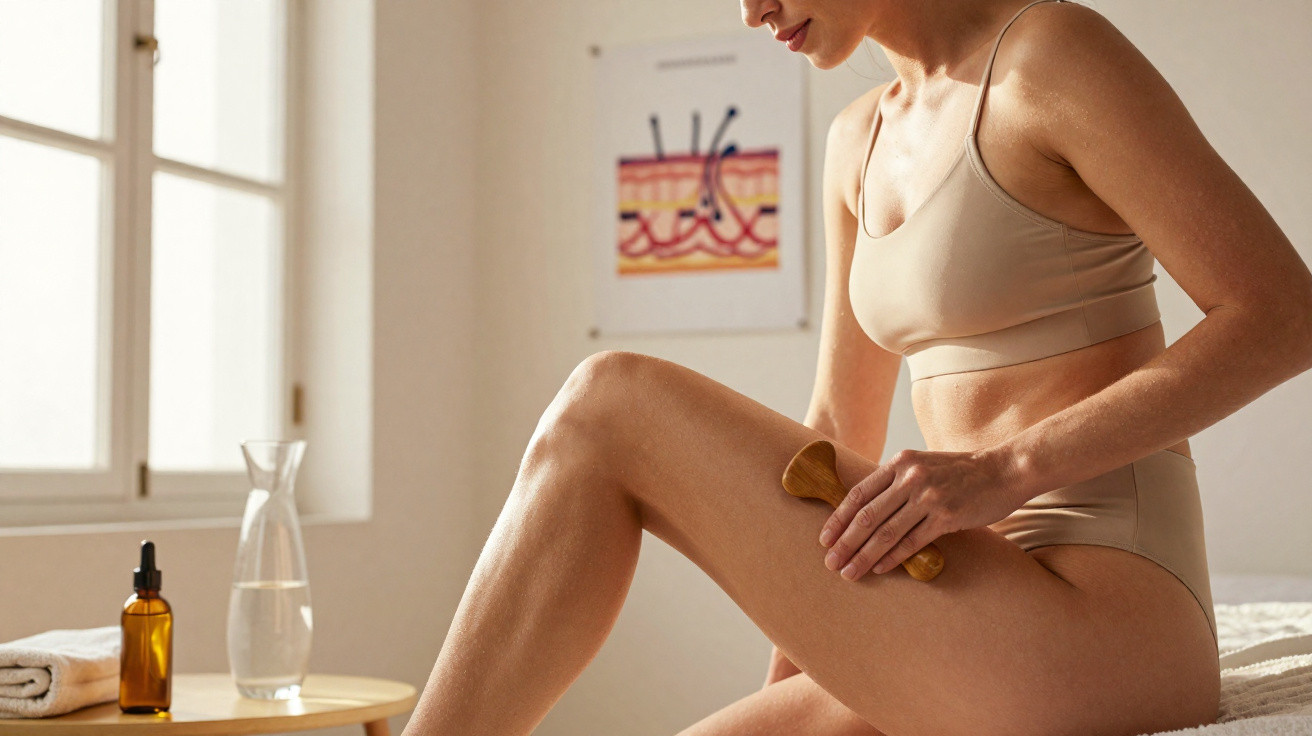
Shiny-looking legs and ultra-smooth thighs have flooded social feeds lately, with much of the credit going to an odd little wellness gadget.
The sales pitch is hard to ignore: tighter-looking skin, less bloating, fewer dimples. Yet as the tool racks up views, clinicians and everyday users are sharply divided on whether it genuinely helps with cellulite and water retention, or whether it’s simply an overpriced massage stick with good marketing.
What is this trending anti-cellulite wellness tool?
At the heart of the trend is a hand-held massage tool, commonly made from wood, metal or rigid plastic, and designed with ridges, knobs and/or rollers. It’s promoted as a way to “break up” cellulite, shift excess fluid and smooth the skin - often with promises of results after only a few weeks of at-home use.
Brands frame it as a DIY body-sculpting massage. In videos, people drag or roll the tool firmly over the thighs, hips, buttocks and stomach until the skin turns red. Many advocates recommend daily use, with sessions lasting 10–20 minutes per area.
Influencers frequently post before-and-after images showing smoother-looking contours. Some go further, saying they can see a “lifting” effect in the buttocks and less of the familiar “orange peel” texture.
What do users say is happening to their bodies?
A quick look on TikTok or Instagram brings up thousands of personal reviews. Experiences vary, but certain themes appear again and again.
- Reduced appearance of dimpling on thighs and buttocks
- Legs feeling “lighter” by the end of the day
- Less sense of bloating around the hips and stomach
- Skin looking a little tighter, particularly on the outer thighs
- Bruising now and then when the pressure is excessive
Some people say they notice changes within two weeks, while others only see anything after a month (or longer) of daily use. Several also report that the results don’t last long if they stop.
One repeated point is psychological: some users describe feeling newly in control of a part of the body they previously felt they couldn’t influence.
However, plenty of people are underwhelmed. Many commenters report nothing beyond temporary redness and achy muscles. For them, it’s a heavily hyped craze dressed up as a breakthrough.
What science actually says about cellulite and water retention
The disagreement makes more sense once you look at what’s happening beneath the surface.
Cellulite: not just “fat”
Cellulite is largely about skin structure rather than body weight alone. Fat cells are contained in pockets separated by fibrous bands. When the bands tug downwards as fat pushes upwards, the skin surface can take on a dimpled look.
Women tend to develop cellulite more easily because their connective tissue is arranged differently from men’s. Genetics and hormones are major factors too, which is why cellulite can be visible even in very slim people.
Massage can boost blood flow locally and may briefly alter how fluid and fat sit in the area. That said, research to date suggests mechanical tools don’t “break” the fibrous bands or permanently remodel the structure that creates dimpling.
Water retention: when fluids build up
Water retention is extra fluid held in the tissues. It’s often most noticeable in the legs and ankles, and can also fluctuate around the menstrual cycle. Heat, salt intake, long periods of standing or sitting, and hormonal shifts can all play a part.
Light massage that follows lymphatic pathways can encourage fluid to move along. This is the idea behind lymphatic drainage performed by trained practitioners.
The most evidence-backed upside of these DIY tools is a short-lived reduction in swelling or puffiness by supporting fluid movement - not a permanent fix for cellulite.
Why experts are divided on the trend
Dermatologists, physiotherapists and aesthetic doctors don’t give a single, unified verdict on these tools. Even so, similar points tend to come up in consultations.
| Potential benefits | Key concerns |
|---|---|
| Better circulation in the treated area | Bruising caused by overly forceful pressure |
| Temporary reduction in fluid build-up | Limited strong clinical evidence |
| A relaxing routine that can improve body awareness | Overpromising claims about “erasing” cellulite |
| Possible mild firming from repeated stimulation | Using it on varicose veins or alongside medical conditions without guidance |
Some clinicians view the tool as a generally safe addition to a self-care routine - as long as people understand what it can and can’t do. Others are uneasy about the way aggressive promotion can create unrealistic expectations and encourage painful, unnecessary habits.
How these tools might make skin look firmer and smoother
Even without dramatic “after” results, there are plausible reasons some people feel their skin looks better.
Increased blood flow and lymph movement
A firm massage naturally increases blood flow, which can make the skin look pinker and slightly fuller - a combination that can briefly soften the look of dimples.
Stroking towards lymph nodes (for instance, moving from the knee up towards the groin) may help disperse retained fluid. Legs may feel less heavy, and measurements can even dip a little for a few hours.
Subtle impact on the skin’s surface
Repeated rubbing can affect the skin’s outer layers. When paired with an oil or cream, this can leave the surface feeling softer and more supple.
Some ideas suggest long-term, consistent massage could encourage small changes in connective tissue. Evidence is still limited, and any effect would likely be minor and slow to show.
A sensible expectation is a modest improvement in tone and texture, rather than a total overhaul of deeper tissue.
How to use these tools more safely and realistically
If you’re considering trying one, a few practical approaches can lower the chances of injury and disappointment.
Go for consistency, not brutality
Brief, regular sessions - for example, 10 minutes a day per area - are usually a better bet than occasional intense sessions that end in bruises. Pain isn’t proof it’s working; more often it means you’re applying too much force.
Using an oil or body lotion helps the tool glide and reduces friction. Many people pair the massage with a firming cream, which may improve hydration and how the skin feels overall, even if most of the change is coming from the massage itself.
Areas to avoid and medical red flags
Professionals typically advise avoiding heavy pressure over:
- Varicose veins
- Skin with active infection or open wounds
- Fresh bruises or recent injuries
- A pregnant abdomen, unless a midwife or doctor has said it’s safe
Anyone with circulation problems, clotting disorders or lymphatic disease should check with a healthcare professional before using any strong massage device.
Where this tool fits among other options
This gadget sits between simple body brushing and clinic-based aesthetic treatments. It’s far cheaper than professional procedures, but it’s also less targeted and much less researched.
Many specialists note that noticeable changes to cellulite usually come from combining approaches rather than relying on one tool. These can include:
- Regular movement to support circulation and lymph flow
- Strength training (especially legs and glutes) to firm the muscles underneath
- Sensible salt intake and good hydration to help manage fluid retention
- Occasional professional massage or lymphatic drainage, if budget allows
Compared with in-clinic options such as lasers, radiofrequency or focused ultrasound, a manual tool is gentler and less precise. On the plus side, it can be used at home every day without appointments or downtime.
Key concepts worth understanding before buying
Two phrases show up repeatedly in marketing for these devices, and they’re easy to misread.
“Detox”
Many companies say the tool “detoxes” the body. Medically speaking, detoxification is handled by the liver and kidneys. A massage tool doesn’t remove toxins in any special way.
What it may do is support normal lymphatic fluid movement. That can reduce puffiness and make you feel less heavy, but it isn’t the same thing as clearing toxins.
“Breaking up fat”
Wooden rollers and hands aren’t cutting through fat cells. What can change is the positioning of fat, fluid and connective tissue within an area. That shift can create a smoother-looking effect - especially when increased blood flow also makes the skin slightly swollen.
When you read claims, it helps to translate “breaks up fat” into “temporarily changes how things sit under the skin”.
What a realistic scenario looks like
Picture someone using the tool on their thighs for 10–15 minutes on most evenings, while also walking more, doing a couple of strength sessions each week, and applying a basic body lotion.
After a month, they may notice slightly smoother-looking skin, less heaviness in the legs, and a small change in circumference thanks to improved fluid balance and stronger muscles. The cellulite won’t disappear, but it may look less obvious in certain lighting.
If they stop using the tool and become less active, fluid retention can return and some of the visible effect may fade. That’s consistent with what the tool is most likely to be: a supporting player, not the star, in how bodies look and feel.





Comments
No comments yet. Be the first to comment!
Leave a Comment