
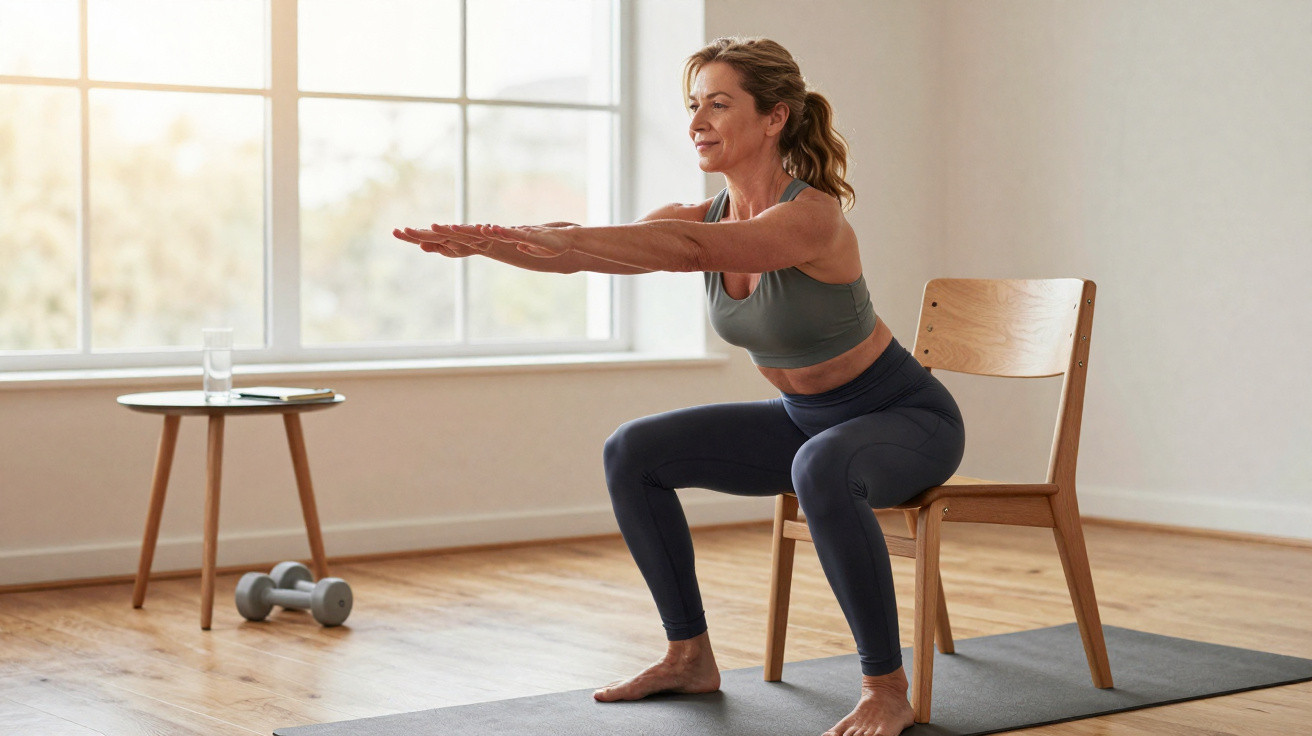
After the age of fifty, keeping your legs strong stops being merely about appearance and becomes closely linked to independence, balance and preventing falls. One well-chosen movement-such as a basic squat-done consistently can deliver meaningful improvements in strength, stability and the confidence to handle everyday tasks more safely.
Why does the squat strengthen the legs so much after fifty?
When you lower and rise using your own body weight, the muscles at the front of the thighs, the back of the thighs and the glutes work together, which helps support the knees and hips more effectively. With daily, progressive practice, these areas become better prepared for routine demands, such as standing up from a chair or climbing stairs.
While squatting, your body also has to stay centred so you do not tip forwards or backwards, bringing the trunk and ankles into play. This controlled balance challenge is particularly helpful for lowering the likelihood of trips and falls, improving overall steadiness and making walking feel more secure.
How to do the chair squat simply and safely
If you are new to the movement or feel unsure, starting with a sturdy chair is a practical way to modify the exercise. The chair helps you manage how deep you squat, ease knee discomfort and reduce the fear of losing balance during the movement.
A few straightforward steps help you perform this exercise at home with greater comfort and protection:
- Place a firm chair against a wall or in another stable position.
- Stand with your heels roughly aligned to shoulder width.
- If needed, reach your arms forwards to help with stability.
- Slowly bend your knees, sending your hips back as if you were going to sit down.
- Lightly touch your hips to the seat, then stand back up in a controlled manner.
How to organise repetitions and progress the exercise
Doing a small amount every day tends to produce better results than long, irregular sessions. The aim is to begin with a volume that feels challenging yet achievable, then increase it gradually as your body adapts-without intense pain or unusual breathlessness.
One simple progression uses three stages: in the initial phase, do 8 to 10 chair-assisted repetitions once a day, starting with 5 if necessary; in the intermediate phase, move to 2 sets of 8 to 12 repetitions, resting for 1 to 2 minutes; in the advanced phase, remove the chair and perform the free squat, keeping 10 to 15 repetitions per set, always respecting individual limits.
What daily habits help keep legs strong for longer?
To get more from squats, it helps to exercise at a consistent time and wear stable footwear with good grip. For people with chronic pain, previous surgery or joint conditions, guidance from a health professional can help tailor the movement safely.
Certain routines support ongoing strength and firmness: a diet with a good protein intake promotes muscle recovery, staying hydrated throughout the day supports joint function, and good-quality sleep helps the body lock in training adaptations. With these measures in place, a daily squat becomes a simple, practical ally for protecting independence and mobility in later life.





Comments
No comments yet. Be the first to comment!
Leave a Comment