
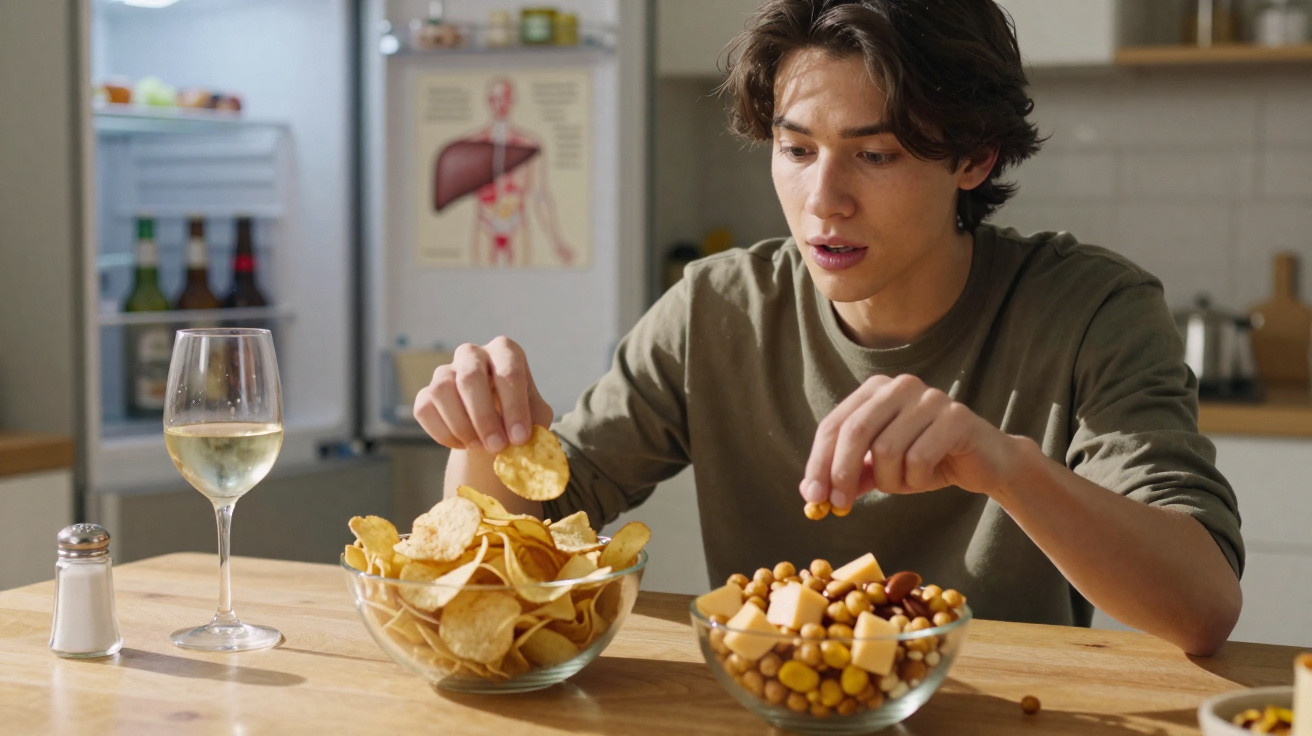
Many of us know the scenario: after a few drinks, the most appealing option suddenly becomes something salty - crisps, chips, pizza, or a late-night burger. It is tempting to put it down to weakened resolve or lowered inhibitions.
Fresh evidence suggests there may be a physiological driver instead. Rather than simple willpower, a hormone could be responsible.
Researchers at the University of Sydney describe how alcohol can nudge us towards salty, savoury junk food - and how that routine can gradually contribute to expanding waistlines.
The hormone behind cravings
At the centre of the findings is a hormone called FGF21. Under usual conditions, FGF21 increases when the body is short on protein, and it signals the brain to seek out protein-rich foods.
Alcohol seems to activate the same pathway, effectively misleading the body into behaving as though it needs extra protein, even when it does not.
“Many people will recognize the experience of having a few drinks and suddenly craving something salty, like chips, French fries, pizza or other savory foods,” said lead author Dr. Amanda Grech.
“Now we have a better understanding of the hormonal dynamic at play, which may be driving overconsumption of ultra-processed foods,” she said.
Why chips beat cake
FGF21 appears to pull in two directions at once: it heightens appetite for savoury, umami flavours while also dampening the urge for sugar.
That helps explain why the late-night temptation usually points to crisps or chips rather than cake - the craving is for salty and savoury foods, not sweet ones.
Across most of human history, that response was useful. Savoury, meat-like flavours were reliable cues for protein, so pursuing that taste helped people obtain the protein their bodies were seeking.
The protein decoy trick
Modern diets have disrupted that old relationship. Many salty snacks now taste intensely savoury because of added flavourings such as monosodium glutamate, yet provide very little genuine protein.
The researchers refer to these items as “protein decoys”. They mimic the taste of protein and stimulate protein appetite, but they do not deliver enough protein to satisfy it.
As a result, people may continue eating in an attempt to feel satisfied, while unintentionally consuming far more fat, carbohydrates and total calories.
This is not limited to packaged snack foods. Rich options such as untrimmed meat, pork belly, or duck eaten with the skin can have a similar effect - delivering a savoury taste alongside lots of fat, but relatively little protein.
“Cravings for chips with a drink, a pizza at the end of a big night out, or a fry-up the next morning may be driven by the way alcohol alters the body’s regulation of appetite, particularly for protein,” said Professor David Raubenheimer, the study’s senior author.
Cravings that stick around
The same mechanism also fits the next-morning fry-up. Earlier experiments found that FGF21 rose within roughly 15 minutes of drinking and stayed elevated for several hours.
With heavier alcohol intake, the increase lasted much longer. Among people drinking heavily at Oktoberfest, FGF21 levels remained raised three days later. In other words, the craving can persist well beyond the night of drinking.
Your diet changes everything
This may also clarify a long-standing puzzle: for years, studies examining alcohol and weight gain have produced inconsistent results.
According to the new research, the outcome may depend less on alcohol itself and more on what foods are readily available alongside it.
“Alcohol has different effects on total energy intake depending on the dietary environment, particularly whether diets are dominated by minimally processed foods or ultra-processed savory foods,” said Professor Stephen Simpson, the study’s co-author.
When someone’s diet is mainly whole foods, a savoury craving is more likely to lead to real protein, which can help keep intake in check.
When the diet is packed with protein decoys, that same craving can drive repeated snacking in search of protein that never quite arrives.
The geography of cravings
There may even be a geographical hint supporting the idea. In places where a savoury taste is a more dependable sign of protein - such as France - obesity levels tend to be lower.
In Australia, by contrast, savoury flavour predicts protein only around a quarter of the time, and obesity rates are among the highest globally. That pattern aligns closely with the proposed explanation.
What drinking days revealed
To explore this further, the researchers analysed Australian dietary survey data from more than 9,000 adults.
On days when people drank alcohol, they consumed more savoury foods overall, and the biggest increase in calories came from processed snacks low in protein.
Each standard drink was associated with greater savoury intake and reduced sweet intake. Notably, the same individuals ate more savoury foods on drinking days than on non-drinking days, reinforcing the association.
Keep better snacks ready
The practical takeaway is straightforward: if the body is signalling for protein, provide protein.
“If you choose to drink, it’s worth being mindful of this hormonal interplay,” said Raubenheimer.
“Having protein-rich whole foods readily available can help steer you away from ultra-processed foods. Think roasted chickpeas, smoked salmon, lean cold meats, prawns or oysters.”
Having filling whole foods to hand will not stop alcohol-related cravings from arising, but it can meet them with what the body is actually asking for. So when a drink leaves you reaching for the crisps, it may be worth remembering: your body may not truly be asking for crisps at all.





Comments
No comments yet. Be the first to comment!
Leave a Comment