
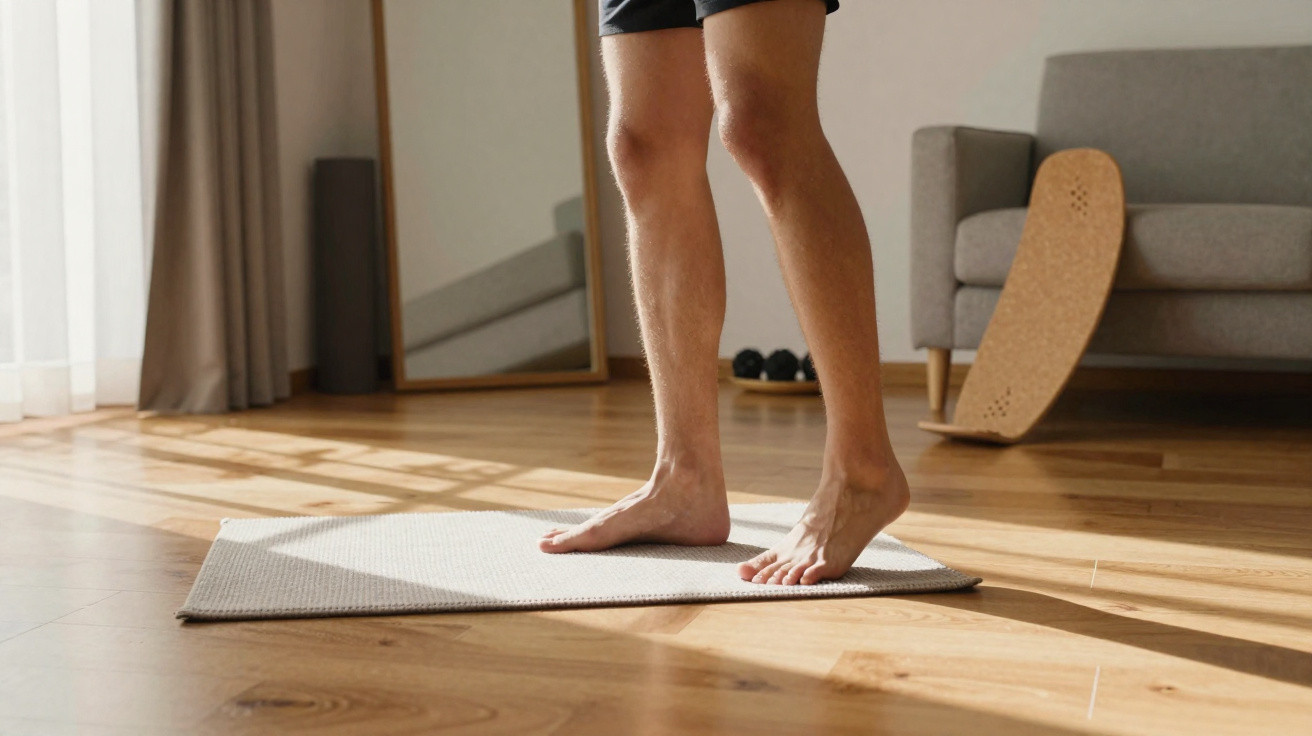
A quiet shift is taking hold behind closed doors: people are taking their shoes off at home, not out of politeness, but because they genuinely believe in it.
What used to be dismissed as simple comfort is increasingly being treated as a deliberately chosen micro-workout. Physiotherapists, orthopaedic specialists and sports scientists are paying closer attention - because walking barefoot around the house appears to do far more than just save your socks.
Why barefoot walking at home is suddenly being talked about
Many people spend their days moving between an office chair, a car and the sofa. Feet stay inside trainers, business shoes or slippers - often for hours on end. At the same time, back pain, tightness and balance issues are becoming more common. In that setting, a seemingly trivial lever is coming into focus: a bare foot on the floor.
"Anyone who regularly walks barefoot at home is unknowingly training hundreds of muscles, tendons and nerve connections that barely work inside shoes."
The idea is straightforward: the human foot is a complex structure, originally made for uneven ground. Indoor floors may be smooth and comfortable, but that’s precisely where the foot can do its job without interference when there’s no rigid sole in between.
How a bare foot reprogrammes balance
Balance doesn’t come only from the inner ear. It’s largely created through the interplay of vision, muscles and so-called proprioception - our sense of where the body is in space. Barefoot walking targets exactly that system.
The role of receptors in the feet
The skin on the sole of the foot contains countless sensors. They report pressure, temperature and tiny surface changes to the nervous system. Shoe soles partially filter those signals. Without that cushioning, the brain has to work more actively again.
- Every small shift in weight is picked up more clearly.
- The stabilising muscles around the ankle joint fine-tune their work.
- Missteps and wobbles are corrected more quickly.
This constant exchange of information functions like a quiet, continuous workout for the body’s internal “balance machine”. Many people notice it at first because they feel less steady when barefoot - for instance, when turning quickly in a hallway.
"The more often the foot has direct contact with the floor, the more precisely the body learns to compensate for every small sway - an advantage in daily life, on stairs, when carrying shopping bags or playing with children."
Long-term effects on stability
Spending a few hours barefoot indoors each day - consistently, over months - gradually strengthens your proverbial “base”. People report:
- fewer minor ankle-rolling incidents in everyday life,
- greater confidence standing on one leg,
- a steadier stance during sudden movements, such as when the phone rings or a glass looks like it might fall.
This can matter particularly for older adults. More reliable balance reduces the risk of falls at home - one of the most frequent causes of broken bones.
How barefoot walking influences posture
Your feet form the foundation of your body’s alignment. If that foundation tilts, knees, pelvis and spine can be pulled into a chain reaction. Many posture problems begin at ground level.
From the sole of the foot up to the neck
If you spend all day walking in heavily cushioned shoes, you often lose a clear sense of how your body is loading the ground. Barefoot, you can immediately feel whether you’re standing more on the inside or outside edge of the foot, whether the forefoot is taking too much weight, or whether your heel is constantly “hanging” into the floor.
"Barefoot walking works like a built-in feedback system: if the body is misaligned, it feels misaligned - and you naturally start to correct it."
Over time, that can shift habitual patterns:
- The pelvis may settle into a more upright position.
- The knees can feel more stable and less prone to collapsing inwards.
- The spine may adopt a more balanced curve.
Many people say they suddenly notice, while brushing their teeth, cooking or talking on the phone, that they’re not arching the lower back as much - or that they’re no longer pushing one hip out so strongly.
Foot muscles as a natural shock absorber
Another piece of the puzzle is the intrinsic muscles within the foot. They shape the longitudinal and transverse arches and act as natural springing. In stiff shoes, these structures can partially “switch off”. The foot effectively unlearns part of its role.
Walking barefoot challenges those small muscles in a targeted way. The foot subtly grips the ground, restabilises with every step and has to keep adapting. Two effects can follow:
- Natural cushioning improves, which may reduce load on the knees and hips.
- The structure of the foot arch becomes more stable, which can help if you tend towards flat feet or splayed feet.
How to build barefoot walking at home into everyday life
Not everyone needs to go shoeless all day from the outset. A gradual start protects tendons and joints and helps prevent overload.
Practical ways to begin
| Everyday situation | Barefoot idea |
|---|---|
| Morning in the bathroom | Stand barefoot for 5 minutes while brushing your teeth and washing your face |
| Working from home | Take shoes off; wear socks or go fully barefoot, especially during standing phone calls |
| Housework | Vacuum, wash up or hang laundry without slippers |
| Evening routine | A short walk through every room, deliberately slow and controlled |
Consistency is what matters. Several short barefoot phases each day deliver more over time than one long “experiment” at the weekend.
Mini-exercises for a bigger effect
If you add just a few seconds a day, you can amplify the training effect:
- Stand on one leg while the kettle boils.
- Spread your toes and draw them back together, for example while reading on the sofa.
- March on the spot, rolling through the heel and then the forefoot with intention.
- Step slowly over a rolled-up blanket or a yoga mat to simulate uneven ground.
"The foot needs stimuli - different surfaces, small challenges, changing loads. Even a blanket or a strip of carpet can provide that."
Who should be cautious and what risks exist
As appealing as the trend sounds, it won’t suit everyone to start immediately. Anyone with known foot deformities, significant pain, diabetes with nerve damage, or recent surgery should seek medical advice before making a change.
Typical risks of progressing too quickly include:
- irritation from overuse at the Achilles tendon,
- pain in the plantar fascia (sole of the foot),
- irritated toe joints if the forefoot suddenly has to carry more.
Your home environment matters too. Sharp edges, broken glass, Lego bricks or timber floors that splinter easily increase the chance of injury. A quick safety check before going barefoot is worth it.
Barefoot at home and other activities - how to combine the effects
Anyone who already practises yoga, Pilates or balance training may benefit especially from barefoot walking. These sessions demand precise body awareness - and stronger foot muscles plus better proprioception provide the foundation.
Leg and core strength training can also feel different when stability comes from the ground up. Squats or lunges without shoes on a non-slip surface can sharpen your sense of alignment and steadiness.
"With every hour your foot isn’t tucked into shoes at home, your body collects quiet training sessions - effortlessly, without a gym bag and without an extra appointment."
Terms worth knowing
Proprioception
This term refers to the sense of where your body is positioned in space. It runs in the background without conscious thought. Muscles, tendons and joints continuously report where your arms, legs and head are. Barefoot walking supplies particularly rich input from the ground up, which can sharpen this sense.
Plantar fascia
The plantar fascia is a tough band of connective tissue on the sole of the foot. It runs between the heel and the toes. It supports the foot arch and transfers forces during walking and running. If it’s loaded too abruptly, it can become painful - one reason to start slowly and give the feet time to become stronger.
What it can feel like in everyday life
Imagine a fairly typical week: Monday morning, the first coffee, the walk into the kitchen. Barefoot, you notice the slightly cool tiles and feel how the weight lands on the heel before rolling forwards. By Wednesday, you stay standing in the hallway during a phone call and test balancing on one leg. You wobble, but it’s manageable. On Friday evening, while tidying up, you realise your back feels less uncomfortable even though you’ve clocked up plenty of steps around the house.
These small observations start to add up. They suggest the connection between floor and brain is becoming more active. Not dramatic, not like a sudden burst of muscle growth - more quietly, in the form of greater confidence and a steadier stance in ordinary moments.
If you decide to try this experiment, you don’t need a stopwatch, a fitness app or a training plan. The first step is always the same: shoes off, feet on the floor, a brief pause - and noticing just how much information is coming in.

Comments
No comments yet. Be the first to comment!
Leave a Comment