

At 7 a.m., the lights ease on inside a small community gym on the edge of town. The treadmills are the first to fill: a line of determined people in their sixties walking quietly into the day. A handful head for the exercise bikes. One man rolls out a yoga mat, lies back, and begins forcing his way through crunches as if it were 1998. Ten minutes later he’s red-faced and short of breath, prodding his stomach with a faint, irritated look. The shape, for him, hasn’t shifted in years.
Over by the windows, though, a retired headteacher in a blue T-shirt is simply… walking. Not quickly. Not for miles. But with every step she’s doing something most people can’t see: lightly drawing in and releasing her midsection in a steady, private rhythm.
Almost nobody notices.
And yet that small, near-invisible action is where the real change is happening.
The “hidden” move experts now swear by after 60
Ask ten people aged over 60 what they’re doing to tackle abdominal fat and you’ll usually hear the same answers: sit-ups, planks, or some other “classic” routine. They put in long sessions, end up with a sore neck or a tight lower back, and still that stubborn band around the waist refuses to budge. Many eventually shrug and decide, with half-hearted resignation, that “it’s just ageing”.
But specialists in ageing and movement are increasingly urging a different strategy. Instead of another visible, gruelling set on the floor, they point to a subtle internal drill you can practise while walking, cooking, or even standing around waiting for the kettle: deep core activation, also known as diaphragmatic walking or “TVA walking”. From the outside it doesn’t look like much. On the inside, it switches on the deep abdominal muscles that help define the waist and protect the spine.
It’s understated, almost like a secret. Which is precisely why so many people never bother with it.
Physiotherapists often explain it like this: picture yourself fastening a snug pair of jeans. Rather than dramatically sucking everything in, you gently draw your abdomen back towards your spine from deep within - and you keep breathing. Slow, soft, steady breaths. That internal “hug” is your transverse abdominis - the deepest layer of the abdominal wall - coming online.
Now imagine carrying that same activation off the mat and into real life: as you push a trolley round the supermarket, go up the stairs, or take the dog out. A 2023 study involving older adults found that pairing walking with deep core engagement reduced waist circumference more effectively than walking on its own. This isn’t about torching thousands of calories in one go. It’s about giving the right muscles something to do, every day, with every step.
The movement is minimal. Over the course of months, the impact isn’t.
After 60, this matters for a reason. Many traditional ab routines repeatedly flex the spine and focus heavily on the superficial “six-pack” muscles. For older bodies, that can aggravate the lower back, compress spinal discs, and overwork hip flexors that are already tightened by years of sitting. The result for many is more discomfort - and even less desire to keep exercising.
Deep core activation turns that approach on its head. You train the muscles that encircle your abdomen like a built-in corset, supporting posture and organs from the inside out. Experts note that waking up the transverse abdominis improves the way we stand and move, which can subtly influence how fat is carried and used. Better posture means the stomach is less likely to tip forwards. And breathing well with the diaphragm can lower stress hormones that tend to push fat storage towards the middle.
So you’re not only pursuing a flatter stomach. You’re reminding your body where its centre actually is.
How to do “TVA walking” that actually targets belly fat
Keep it basic to begin with. Stand upright with your feet hip-width apart and rest your hands lightly on your lower abdomen. Breathe in through your nose and allow your belly to rise gently, as if you’re inflating a balloon behind your navel. As you breathe out, draw your abdomen softly back towards your spine - like you’re doing up a zip inside your tummy. Don’t brace, and don’t hold your breath. Aim for a quiet, deep tightening rather than a hard clench.
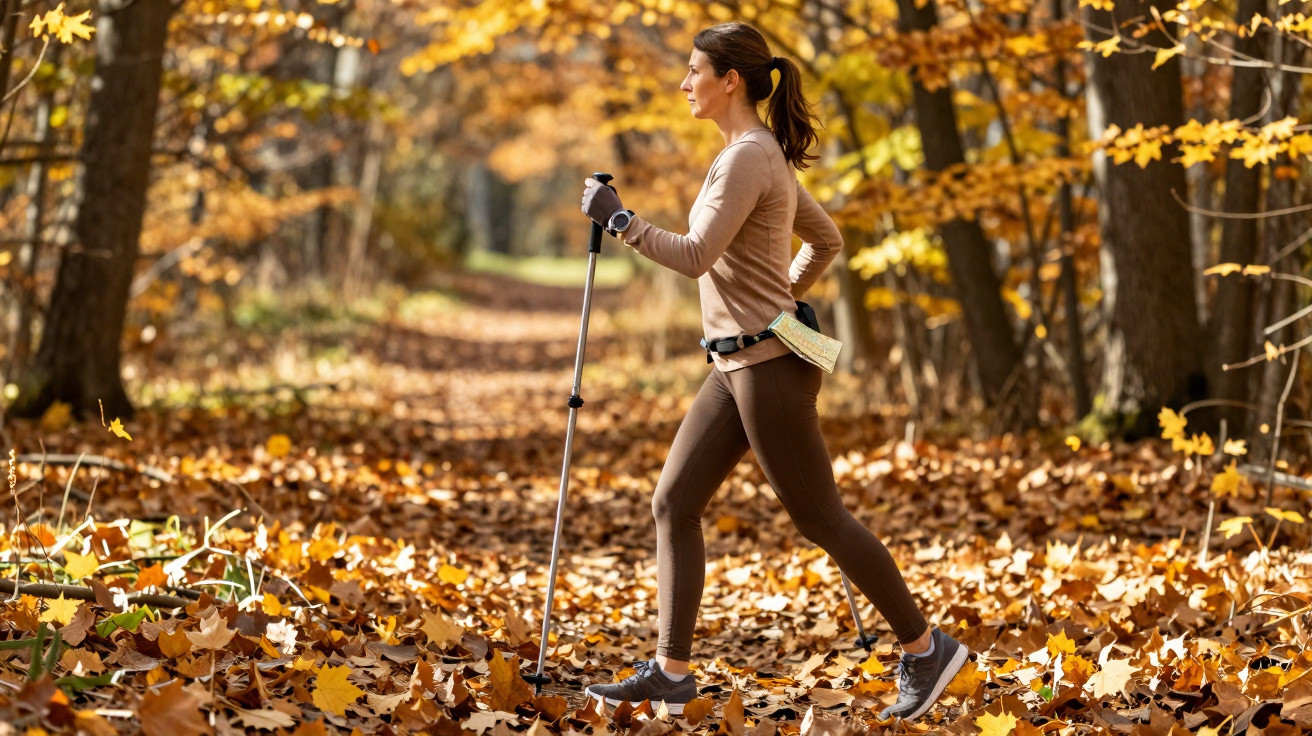
Can you feel that mild, controlled tension? That’s the muscle you’re aiming to recruit. Once you can find it while standing still, start taking a few slow steps. Let the belly relax a little as you inhale, then draw it in again as you exhale. Keep your shoulders relaxed, your chest easy, and your gaze forward. You’re not striding like you’re on parade. You’re walking as you normally do - just more connected through the middle.
Do this for two minutes at a time. That alone is a meaningful shift.
The biggest pitfall is overdoing it. People hear the word “core” and immediately lock everything up, stop breathing, and end up flushed after half a minute. Others pull the belly in so forcefully that only the surface muscles take over, while the deep stabilisers remain switched off. And realistically, nobody performs this perfectly every single day.
What experts recommend instead is a gentler pattern: three or four short TVA walking practices dotted across the day. From the lounge to the kitchen. From the car to the front door. Even while brushing your teeth. It’s not about heroic workouts; it’s about repeating a small action often. If you notice your lower back tightening or your jaw clamping, treat that as a sign you’ve pushed too hard. Ease off, reset, and try again with a lighter draw-in.
Your body usually responds better when it doesn’t feel attacked.
Dr. Lena Hartmann, a geriatric physiotherapist, puts it bluntly: “At 65, you don’t win against belly fat by punishing yourself on the floor. You win by teaching your deep core to wake up every time you move. It’s quiet work, but it changes everything.”
- Start with 2 minutes of deep-core walking at home, once in the morning and once in the evening.
- Pair it with normal daily walking – to the market, round the block, inside a shopping centre when the weather is poor.
- Add occasional posture checks: ears over shoulders, shoulders over hips, belly gently hugging inwards as you breathe out.
- Skip endless crunches if they aggravate your back; replace them with standing marches using deep-core activation.
- Pay attention to how your waistband feels after a few weeks - often the first “result” is the way clothes fit, not what the scales show.
Beyond the mirror: what changing your walk does to your life
When people over 60 begin using this neglected exercise, something quietly shifts. Many start for one reason: the belly. Trousers that used to do up without a second thought now feel like a daily argument. There’s that one photo where the stomach is all they can focus on. Then, a few weeks into deep-core walking, the conversation often changes. They mention less about fat and more about how they feel when they get out of bed. Standing up from a chair seems easier. That low, constant pull in the lower back settles down a touch.
That’s the understated power of the method: it doesn’t only affect how your abdomen appears. It changes how your body supports you through the day. You start to carry yourself differently, with a spine that feels more held from the inside. For some people, that sense of support matters more than dropping a dress size. Yes, the belly can soften. But so can something else - the ongoing mental battle with the mirror.
| Key point | Detail | Value for the reader |
|---|---|---|
| Deep core vs. crunches | TVA walking activates the deepest abdominal muscles instead of overusing the spine and neck | Targets belly fat more safely after 60 and protects the lower back |
| Micro-sessions all day | 2–3 minute bouts while walking or doing daily tasks, repeated often | Fits real life, no need for long gym workouts or special equipment |
| Posture and breathing | Combining upright posture with diaphragmatic breathing reduces stress load | Helps reduce stress-related belly fat and improves energy and balance |
FAQ:
- Question 1 What exactly is the transverse abdominis, and why does it matter after 60?
- Answer 1 It’s the deepest layer of your abdominal wall, wrapping around your torso like a natural corset. After 60, it helps stabilise your spine, support your organs, and subtly shape the waist, all while reducing strain on the back.
- Question 2 Can TVA walking really reduce belly fat, or is it just toning muscle?
- Answer 2 It does both. It tones deep muscles, which can pull the abdomen in and improve posture, and it increases overall movement and breathing efficiency, which supports fat loss around the midsection when combined with a reasonable diet.
- Question 3 How many minutes per day should I aim for?
- Answer 3 Start with 2 minutes, 3–4 times a day. Over time, many experts suggest building up to 15–20 total minutes spread across your walks and daily activities.
- Question 4 Is this safe if I have osteoporosis or chronic back pain?
- Answer 4 Deep-core activation is generally gentle and often recommended, but always check with your doctor or physiotherapist. Begin with very light engagement and stop if you feel pain rather than mild effort.
- Question 5 Do I still need other forms of exercise?
- Answer 5 Yes. TVA walking works best alongside simple strength training for legs and arms, regular walking, and some balance work. Think of it as the missing link that makes all your other efforts safer and more effective.




Comments
No comments yet. Be the first to comment!
Leave a Comment