
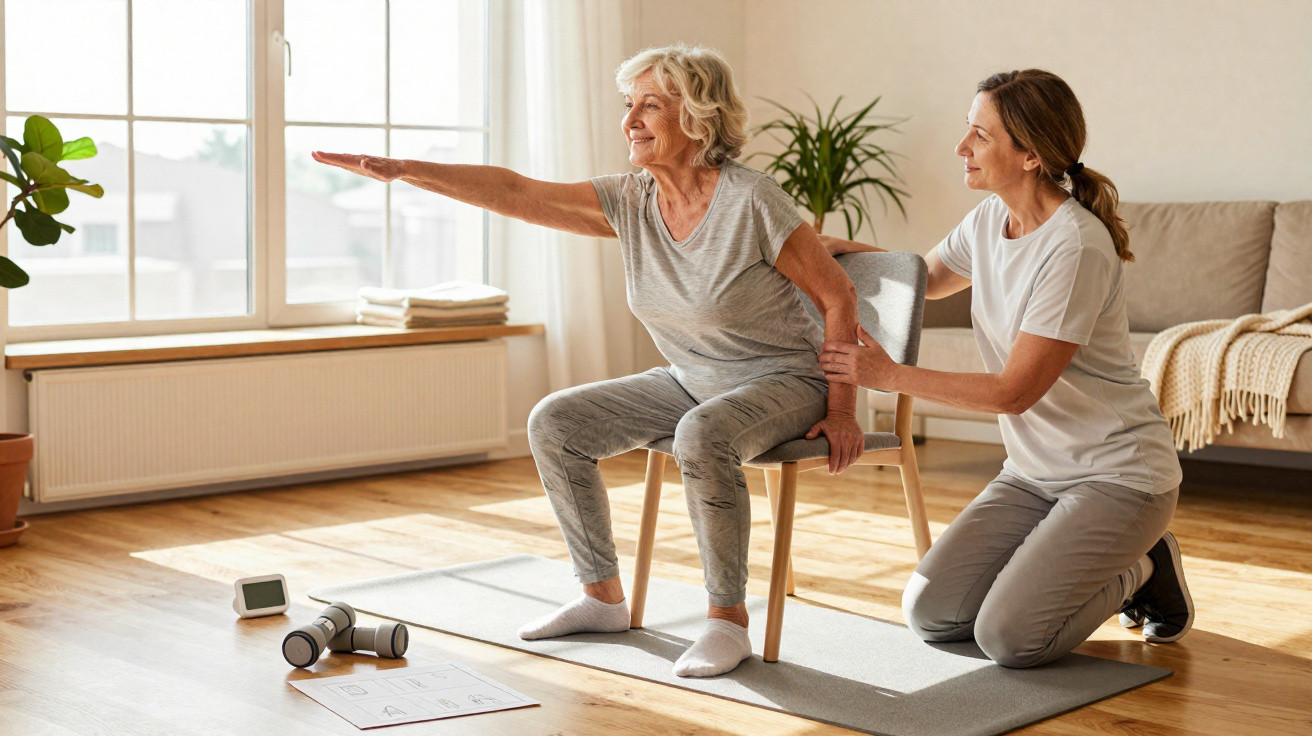
Keeping physically steady after the age of seventy is crucial for staying safe and avoiding serious accidents at home. Targeted training sessions help build strength and can bring a marked improvement in overall motor coordination. When the movements are done correctly, day-to-day autonomy also increases.
How do at-home exercises prevent falls in older adults?
As part of natural ageing, physical responses can slow and change, which makes falls a common worry among older people. Simple, preventative activities carried out at home act as an effective protective barrier, teaching the body to respond quickly when balance is disrupted. With regular practice, the neuromuscular system becomes stronger.
Starting preventative care as soon as the first signs of unsteadiness appear helps preserve a healthier and longer life. Making the living space safer and performing dynamic tasks can rebuild reflexes that have been lost over time, adding more steadiness with every step. Every older person deserves access to geriatric physiotherapy.
To set up your daily at-home training plan, pay attention to these essential points:
- Initial support: Use a sturdy chair or a nearby sofa to hold on to and prevent loss of balance.
- Forward step: Shift your body weight forwards in a controlled way ten times in a row.
- Side step: Step out to the side and return to your base position without dragging your feet.
- Backward step: Step back carefully, adjusting the range of movement according to your confidence.
- Full circuit: Combine the steps by tapping the foot forwards, to the side, and backwards in a continuous sequence.
What are the essential steps for the basic routine?
The first move centres on stepping forwards: the older person shifts their weight forwards and then comes back to the starting position. This controlled repetition trains mechanical balance while safely activating the lower body. Keeping a sturdy chair close by provides essential support.
After that, side and backward steps challenge the body in different directions, broadening the capacity for motor responses. Avoiding the common mistake of dragging the feet helps the exercises deliver their full effect. These variations build mobility and independence.
Below is a video from the PhysioBRAIN YouTube channel that goes deeper into the points covered in this topic:
How can you combine the movements with complete safety?
Bringing all the steps together into one sequence creates a full training circuit for an older adult. Tapping the foot forwards, to the side, and behind demands focused attention, offering a positive challenge for the brain and well-trained muscles.
Important note
Safety comes first
Never do these activities without a stable structure nearby to use as support.
If you feel dizzy or experience pain, stop the movement immediately.
To prevent dizziness or excessive strain, the person practising should keep an eye on their own pace and pause whenever needed. Stopping to drink water supports proper hydration, keeping the body fully prepared to continue with the routine. This care supports motor development.
A structured combination like this can bring several immediate, practical day-to-day benefits:
- A substantial improvement in how quickly the body reacts.
- Simultaneous stimulation of cognitive and motor functions.
- A significant reduction in fear of falling at home.
Why do three sets of ten repetitions?
The guidance to complete three sets of ten repetitions on each side provides an ideal volume of physical stimulus. This specific amount encourages the necessary muscle adaptation without causing excessive fatigue in an older person’s daily routine. A planned approach strengthens the lower limbs.
The muscular dynamism created by this training volume helps build beneficial movement memories in the central nervous system. Over the weeks, the legs respond faster to unexpected obstacles or slippery surfaces. This consistency reinforces physical safety.
The main effects of this structured repetition method include:
- Gradual joint adaptation to mechanical effort.
- Ongoing stimulation of fast-twitch muscle fibres.
- A noticeable increase in confidence to walk without assistance.
How do you stay consistent with daily training?
Turning a ten-minute session into a daily habit mainly requires initial discipline and choosing a fixed time. Doing the steps first thing in the morning can help lock the routine into your day. This regularity supports joint health and helps restore vitality.
Inviting family members or carers to take part increases motivation while also keeping the environment safer. Sharing this health-focused moment strengthens emotional bonds and supports collective physical wellbeing. Practising consistently safeguards personal independence and brings a strong sense of wellbeing.
Read also: A daily thirty-minute walk can replace the gym effectively





Comments
No comments yet. Be the first to comment!
Leave a Comment