
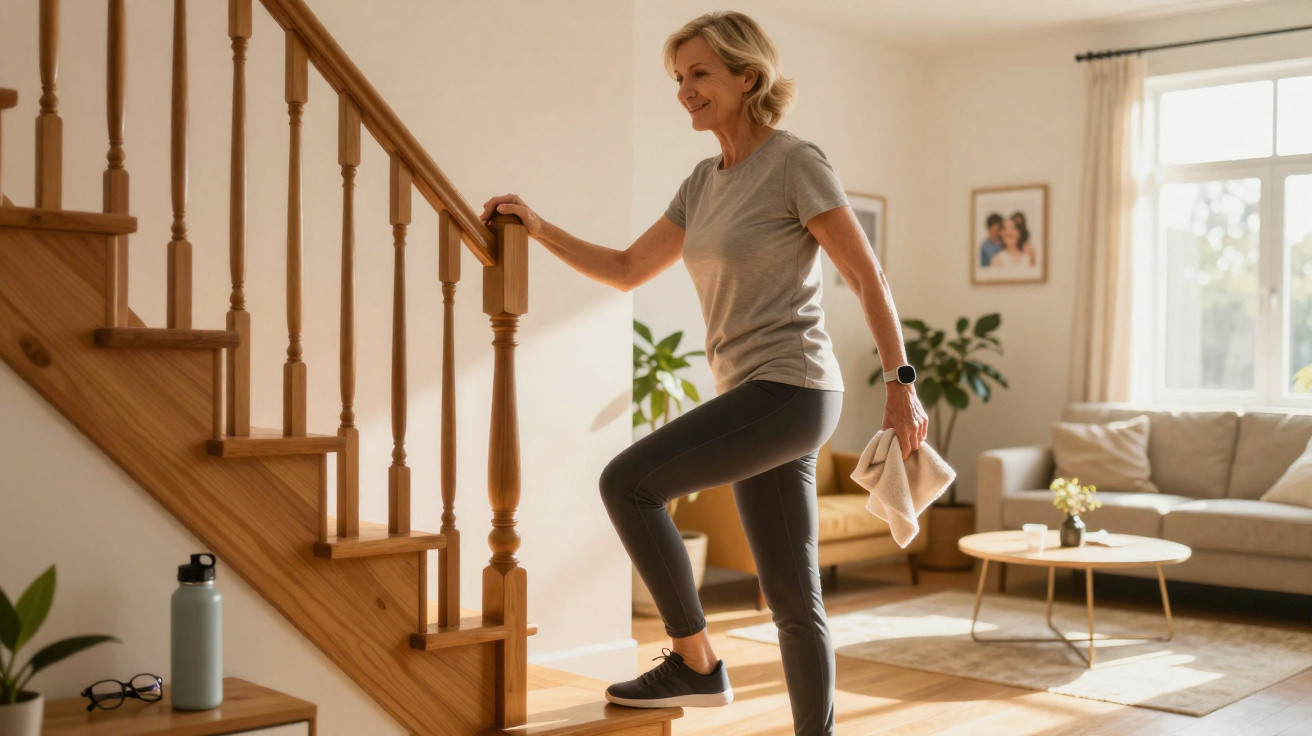
The ideal exercise for people over 65 does not always require expensive equipment or travelling to a gym. One activity that has been gaining attention is the simple act of stepping up and down a single step in a controlled way. Because it is easy to do at home, it can help strengthen key muscles, improve balance, and support day-to-day independence. If you want a practical way to stay active, this can be a very strong option.
Why is stepping up and down considered a complete exercise?
Stepping up and down engages several muscle groups at the same time. Your legs, glutes and abdominal area are continuously working during the movement, which supports muscle strengthening and overall body stability.
It also challenges the cardiovascular system and helps improve motor coordination. Because the exercise requires you to pay close attention to how you move, it can build better body control and greater confidence during everyday tasks.
What are the main benefits of this exercise after 65?
As we get older, maintaining muscle strength and balance becomes crucial for staying independent. That is why many specialists recommend activities that combine strengthening and endurance in a single practice.
One of the best ways to do this is with a simple, free exercise that is easy to add to your daily routine: climbing stairs. In the video below, @NutricionistaPatriciaLeite explains in detail how this habit can positively affect muscle health, bone health and balance.
How to start practising the ideal exercise for people over 65?
It is best to begin gradually so your body can adjust to the effort. A low, stable step is usually enough to get started, ideally close to a wall or a sturdy chair that you can use for support.
For a safer practice, it helps to follow a few straightforward recommendations:
- Wear non-slip footwear.
- Start with short sessions of 1 to 2 minutes.
- Keep a comfortable pace.
- Avoid sudden movements.
- Respect your body’s limits.
Over the following weeks, you can slowly increase the time you spend practising. The key point is to keep each repetition controlled and to prioritise stability throughout every movement.
Who should consult a professional before doing this exercise?
Even though it is a simple and accessible activity, not everyone should start without specialist guidance. If you have heart problems, a history of frequent falls, recurring dizziness, or intense joint pain, you should seek professional assessment before beginning.
A doctor, physiotherapist or qualified fitness professional can review your individual situation and suggest adaptations if needed. In this way, the exercise can be done more safely, helping to protect mobility, balance and independence as you age.

Comments
No comments yet. Be the first to comment!
Leave a Comment