
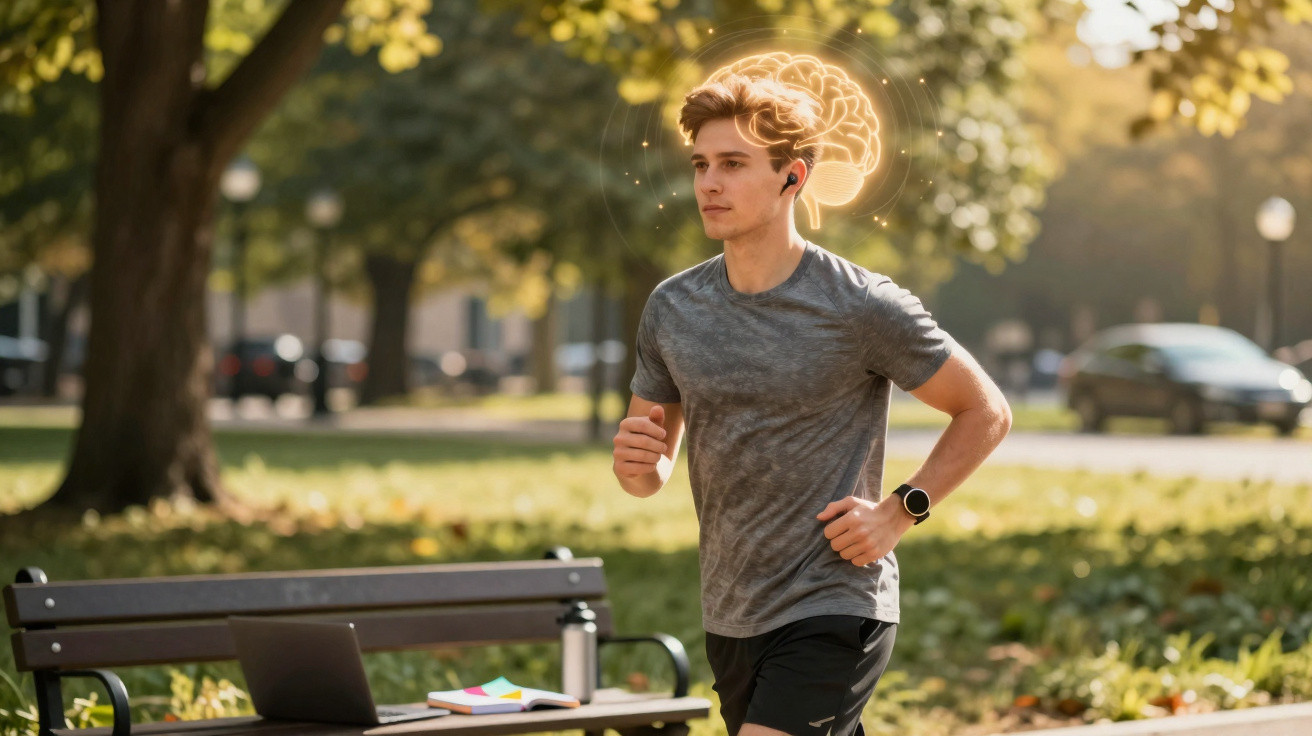
Lots of people reach for Sudoku, Wordle or brain-training apps in the hope of keeping their minds sharp. Yet a growing body of evidence suggests that exercise is one of the most effective ways to improve memory, concentration and overall brain health.
In our latest research, we analysed evidence drawn from more than 250,000 participants across 2,700 studies. The results showed that being physically active supports brain function - whether that means walking, cycling, yoga, dancing, or even active video games such as Pokémon GO.
In short, moving more helps people think and reason better, remember more, and maintain attention - and these effects appear at every stage of life.
What the science says
Our review strengthens the expanding scientific consensus that regular physical activity improves three major aspects of brain function:
- cognition: your broader capacity to think clearly, learn, and make decisions
- memory: particularly short-term memory and the ability to recall personal experiences
- executive function: including concentration, planning, problem-solving, and regulating emotions.
We carried out an umbrella review. That means we examined the findings of more than 130 high-quality review papers that had already pooled results from many exercise studies. In most cases, participants were asked to begin a new, structured exercise programme rather than simply reporting what activity they were already doing.
To measure changes in cognition, memory and executive function, the underlying studies used a variety of standard brain tests. These included tasks such as recalling word lists, completing puzzles, or rapidly switching between activities - straightforward exercises designed to consistently gauge how well the brain is performing.
Overall, the gains ranged from small to moderate. On average, exercise produced a clear improvement in cognition, while memory and executive function also improved, though to a slightly lesser extent.
Positive effects were seen in every age group, but children and teenagers experienced particularly large improvements in memory.
People with attention-deficit hyperactivity disorder (ADHD) tended to show bigger improvements in executive function after physical activity compared with other groups.
The brain’s response was relatively rapid - many participants saw benefits after just 12 weeks of exercising regularly.
In broad terms, the strongest effects were linked with doing at least 30 minutes of exercise on most days, working towards around 150 minutes per week.
What's happening in the brain?
Activities like walking or cycling may increase the size of the hippocampus - a brain region central to memory and learning.
One study found that older adults who completed a year of aerobic exercise increased their hippocampus by 2%, which is roughly equivalent to reversing one to two years of age-related brain shrinkage.
Higher-intensity training - such as running or high-intensity interval training - can also enhance neuroplasticity, the brain’s capacity to adapt and rewire. This supports faster learning, clearer thinking, and maintaining mental sharpness as we age.
Another reason to get moving
The global population is getting older. By 2030, one in six people will be aged over 60, bringing with it a growing risk of dementia, Alzheimer’s disease and cognitive decline.
At the same time, many adults are not active enough: one in three does not meet the recommended levels of physical activity.
Adults are advised to do at least 150 minutes of moderate exercise each week (for example, brisk walking), or at least 75 minutes of more vigorous activity such as running.
It is also recommended to include muscle-strengthening work - such as lifting weights - at least twice a week.
Everyday movement counts
You do not have to run marathons or lift very heavy weights to see benefits. Our findings indicated that lower-intensity options such as yoga, tai chi and "exergames" (active video games) can be similarly effective - and in some cases may work even better.
These activities challenge both mind and body. Tai chi, for example, demands sustained attention, coordination, and remembering sequences of movements.
"Exergames" often require quick decisions and fast reactions to prompts, helping to train attention and memory.
Crucially, these ways of moving are accessible. They can be done at home, outdoors, or socially with others, which makes them suitable for a wide range of fitness levels and for people with limited mobility.
And while everyday activity already helps - such as choosing to walk instead of drive, or carrying shopping home - it still matters to make time for structured exercise, like strength training at the gym or attending a regular yoga class, to gain the fullest brain and body benefits.
Real-life applications
If you are a grandparent, you could try playing Wii Sports virtual tennis or bowling with a grandchild. If you are a teenager noticing signs of ADHD, a dance class may be worth trying to see whether it affects your concentration at school. If you are a busy parent, you may feel more mentally clear if you can fit in a 20-minute yoga video session between meetings.
In each example, you are doing more than just moving - you are giving your brain a valuable "tune-up". And unlike many brain-training apps or supplements, exercise brings wide-ranging benefits, including better sleep and improved mental health.
Workplaces and schools are increasingly paying attention. Many organisations are introducing short movement breaks during the working day to support employees’ focus.
Schools that build physical activity into lessons are also reporting improvements in pupils’ attention and academic performance.
Exercise is one of the most effective and widely available tools we have to support brain health. Better still, it costs nothing, is accessible to most people, and it is never too late to begin.
Ben Singh, Research Fellow, Allied Health & Human Performance, University of South Australia and Ashleigh E. Smith, Associate Professor, Healthy Ageing, University of South Australia
This article is republished from The Conversation under a Creative Commons licence. Read the original article.






Comments
No comments yet. Be the first to comment!
Leave a Comment