
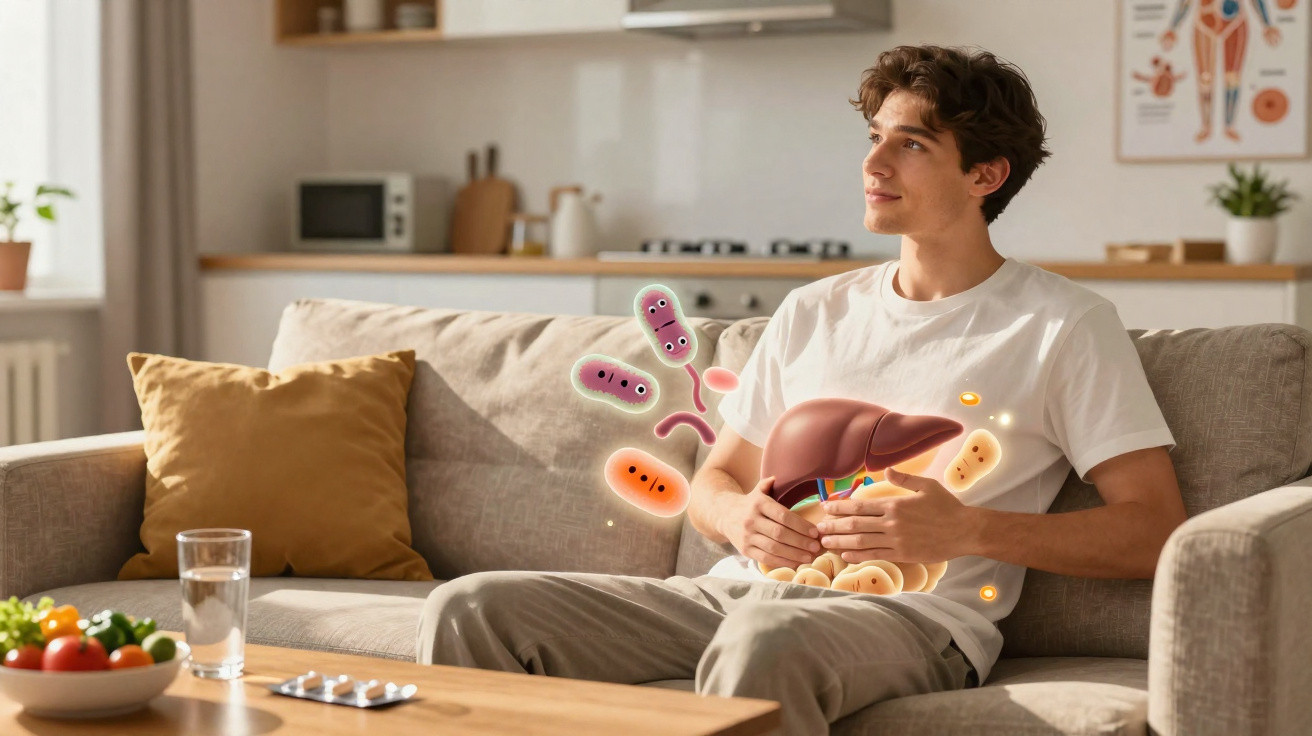
Recent research suggests body fat is far more adaptable than scientists long assumed. What matters is not only what we eat, but also which gut microbes can ‘decode’ those dietary signals. Together, diet and microbiome can reprogramme fat cells so they burn energy rather than stubbornly stockpiling it.
How gut microbes turn fat into a heater
In the experiment, mice were fed an extremely low-protein diet. When that diet was paired with a specific mix of gut bacteria, some of the animals’ white fat shifted into so-called “beige” fat - an in-between state between white storage fat and brown fat, which actively burns calories.
In fat pads around the groin, the researchers suddenly found many cells producing classic thermogenic proteins - proteins that usually ramp up after cold exposure, when the body needs to generate heat. In other words, those fat cells switched into heating mode.
Gut microbes responded to scarce protein intake and sent signals through the body that spurred fat cells to burn energy.
Crucially, the same idea failed in animals raised in sterile conditions without gut bacteria. Even with identical food, their fat remained metabolically sluggish. Only once microbes were present in the gut did the programme kick in. Diet alone was not enough - the body needed a kind of “interpreter” in the intestine to translate protein shortage into biochemical signals.
A small team of bacteria makes the difference
The researchers tested dozens of microbial combinations, many originally isolated from humans. In the end, an unexpectedly small set stood out: four specific bacterial strains had to be present together for the effect to reach its peak.
- Only the full set of four strains most strongly activated beige fat.
- Removing even one strain caused the effect to collapse.
- Transplanting the “best” human gut contents into mice intensified fat burning, whereas weak donors produced little to no impact.
Among 25 healthy volunteers, the scientists found signs of active beige fat in around 40 percent. Stool samples from those individuals had a particularly clear effect on mice - suggesting that some people naturally carry a gut environment that more readily revs up fat tissue.
Why the liver suddenly becomes the control centre
The protein shortage did not stay confined to the gut. The bacteria produced more ammonia, a metabolic by-product that travelled via the portal vein straight to the liver. There, it flipped a switch: the liver released more of the hormone FGF21. This hormone helps govern how the body manages energy under stress conditions such as hunger.
At the same time, the microbes altered the make-up of bile acids. These are not merely digestive helpers; they also act as signalling molecules that reach cells throughout the body. Together, these messages pushed immature fat cells towards becoming beige, energy-consuming fat.
Ammonia, altered bile acids and the liver hormone FGF21 formed a kind of signalling axis from the gut to fat tissue - without any one link, the overall effect fell apart.
When the researchers blocked a key bacterial enzyme responsible for producing ammonia, the liver and hormone response weakened - and the “browning” of fat faded with it. Even lab-grown mini-livers made from human cells responded to the signal: under ammonia exposure, they too increased FGF21 production. That points to a mechanism that is not limited to mice.
Beige fat appears - and can disappear again
In the animal model, it took only about two weeks for visibly more beige fat to show up. Over several further weeks, that state became more pronounced. Genes that typically switch on in cold conditions and drive heat production rose sharply in mice on the low-protein diet with the right gut flora.
The twist - and the let-down - was that once the animals returned to a normal diet, the fat lost a large share of its new capabilities. The body remains adaptable. This reprogramming is not fixed permanently; it depends on an ongoing trigger.
Age, sex and the body region where the fat sat also shaped the response. Some depots reacted strongly, others much less so. The remodelling did not occur evenly across the whole body.
Nerves connect gut, liver and fat tissue
The study also uncovered another layer: the nervous system. Signals originating in the gut and liver led to increased growth of sympathetic nerve fibres within fat tissue. These nerves normally drive energy use - boosting heart rate, metabolic rate and the activity of beige or brown fat.
When researchers interrupted signalling from the gut and liver, this nerve network in the fat shrank, and the browning response became much weaker. Conversely, a drug that directly activates these nerves was enough to restore the effect at least in part. The microbes were not replacing the body’s own circuitry; they were effectively turning its volume up.
What benefits the mice actually showed
Mice on the low-protein diet gained less weight, carried less body fat and handled blood sugar better than the control group. That points to a genuine metabolic advantage. With the four key microbes on board, the following also improved:
| Parameter | Change with key microbes |
|---|---|
| Cholesterol | markedly lower |
| Triglycerides | reduced |
| Markers of liver damage | also reduced |
| Lean body mass / muscle | largely preserved |
Because muscle mass and fat-free mass stayed stable, it is unlikely the animals simply “starved”. Instead, their metabolism appeared to shift deliberately into a frugal yet fat-burning mode.
Why this is not a diet trick to try at home
The test animals obtained only around seven percent of their calories from protein - roughly 60 percent less than the control group. That level of restriction is something few people could sustain long term, let alone judge safely without health risks.
On top of that, probiotic results in humans have so far tended to be modest. What works neatly in a mouse gut often fails to translate in people. Each person brings their own mix of bacteria, dietary habits and pre-existing conditions. A one-size-fits-all probiotic that reliably turns fat tissue into a heater is not on the horizon.
The researchers themselves caution against simply cutting protein drastically. Anyone experimenting with severe protein restriction risks muscle loss, weakness and long-term harm - particularly in older age.
Medicines instead of a starvation diet: what experts are planning
Rather than pitching the extreme diet as a solution, the study authors see it as a tool for pinpointing targets in the body. The current focus includes:
- specific bile-acid receptors in fat cells,
- signalling pathways involving the hormone FGF21,
- bacterial enzymes that produce ammonia,
- growth factors that encourage sympathetic nerves in fat tissue.
Pharmaceutical companies could try to target these steps with drugs - without requiring people to eat extremely little protein or undergo risky probiotic regimens. The context is clear: severe obesity significantly increases the risk of diabetes, cardiovascular disease and some cancers. Any additional lever that improves metabolism is therefore of interest.
What readers can take away from the study
Above all, the work underlines one point: fat tissue is not a rigid energy store. It responds to signals from the gut, liver and nervous system - even in adulthood. Changing your lifestyle also means changing this internal signalling landscape.
A few practical touchpoints far removed from lab conditions:
- Balanced protein intake: Neither extreme deficiency nor heavy excess makes sense. Reference ranges are often around 0.8 to 1.2 grams of protein per kilogram of body weight, depending on activity level and health.
- A fibre-rich diet: Wholegrains, vegetables, pulses and nuts support a more diverse gut microbiome, which is more likely to align with favourable metabolic profiles.
- Regular cold exposure: Contrast showers, walks in fresh air or brief periods in cooler environments can activate brown and beige fat - a mechanism the study maps at the molecular level.
- Exercise: Physical activity shifts hormones and nerve activity in fat tissue, interacting with the signalling axis described here.
Terms such as “beige fat” and “FGF21” may sound technical, but they describe everyday processes: how many calories we store, how warm we feel and how stable our blood sugar remains. This study adds one piece to the puzzle of why two people with seemingly similar diets can respond so differently in terms of weight.
It also makes something else clear: anyone who only counts calories is missing a quiet co-player - the trillions of bacteria in the gut that help decide whether energy is stored or burned.






Comments
No comments yet. Be the first to comment!
Leave a Comment