
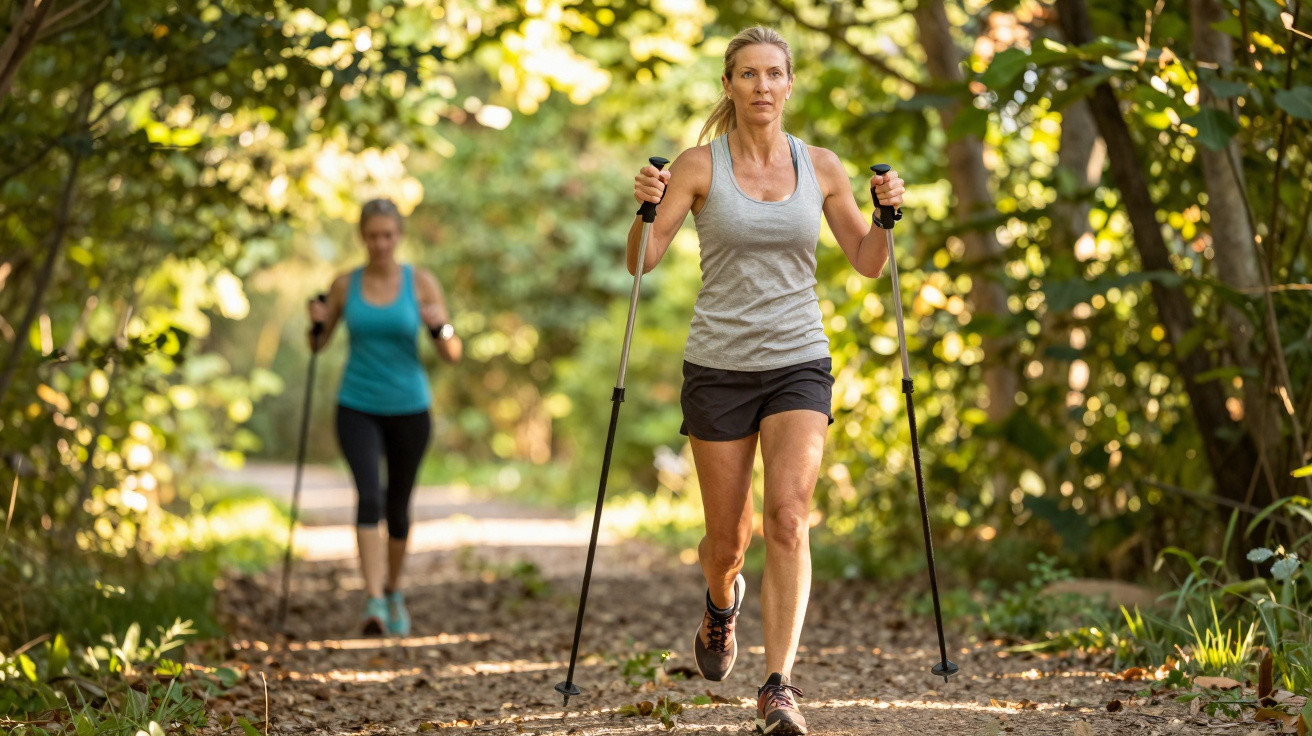
Nordic Walking looks innocuous: two poles, comfortable shoes, off you go. That apparent simplicity is exactly why many people never bother to learn the technique. The result is that you walk, sweat a little, but give away a large chunk of the training benefit - and, in the worst case, even set yourself up for tightness and aches.
Why Nordic Walking is much more than a walk with poles
Nordic Walking is often described as a gentle endurance sport, but in practice it can be a very complete full-body workout. When the technique is done properly, sports medicine specialists say you can engage up to 80 percent of your muscles:
- Legs, glutes and hips drive the stride
- Arms and shoulders work actively with every pole plant
- Core and abdominal muscles stabilise the body
- Back muscles are trained dynamically as you move
Using the poles takes pressure off the knees and hips because some of the load is shared with the upper body. That is a major advantage for older adults or anyone carrying a bit of extra weight: you can train your heart and circulation without overloading your joints.
"Done correctly, Nordic Walking is clearly more intense than normal walking - while putting less pressure on the joints."
There are also effects people often underestimate in day-to-day life. Regular brisk walking improves balance, posture and body awareness. Standing tall makes breathing easier, the cardiovascular system works more efficiently, and your metabolism gets going. Studies indicate Nordic Walking can have a positive effect on blood sugar and blood pressure - a useful benefit, for example, for people with diabetes or high blood pressure.
The most common mistakes - and how to avoid them
Plenty of people spend months walking around with poles without ever really doing Nordic Walking. In parks up and down the country, the same patterns show up again and again.
Just “carrying” the poles instead of using them actively
The classic error: the poles only tap the ground in front of your feet, more like hiking poles used for show. That turns the session into mostly leg work while the upper body takes a break.
The basic principle is different. The pole acts as a lever that helps push you forwards. Let the arm swing loosely back, and briefly open your hand at the end of the push - only then do you plant the pole again in front.
"If you only place the poles in front, you’re at best training your balance - if you push off with them, you turn walking into a real full-body workout."
Rounded back and eyes on your shoes
Beginners in particular often look down to check whether the poles are “in the right place”. The head drops, the back rounds, and the shoulders creep up. That slows your stride and encourages tension through the neck.
A better approach: look ahead into the distance, lift the breastbone slightly, and keep the shoulders relaxed and low. Many people find it helps to imagine an invisible thread gently pulling them up from the back of the head - posture often improves on its own.
Poor arm–leg coordination
Nordic Walking relies on a diagonal pattern: right arm with left leg, left arm with right leg. At first, many people either march in parallel (right arm with right leg) or hardly move their arms at all.
A simple way in: start walking without poles and consciously let your arms swing, as you would on a brisk walk. Then add the poles without changing the rhythm. The pole should follow the arm swing, not the other way round.
Steps that are too short - or too long
Tiny steps rob the movement of momentum, while exaggerated giant strides put too much strain on muscles and tendons. Aim for a natural, dynamic stride: a slight forward lean through the body and a push-off that comes from the ball of the foot.
Getting started - step by step
If you are new to Nordic Walking, being shown the basics early on pays off. Many clubs, adult education centres and health organisations run beginner sessions. One or two hours with an experienced trainer can prevent technique errors that would otherwise become habits over months.
"The sooner you nail the basics, the bigger the training effect - and the lower the risk of frustration."
Choosing the right equipment
You do not need expensive high-tech kit, but a few essentials make sense:
- Poles at the right length: A rough rule of thumb is around 68 percent of your height. Many manufacturers provide sizing charts. Poles that are too short force you into a hunched position; poles that are too long can lock up the shoulders.
- Wrist straps: These should fit well so you can briefly open your hands during the push without losing the pole.
- Shoes with good cushioning: Lightweight walking shoes or running shoes with a grippy sole are ideal. Stiff hiking boots tend to restrict the roll-through of the foot.
- Clothing: Breathable and suited to the weather - several thin layers are usually better than one thick one.
Training plan for beginners
If you have not exercised for a long time, it is wise to start conservatively. One possible beginner structure:
- Week 1–2: Two sessions per week, 20–30 minutes each, at an easy pace.
- Week 3–4: Three sessions per week, 30–40 minutes each, only a slight increase in pace.
- From week 5: Gradually build duration up to 45–60 minutes, occasionally adding short faster sections.
Your body needs time to adapt to the unfamiliar load on the arms and core. Mild muscle soreness is normal; sharp pain or joint issues are a warning sign and should be checked by a doctor.
Who Nordic Walking is particularly good for
One of the best things about this activity is how widely it can be used: almost anywhere, and at almost any age. It is especially beneficial for:
- People over 50: Joint-friendly endurance training, plus fall prevention through improved balance.
- Office workers: A counterbalance to long hours sitting; shoulders and back get moving again.
- Those returning after a long break from sport: A sensible stepping stone towards more demanding activities.
- People with mild high blood pressure or diabetes: With a doctor’s guidance, a cardiovascular workout that is easy to control.
"If you feel pain in your knees or hips quickly when jogging, Nordic Walking often turns out to be a surprisingly comfortable alternative."
Common misconceptions about Nordic Walking
In many minds, Nordic Walking still carries the reputation of being a “pensioners’ sport”. That cliché is stubborn - and it mainly puts off younger people who could genuinely benefit from the training.
In reality, the intensity is highly adjustable. With a brisk pace, a powerful pole push and slightly undulating terrain, your heart rate quickly reaches a training zone that can interest even ambitious runners. If you prefer it gentler, ease off the pace and reduce the pressure through the poles.
Another misunderstanding is the idea that you can pick up the technique “along the way” without ever practising it consciously. In real life, that is when you see stiff shoulders, rigid arms and wobbly steps. A short technique focus early on saves time later - and makes the whole thing more enjoyable.
Practical tips for more enjoyment and better results
To stop Nordic Walking becoming a monotonous chore, variety helps. Different routes and surfaces challenge muscles and balance in different ways:
- Park paths with a gentle gradient
- Woodland trails with roots and uneven ground
- Farm tracks with softer surfaces
- City routes with kerbs and small climbs
Many people find it easier to settle into a steady rhythm when they go out as part of a group. Groups keep you motivated, help you stick with it, and give you a chance to swap notes on technique or equipment.
"Small technique drills in between - for example, 5 minutes of especially emphasised arm swing - sharpen body awareness and improve the movement pattern step by step."
How to combine Nordic Walking with other activities
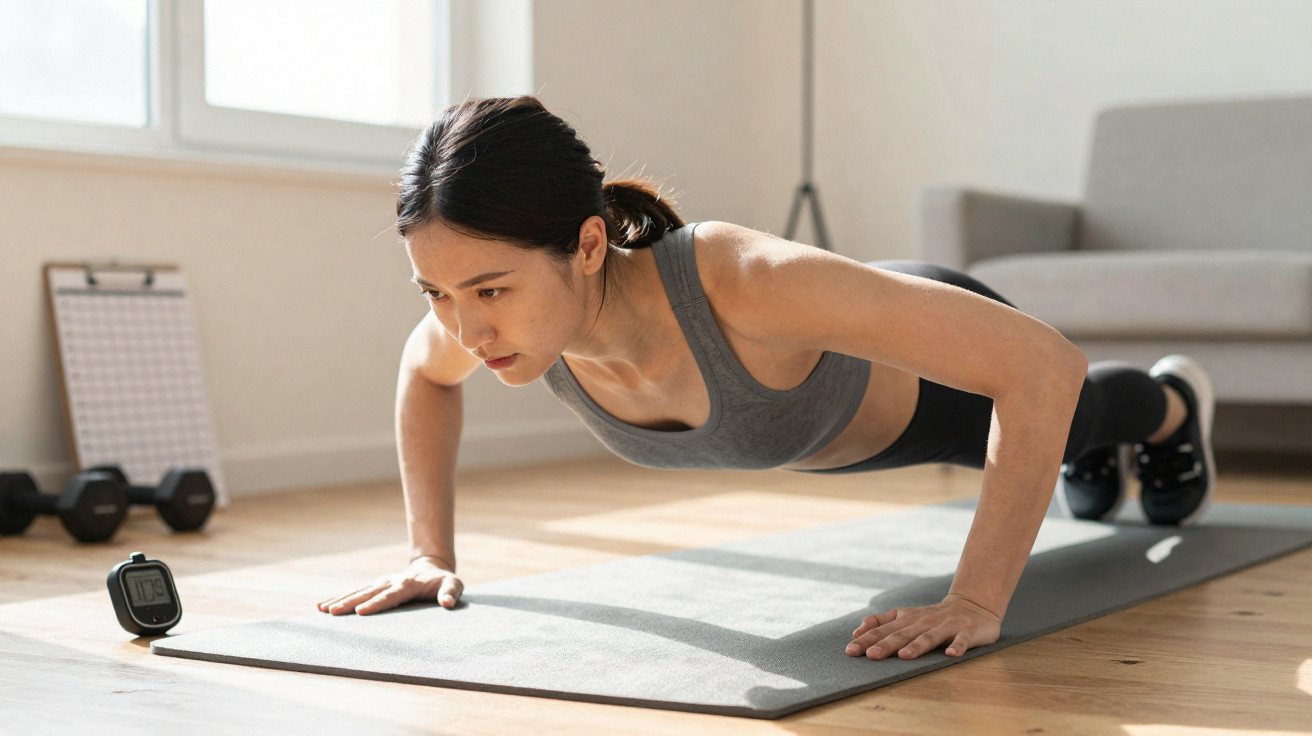
Regular sessions with poles create a solid base for other sports. Two to three Nordic Walking workouts per week pair well with light strength training. Exercises for the core, glutes and hips are particularly useful, such as squats, lunges or planks.
For recreational runners, Nordic Walking also works as a joint-friendly option on recovery days. Your circulation stays active and muscles are supplied with blood, without the impact being as high as it is when running.
The sport is also appealing for people looking to reduce stress. The rhythmic pole action, repeated steps and time outdoors often have a calming effect. Many report that after 30 to 40 minutes of walking, they can think more clearly and feel less tense.
With a bit of planning, one routine can therefore serve several goals at once: building endurance, preventing back pain, managing weight and clearing your head - provided the technique is right and the poles are more than just an accessory.



Comments
No comments yet. Be the first to comment!
Leave a Comment