
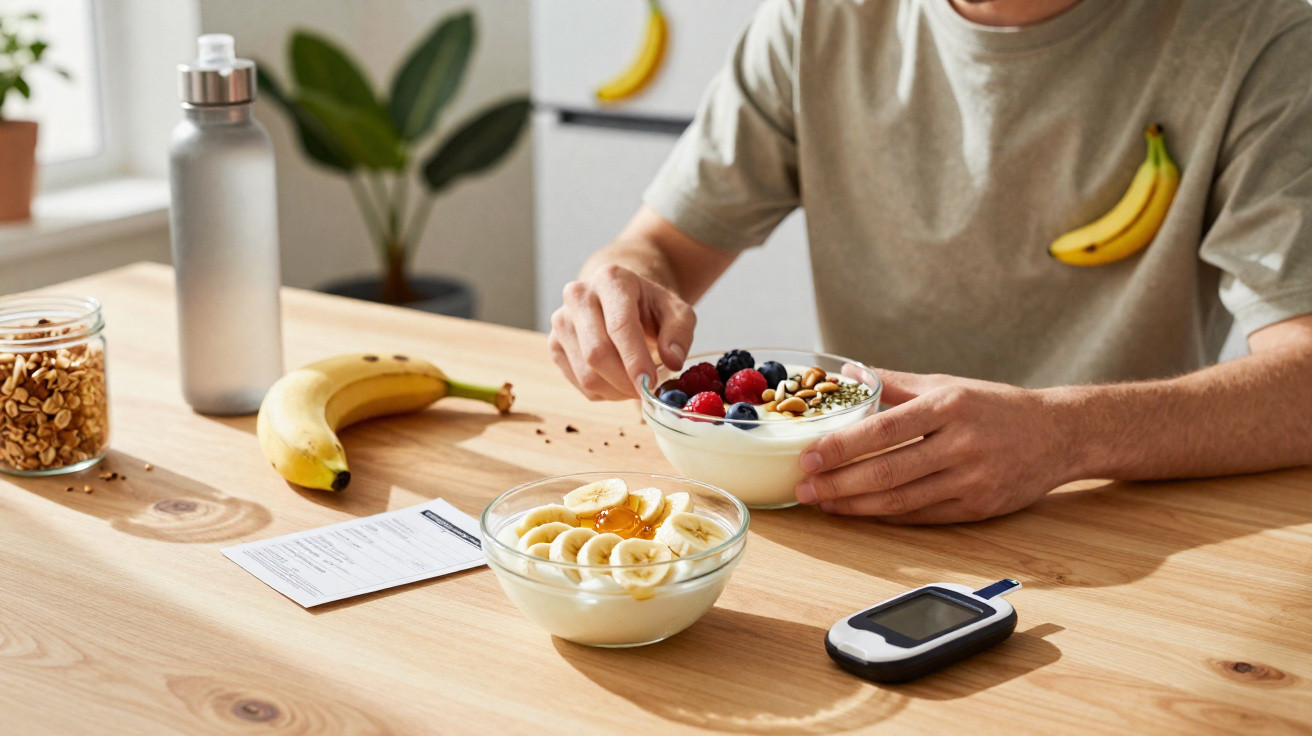
A cup of creamy yoghurt topped with neatly layered banana slices and a little crunchy sprinkle looks like the perfect morning on Instagram. Nutrition blogs often present this combination as a savvy swap for a bread roll, croissant and the like. If you eat that for breakfast, it’s easy to assume you’re making a sensible choice. Look a little closer, though, and the picture changes: this supposedly light fitness breakfast can send your blood sugar on a rollercoaster, add needless calories and have a bigger environmental impact than many realise.
Why this trendy breakfast doesn’t deserve its good reputation
At first glance, yoghurt plus sweet banana seems like an ideal match: protein, calcium, vitamins and “natural” sugar, all in one bowl. That impression can be misleading. The type of yoghurt you choose, how much banana you add and what you scatter on top determines whether it’s a balanced meal or a hidden calorie trap.
"A yoghurt-and-banana bowl can feel like a light snack, but in the body it often behaves more like dessert for breakfast."
There’s another catch: plenty of people eat this bowl in a rush-grabbed between tasks or even while walking. Because the portion looks small and “light”, it’s tempting to add a second breakfast later. The result is often more energy than you’ll burn before lunchtime, yet hunger returns early.
Yoghurt with a “Greek-style” twist: protein hero or fat bomb?
The idea that Greek-style yoghurt is a protein superstar is only partly true. What matters is what’s actually in the tub.
The big difference between real Greek yoghurt and the supermarket version
Proper, well-strained yoghurt made in the Greek style tends to deliver relatively high protein, low fat and moderate calories. Many pots in the chilled aisle, however, use similar wording on the label while containing a much fattier dairy product with less protein-often with added sugar or flavourings.
- Real strained yoghurt: lots of protein, little fat, typically more filling
- Industrial “Greek-style” product: more fat, frequently added sugar, less protein
- Flavoured varieties: often as sweet as a dessert
It becomes problematic when that already rich yoghurt is then topped generously with crunchy granola, honey, syrup or nut butter. At that point, the cup quickly starts to resemble a pudding: high energy density, fast sugar, and little lasting satiety.
The hidden environmental burden of a milk-based base
Producing heavily strained yoghurt creates large amounts of acidic whey waste. If it isn’t treated properly, it can pollute waterways by reducing oxygen levels. If the product is also imported from far away, longer transport distances increase the CO₂ footprint.
"Anyone who reaches daily for high-protein speciality yoghurt from abroad quietly increases not only their protein intake, but also their climate impact."
Regional options such as quark or skyr can offer similar nutritional values, often involve fewer transport emissions and work just as well with fruit and oats.
Banana in the morning: a sugar hit with a short-lived effect
The yellow fruit is often described as “energy from nature”. That’s true-yet that energy can spike and dip quickly. A medium banana typically contains over 20 grams of carbohydrates, with a large share coming from simpler sugars.
Blood sugar up-then energy drops
If you eat a banana on an empty stomach, your blood sugar can rise quickly. Pair it with yoghurt that’s already on the sweet side and you’ve got a sizeable sugar hit straight after getting up. Many people recognise what comes next: you feel great at first, then-about two hours later-fatigue, a dip in concentration and early hunger.
For those with sensitive digestion, eating it on an empty stomach can also be uncomfortable. The fruit’s acidity and certain components may worsen feelings of fullness, mild burning or stomach rumbling.
The other side of the story: banana farming under pressure
Bananas require a tropical climate and large plantation areas and are often grown as monocultures. To control pests and fungi in humid regions, farms typically rely heavily on pesticides and fungicides. Residues don’t just end up on the peel and plant-they also find their way into soil, rivers and groundwater.
"The banana that ends up in your breakfast cup has usually travelled thousands of kilometres-and often carries a long list of environmental issues."
On top of that come the cold chain, packaging and storage. It all adds up-especially if bananas appear on the table every day and crowd out other, more local fruits.
How to turn a “false friend” into a sensible breakfast
No one needs to banish their yoghurt cup. With a few tweaks, you can make this trendy bowl far more balanced and sustainable-and more likely to keep you full.
The key levers at a glance
| Component | Typical problem | Better option |
|---|---|---|
| Yoghurt | Too fatty, sweetened, low protein | Plain yoghurt with high protein, quark or skyr, ideally regional |
| Banana | Large portion, eaten daily | Half a banana, mix with other fruit, not every day |
| Toppings | Crunchy granola, syrup, lots of honey | Oats, nuts, seeds, a small amount of unsweetened muesli |
| Satiety | Hunger returns well before lunch | More fibre and protein, plus a small portion of healthy fats |
Practical ideas for the morning
- Instead of 200 g of rich, cream-based yoghurt, choose 150–200 g of high-protein plain yoghurt or quark.
- Use only half a banana and combine it with seasonal fruit such as berries, apple or pear.
- Stir in 2–3 tablespoons of oats to add slow-release carbohydrates and fibre.
- A small spoonful of nuts or seeds (walnuts, almonds, linseed, chia seeds) adds healthy fats.
- Keep ready-made crunchy granola to a minimum; if you want sweetness, use a little honey or a few small pieces of date.
This gives your body a morning mix of protein, complex carbohydrates, a little fat and vitamins. It typically affects blood sugar far more evenly and often carries you through to lunch without a raid on the biscuit tin.
How often is yoghurt with banana still reasonable?
If you love this bowl, you don’t have to drop it altogether. It makes more sense as one option among several, rather than an everyday default. On other mornings, wholegrain bread with cheese or nut butter, scrambled eggs with vegetables, or porridge with apple and cinnamon can take its place.
As a practical rule of thumb: yoghurt-and-banana breakfast no more than once or twice a week, ideally with the adjustments above. That spreads the environmental load and keeps your diet more varied.
What’s behind the “healthy” image-and how to see through it
The social-media look plays a huge part: a white bowl, a creamy texture, nicely arranged fruit-and suddenly it all seems light and virtuous. Nutritional values and portion sizes can slip out of focus. Packaging terms such as “protein”, “low fat” or “natural” reinforce the effect, even when the ingredients list is long and sugar-heavy.
If you get into the habit of scanning labels briefly, the main pitfalls become obvious: sugar listed near the top, flavoured fruit preparations, high fat levels, or tiny “suggested servings” that don’t match what people actually eat at breakfast.
When this breakfast combination can still make sense
In certain situations, the yoghurt-and-banana mix can genuinely fit. Before or after intense exercise, the fruit’s quick energy alongside dairy protein can help replenish stores. And if you’re on the move, plain yoghurt with a banana and a few oats in a jar is a better option than a chocolate bar from a station kiosk.
The key is not to file this trend breakfast under “always healthy” by default. If you keep an eye on portion sizes, plan in more local fruits and choose your yoghurt carefully, you can still enjoy the popular cup-with far less regret for both body and climate.






Comments
No comments yet. Be the first to comment!
Leave a Comment