
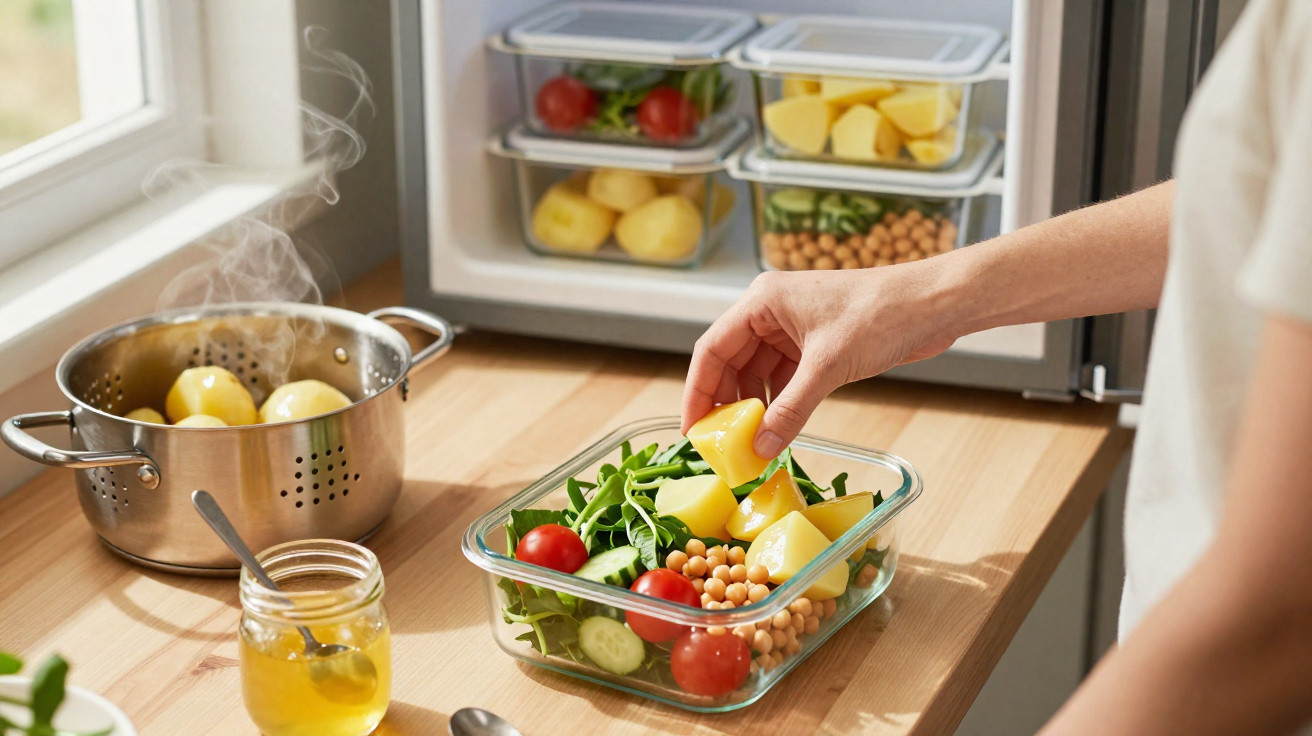
Spending your lunch break in spring and summer with a colourful bowl of salad usually comes down to two aims: keeping calories low while staying full for hours. That is why many people build their salad around pasta or rice. Nutrition professionals are increasingly sceptical about that approach - because a familiar vegetable can offer fewer calories, more nutrients and longer-lasting fullness, as long as it is prepared properly.
Why a salad without something filling rarely satisfies
A bowl of leafy greens with a few tomatoes may look wholesome, but it seldom keeps you going until you finish work. Alongside vegetables, the body also needs sources of protein and carbohydrates to provide fuel. That is where starchy sides typically come in, for example:
- Pasta (usually durum wheat)
- Rice
- Potatoes
- Bulgur, couscous or quinoa
Plenty of people trying to cut calories assume that the “lighter” something feels, the better it must be. So a small scoop of rice often ends up in the salad, with the idea it is the lighter option. But the numbers point to a different classic.
"Fewer calories per 100 grams, a strong satiety effect and rich in vitamins: that is exactly what the potato offers - if it is prepared correctly."
Rice, pasta or potatoes - a direct calorie comparison
Once cooked, rice and pasta are fairly similar. Typical averages:
| Food (cooked) | Calories per 100 g |
|---|---|
| Rice | about 110–120 kcal |
| Pasta | about 100–120 kcal |
| Potatoes | about 70–80 kcal |
That puts potatoes well below rice and pasta. For anyone watching their weight, that is a clear advantage: for the same calorie budget, you can add more potato to the bowl than rice or pasta.
Preparation is the crucial point, though. These figures apply to boiled or steamed potatoes - not chips, fried potatoes or croquettes from a takeaway. Fat quite literally soaks into the potato and pushes the calorie count up quickly.
The underestimated strength of the potato in salad
Nutrition experts stress that the potato is not merely a “cheap, filling side”. In a mixed salad, it really comes into its own. It provides:
- complex carbohydrates that enter the bloodstream more slowly
- fibre to support digestion
- vitamin C, which supports the immune system
- B vitamins for nerves and energy metabolism
- minerals such as potassium, important for blood pressure and muscles
After a meal that includes potatoes, blood sugar levels tend to stay steadier. That reduces the risk of afternoon cravings - meaning the typical reach for the sweets drawer happens less often.
"If you add potatoes to your salad, you are investing not only in fewer calories, but also in longer satiety and more micronutrients."
When chilled, potatoes become even more interesting
For salads, potatoes are usually cooked in advance, cooled and then used in the dish. From a gut-health perspective, that cooling step is exactly what makes them especially appealing. As they cool, so-called resistant starch forms.
What resistant starch does in the body
The small intestine can only break resistant starch down to a limited extent. It travels to deeper sections of the gut, where it acts as “food” for certain bacteria. Those bacteria produce substances that can help protect the gut lining and may reduce inflammation.
In practical terms, that means a potato salad that has properly rested and is eaten cold will generally provide more resistant starch than potatoes served freshly steaming from the hob. The result is a convenient double benefit: fewer calories than rice or pasta, plus a possible digestion bonus.
How to make potatoes the ideal base for a salad box
To turn a simple potato into a modern, everyday salad staple, a few basic rules help:
- Choose waxy varieties: they hold their shape, stay in chunks and give a better texture.
- Cook in the skin, then peel: this helps retain more vitamins and minerals.
- Boil or steam: no added fat, so the calorie advantage remains.
- Let them cool completely: for more resistant starch and firmer slicing.
- Pair with plenty of vegetables: peppers, cucumber, radishes, tomatoes, rocket or spinach all work very well.
If you like, add a portion of protein too: a boiled egg, tuna, lentils, chickpeas, feta or strips of chicken. That turns it into a complete lunch that keeps you full for several hours.
Watch the dressing: this is where hidden calories add up
With potato salad, the biggest calorie swing is rarely the potato itself - it is the dressing. Traditional versions with mayonnaise, lots of oil and bacon cubes can quickly turn a light, filling base into a calorie bomb.
Lower-calorie options that still taste good include:
- a vinaigrette with a little olive oil, vinegar, mustard and stock
- a yoghurt dressing with herbs, lemon juice and minimal oil
- a splash of linseed, walnut or rapeseed oil for healthier fats
This way, the potato stays the “lighter” filling element in the salad - rather than becoming the hidden issue.
Common myths about potatoes
Several misconceptions refuse to go away. Three come up again and again in conversations about “light eating”:
- “Potatoes make you fat”: they contain fewer calories than rice or pasta. What usually causes weight gain is what you add to them - butter, creamy sauces, cheese or frying fat.
- “Potatoes are empty carbohydrates”: not true. They contribute vitamins, minerals and fibre. Compared with white pasta in particular, they often come out ahead.
- “Potatoes are boring”: in salads, they can be livened up in many ways with fresh herbs, mustard, spring onions, vinegar, capers or gherkins.
How much potato fits into a “light” salad meal?
Dietitians often use straightforward portion guidance: as a side, roughly 150–200 grams of cooked potatoes per meal is typical. In a large salad bowl that serves as a complete lunch, 200–250 grams can also be appropriate, depending on individual energy needs.
If you are trying to lose weight, a simple guide is a palm-sized amount of potato pieces, plus plenty of vegetables and a solid protein source. That keeps calories under control without leaving your lunch break with a rumbling stomach.
Practical ideas for everyday potato salads
To keep this from staying theoretical, here are a few lunchbox-friendly options:
- Mediterranean potato salad: potato cubes, cherry tomatoes, olives, red onion, pepper, feta, parsley, plus a vinaigrette with olive oil and lemon juice.
- Nordic style: potatoes, cucumber, radishes, dill, spring onions, plus a yoghurt dressing with mustard and a little lemon zest.
- Protein version: potatoes, rocket, chickpeas, grilled chicken or tofu, peppers, plus a light honey-mustard dressing.
These combinations show just how flexible the potato can be - and how easily it fits into modern eating habits, far removed from heavy canteen potato salad.
When potatoes are not the best choice
Despite all the benefits, there are situations where rice or other grains may suit better. People with certain digestive issues do not always tolerate large amounts of resistant starch. If cold potato dishes regularly cause severe bloating or stomach pain, it is sensible to reduce the portion or speak with a professional.
Very strict low-carb approaches may also exclude potatoes, since they naturally contain meaningful amounts of carbohydrates. For most healthy people who simply want to eat “lighter” while still staying full, boiled potatoes in a salad remain an excellent choice.






Comments
No comments yet. Be the first to comment!
Leave a Comment