
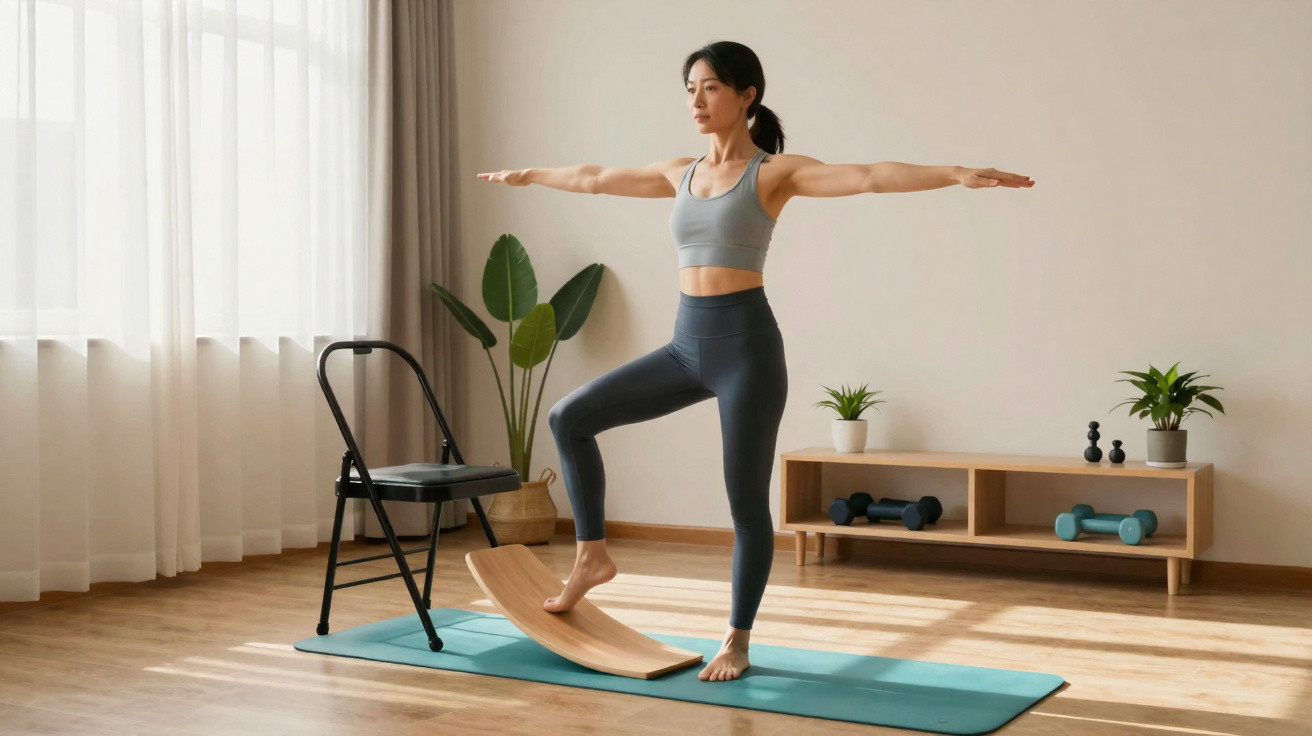
Balance training at home is becoming a regular part of life for people who want to look after their health without relying on a gym or any equipment. Even with limited time and a small space, you can train your body’s stability, lower the risk of day-to-day falls, and stay confident when walking, climbing stairs, or doing household chores - including later in life.
Why is balance training at home so important for everyday life?
Balance training at home plays a key role in preventing falls, improving posture, and preserving independence in daily activities. By strengthening stabilising muscles - particularly around the trunk and the ankles - your body gains better control of movement and reduces unnecessary strain on the knees and hips.
This kind of training is not only about muscle strength. It also relies on vision, the vestibular system, and the sensation (proprioception) in the feet and legs. When you practise single-leg support, changes of direction, and mild instability, the brain, muscles, and joints learn to work together more efficiently, leading to steadier, safer steps.
Watch a video on Simone Pavan’s Instagram to see some of the benefits that balance exercises can provide:
View this post on Instagram
What benefits can simple balance exercises offer?
Simple balance exercises help create a solid foundation for everyday movements and other light physical activities. They are approachable, require no equipment, and can be adjusted for different abilities - from younger adults to older people, including those returning to activity after long periods of inactivity.
Practising regularly supports several factors that matter for safe movement. Key benefits include:
- Improved posture, with better spinal alignment;
- Lower risk of falls, especially for people over 60;
- Stronger core (abdominal and lower-back muscles);
- Greater stability in the ankles and knees, helpful for walking and stairs;
- Better agility to respond to trips and unexpected loss of balance.
Which simple balance exercises can be done at home?
Below are eight basic balance exercises you can do on a flat surface, using a chair or a wall for support when needed. As a general guide, start with just a few seconds, keep your breathing calm, and stop if you feel dizziness, pain, or excessive fatigue.
Standing on one leg
Stand near a wall or chair, shift your weight onto one foot, and lift the other a few centimetres off the floor. Aim to stay still with an upright torso and your gaze forward, starting with 10 to 15 seconds on each leg.Heel-to-toe walk in a straight line
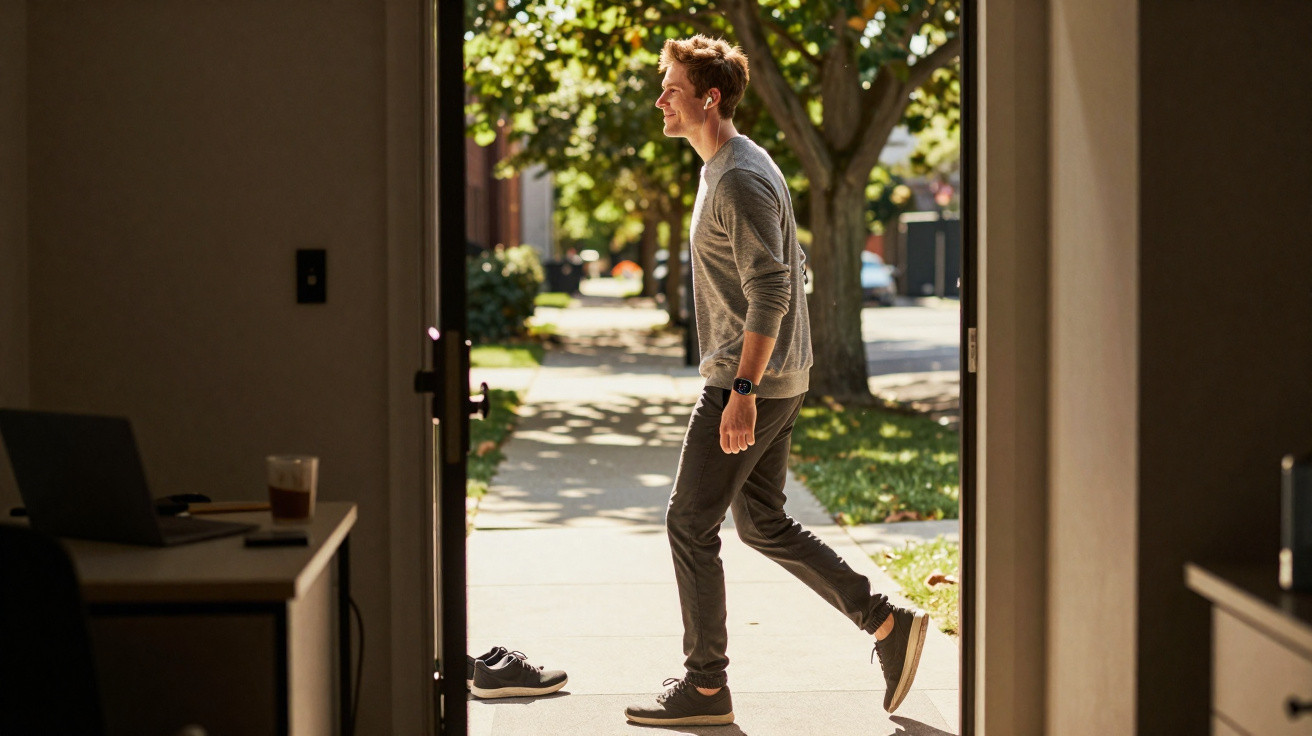
Walk forwards in a straight line, placing the heel of one foot directly against the toes of the other, as if you were walking along an imaginary line. This helps improve side-to-side stability and step control over a short distance.Sit-to-stand from a chair without using your hands
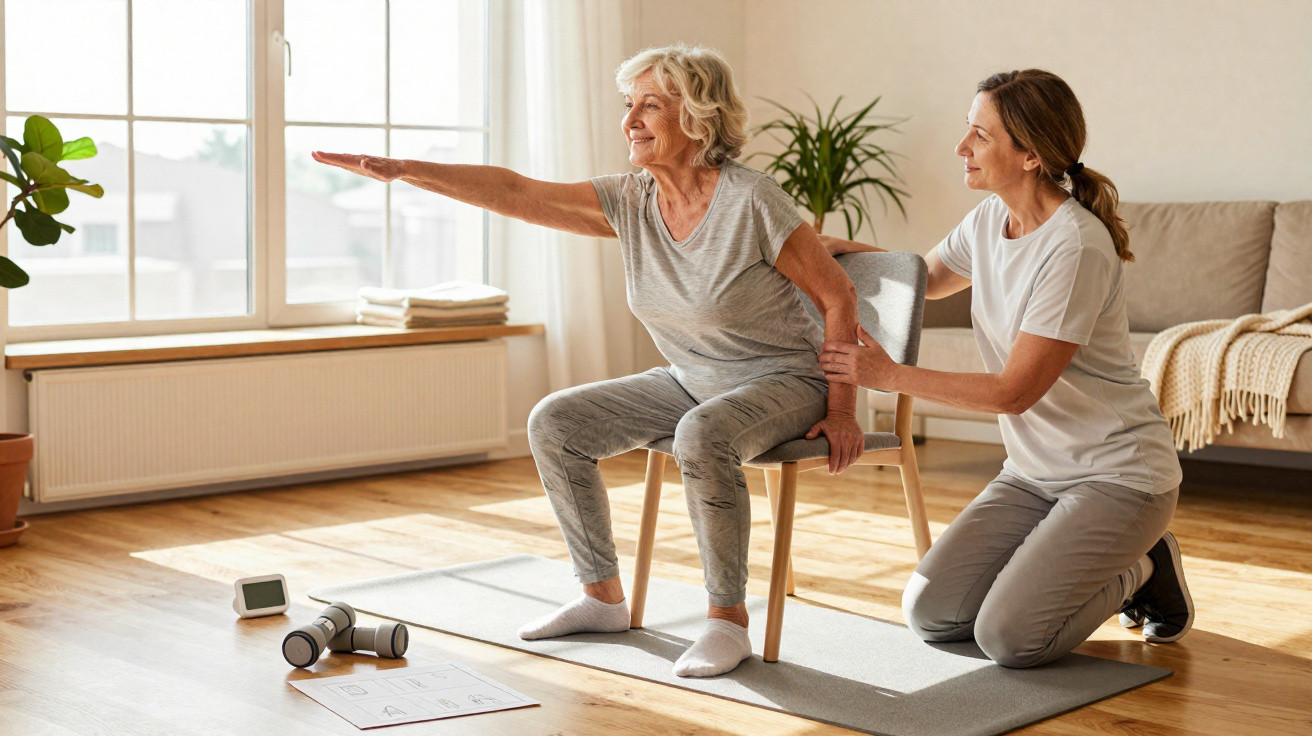
Using a stable chair, sit down and stand up without pushing with your hands, keeping your eyes forward. Alongside balance, it strengthens the thighs and glutes; it can be useful to begin with 8 to 10 repetitions.Heel raises
Stand with your hands close to a wall for safety, rise onto your toes by lifting your heels, then lower slowly. This strengthens the calves and ankles, which can help when dealing with less stable surfaces.Standing on one leg with eyes closed
A harder version of the single-leg stand: once steady, close your eyes for a few seconds. Keep support nearby because, without vision, your body relies more on feedback from the feet and joints.Side step with a shallow squat
From standing, step to the side while slightly bending the knees, then return to the centre and alternate sides. This builds hip stabilisers and trains controlled changes of direction.Figure-of-eight walk around an object
Place two objects on the floor and walk a figure of eight between them. This develops dynamic balance with gentle turns, direction changes, and increased attention to foot placement.Weight shift from side to side
With feet about shoulder-width apart, slowly shift your body weight onto one leg and then the other. This improves awareness of your centre of gravity and prepares you for larger sideways movements.
How can you progress safely with balance training at home?
To move forward safely, increase the challenge gradually: extend the time you hold each position, rely less on hand support, or bring your feet closer together to narrow your base of support. You can also combine tasks, such as standing on one leg with a gentle head turn, or doing a heel-to-toe walk while carrying a light object.
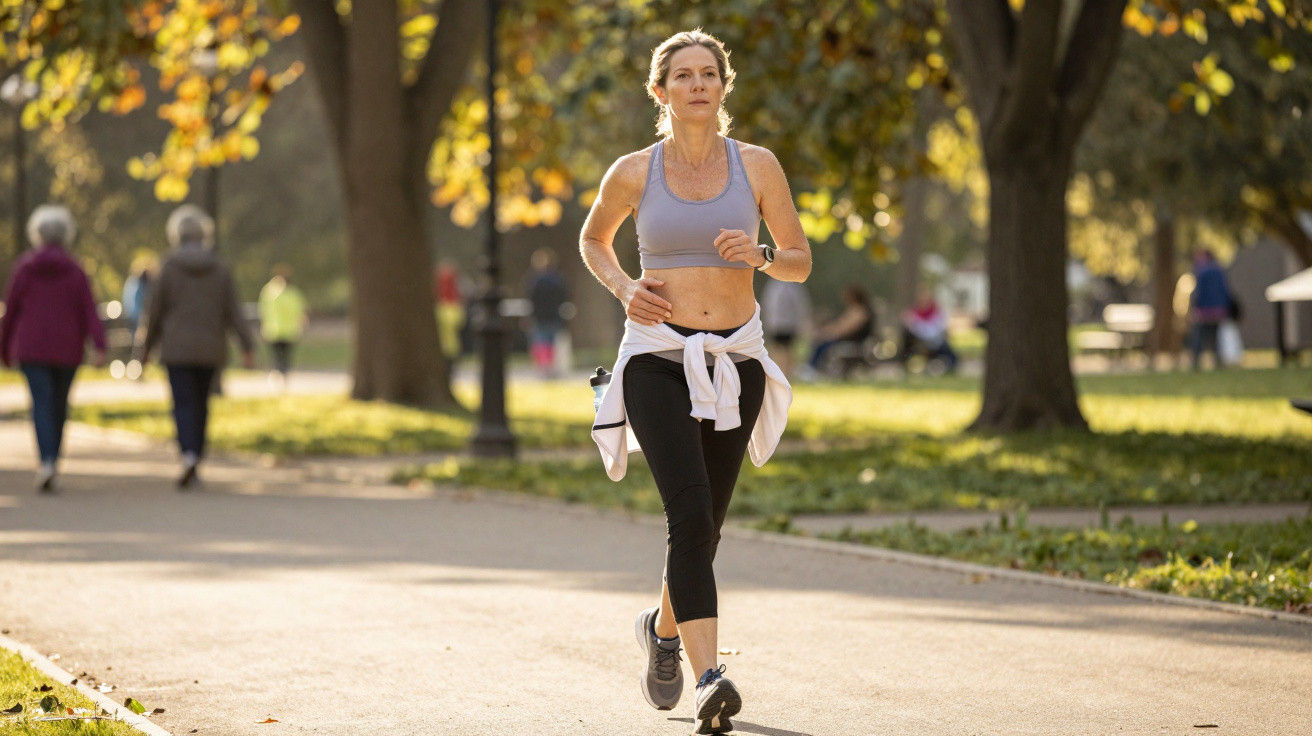
Anyone with a history of falls, severe pain, frequent dizziness, or joint conditions should seek professional guidance before progressing. With consistency, attention to how your body feels, and a safe home environment, balance training is likely to become an easy part of your routine, supporting steadier and more confident movement over the years.

Comments
No comments yet. Be the first to comment!
Leave a Comment