
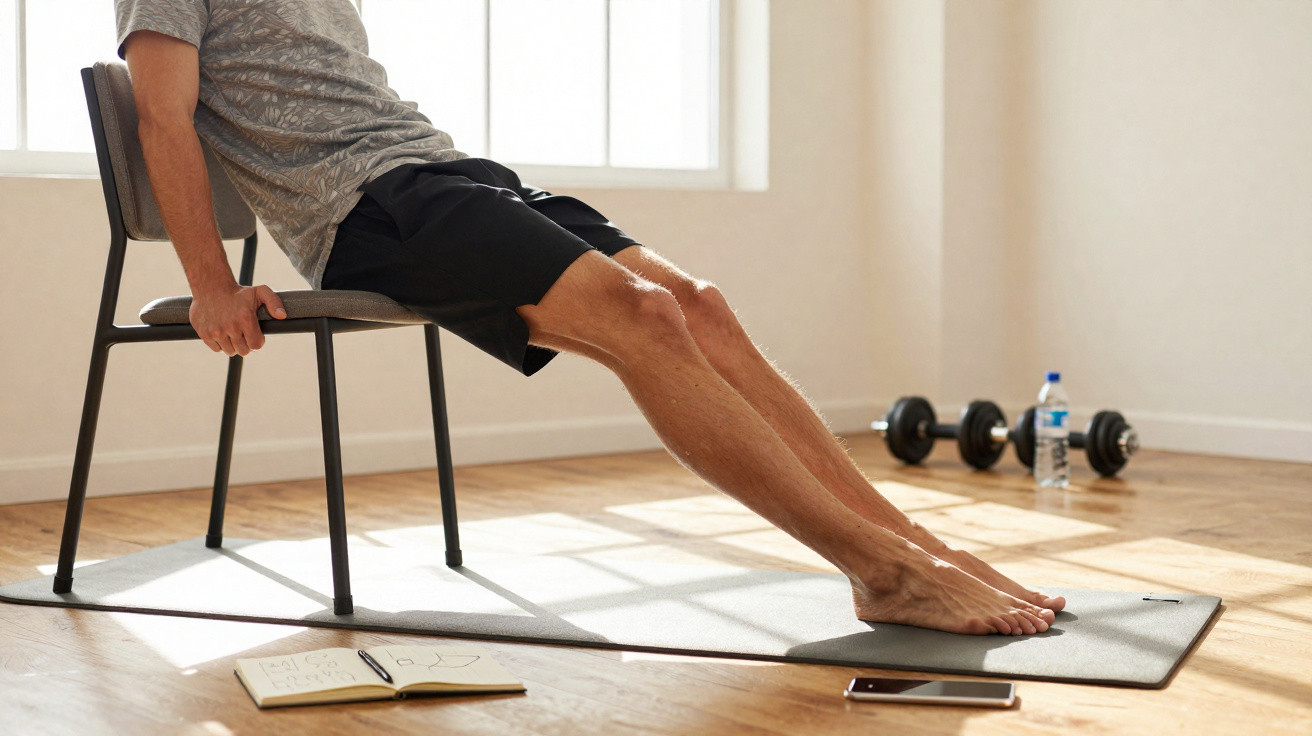
Heel raises are a straightforward exercise, yet they target the calf directly when you move with control. Whether standing or seated, this action strengthens the back of the lower leg and supports stability and push-off in everyday movements.
Why do heel raises activate the calf so much?
The gastrocnemius sits at the back of the leg, just below the knees, and lies over the soleus. Together, these muscles make up the calf and share an attachment through the Achilles tendon, playing a key role in ankle plantar flexion.
During heel raises, you lift your body on to the balls of your feet and then lower yourself slowly. That pattern mirrors the exact motion of pressing the foot down, demanding repeated contraction, coordination, and calf strength.
The following key points make the exercise more effective:
- Lift: raise your heels until you clearly feel the calf tightening.
- Balance: hold on to a support if you are swaying too much.
- ⏬
Lower: come down slowly to keep tension in the muscle. - Repetitions: focus on consistency before making it harder.
- Limit: stop if you feel sharp pain or ongoing discomfort.
How do you do the movement standing or seated?
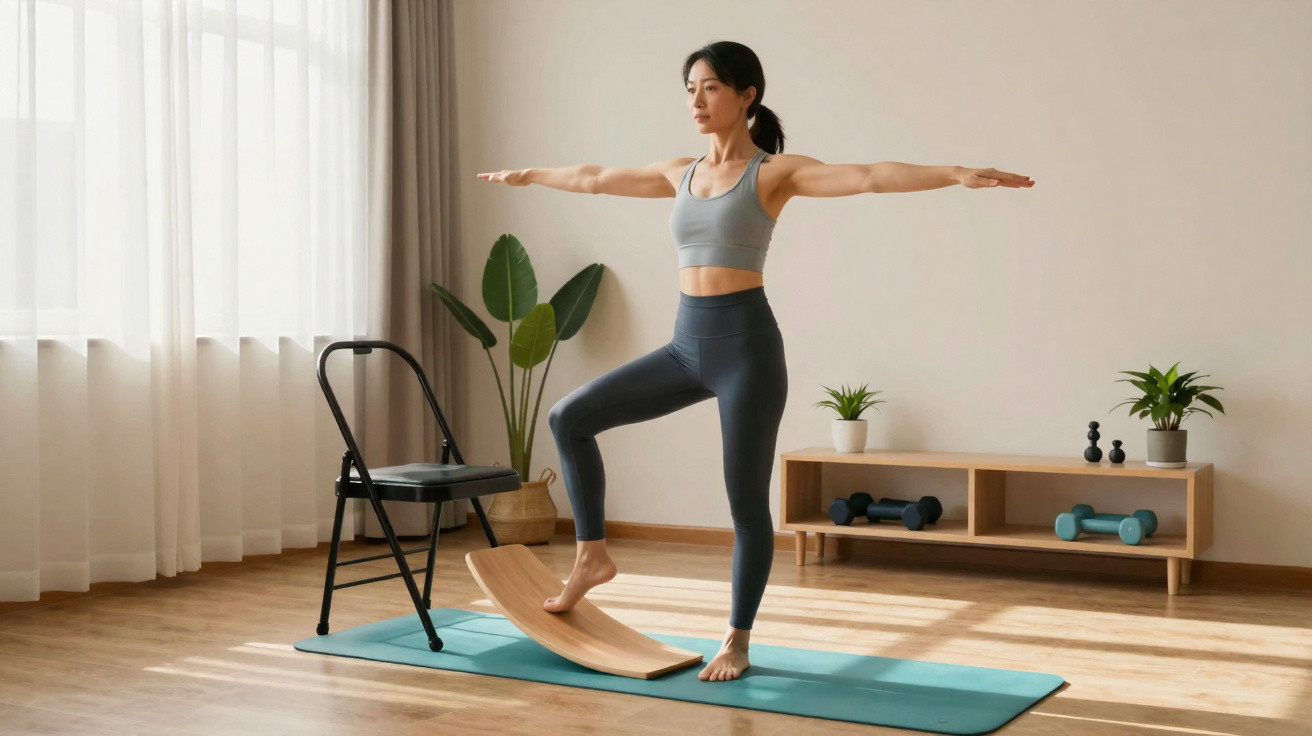
For the standing version, place your hands on a wall or chair, keep your body aligned, and lift your heels without rolling your weight to the outer edges of your feet. Then lower under control, maintaining balance and control throughout.
For the seated version, keep your feet flat on the floor and raise your heels while the balls of your feet stay planted. This option reduces the balance demand and can help you train the calf with greater safety and precision.
How many repetitions are recommended to start?
If you are new to the exercise, a useful benchmark is 2 to 3 sets of 12 to 20 repetitions, always at an unhurried pace. The upward phase should be steady, and the lowering phase needs to be slow to maintain tension and quality.
Calf training with control
Each repetition needs a full range
If you only lift a little, the stimulus is smaller; if you drop down quickly, you remove part of the muscular work. The best way to begin is to control every phase-without using momentum or holding your breath.
Between sets, a 30 to 60 second rest is usually enough to regain control. If you experience cramp, sharp pain, or your technique breaks down, the right choice is to stop and adjust the load and the range of motion.
To organise your first sessions:
- Do 2 to 3 sets per session.
- Start with 12 to 20 controlled repetitions.
- Rest for 30 to 60 seconds between sets.
- Use a support if your balance is still unsteady.
Why is training 2 or 3 times per week enough?
Training 2 or 3 times a week lets you repeat the stimulus without stressing the same muscles every day. Because the gastrocnemius helps you stand, walk, run, and jump, it also needs rest and recovery.
Working calves daily can look more efficient, but it raises the risk of compensation once your technique starts to slip. Progress tends to show up more reliably with consistency, good range of motion, time between sessions, and gradual progression without rushing.
To protect weekly recovery:
- Leave at least one rest day between hard sessions.
- Avoid increasing load and repetitions in the same week.
- Watch for excessive fatigue, ongoing pain, or loss of technique.
- Pair the exercise with movements that train the whole leg.
How can you include heel raises in your routine?
Heel raises can be added at the end of a leg workout or done in short home sessions. In routines such as leg-strengthening exercises, they work well as a simple, targeted addition alongside bigger movements.
What matters most is doing the movement well before increasing difficulty. With feet aligned, a controlled lift, a slow lower, and rest between sessions, your calves get enough stimulus to build endurance and everyday function safely.




Comments
No comments yet. Be the first to comment!
Leave a Comment