
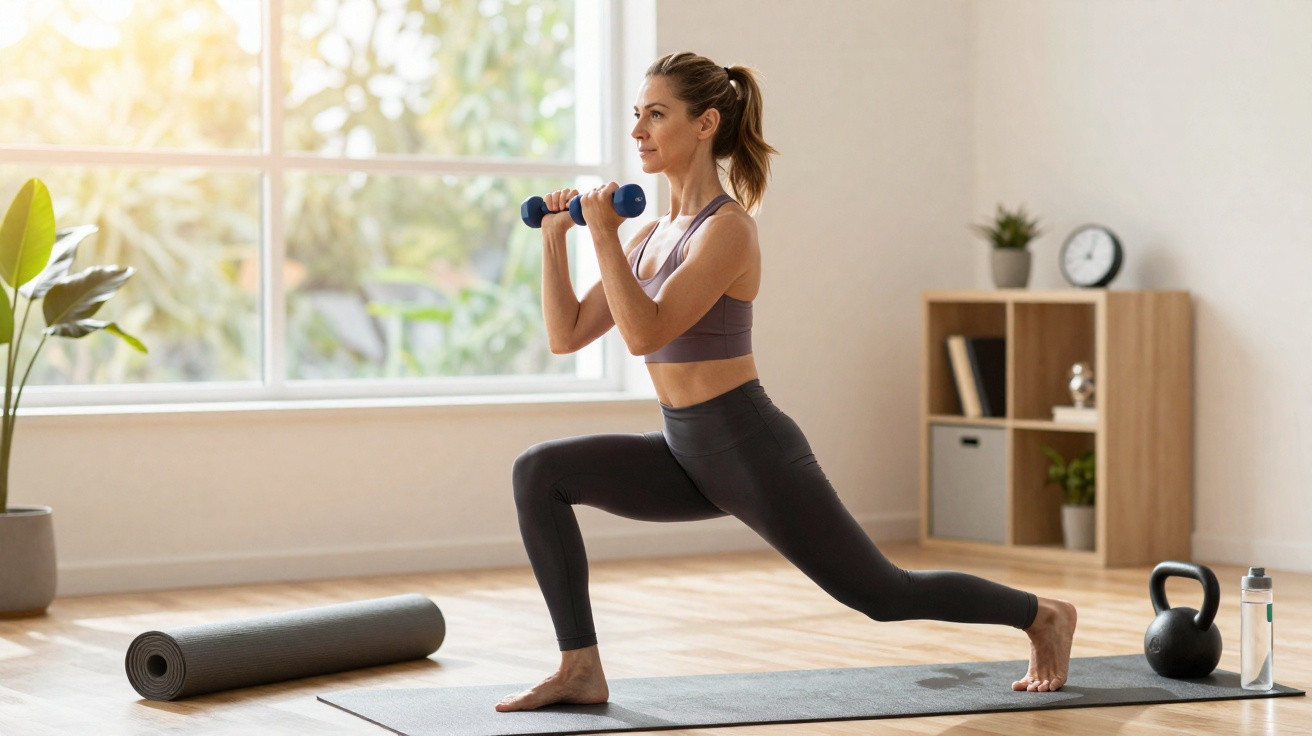
Exercises for a long and healthy life are powerful allies for women who want to protect their independence, energy and overall quality of life after 40. As the years pass, the body naturally loses muscle mass, balance and mobility, but keeping up a regular exercise routine helps to lessen these effects. The good news is that you do not need to spend hours in the gym: a handful of key movements can build strength, support your joints and encourage more active ageing.
Why is strength training so important after 40?
Strength training is one of the most effective ways to maintain muscle and protect bone density. This kind of training helps you keep doing everyday tasks with greater ease and confidence.
On top of that, stronger muscles can improve posture, ease aches and pains, and lower the risk of falls. Training consistently also supports your metabolism and can help you maintain a healthy weight over the years.
Which exercises for a long and healthy life are must-haves?
Some movements are especially valuable because they work multiple muscle groups and mirror actions you perform in day-to-day life. When you combine them into a well-rounded session, they help build strength, mobility and coordination.
Among the most recommended exercises for middle-aged women are:
- Bodyweight squat to strengthen legs and glutes.
- Reverse lunge to build strength in the lower body.
- Deadlift to strengthen the hips and lower back.
- Shoulder press to increase upper-body strength.
- Bent-over row to train the back and support good posture.
How can you improve balance and mobility with simple exercises?
Balance and mobility are essential for staying independent as you age. Targeted exercises strengthen stabilising muscles and make everyday movement safer.
A few simple options that are easy to fit into your routine include:
- Farmer’s carry to improve overall stability.
- Step-up to develop coordination and movement control.
- Incline press-up to strengthen the arms and torso.
- Jumping jacks to encourage mobility and general fitness.
- Skipping rope to boost cardiovascular endurance.
How often should these exercises be done?
The ideal frequency depends on each person’s fitness level, but most specialists suggest strength training two to three times per week. This schedule gives muscles the stimulus to improve while allowing enough recovery time.
One effective approach is to choose six to seven exercises per session and complete three sets of around ten repetitions. Above all, consistency matters: stay within your limits and increase the intensity gradually. Practised regularly, these movements can help you feel more energetic, stronger and healthier for many years.





Comments
No comments yet. Be the first to comment!
Leave a Comment