
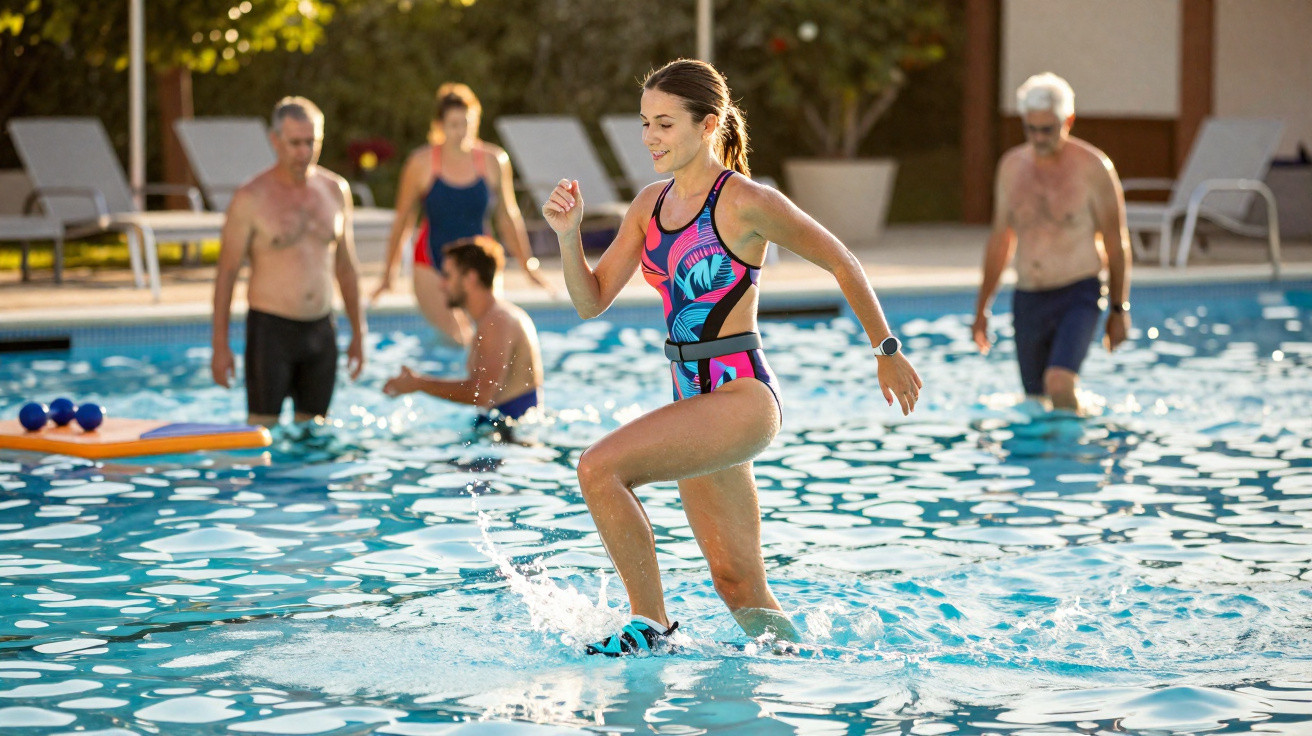
Anyone looking for effective training to achieve a slimmer figure often ends up thinking of jogging, the gym, or punishing interval sessions. Yet a different endurance sport has quietly built a following-one that is kind to the joints, challenges the muscles and, according to experts, can support weight loss and even help with stubborn cellulite: water marching, also known in specialist circles as “Longe-Côte” or “Aquawalking”.
What’s really behind this supposedly “granny” water sport
Water marching doesn’t mean strolling along the shoreline-it’s done directly in the water, typically in the sea or in a lake that’s deep enough. Ideally, the water level sits somewhere between your navel and your armpits, which is far deeper than simply paddling at the water’s edge.
Sessions are often done in groups, wearing a wetsuit or at least technical sports clothing, and sometimes using paddles or gloves. What matters most is pace: if you’re ambling along and chatting the whole time, it’s closer to a wellness dip. If you move briskly, though, your heart rate rises and your muscles have to work properly.
Water marching is considered an endurance sport that strengthens the legs and core, trains the cardiovascular system and, at the same time, significantly reduces stress on the joints.
Thanks to buoyancy, your skeleton carries only a small fraction of your body weight. That spares the knees, hips and ankles, while the muscles have to push against the water’s resistance. It’s precisely this resistance that turns what looks like slow walking into a demanding training stimulus.
Why water marching supports weight loss
Specialist websites estimate that a brisk water marching session burns around 500 to 550 kilocalories per hour for someone weighing about 70 kg. The exact figure varies with speed, water depth, waves and, of course, individual physiology.
The key factor is the so-called endurance zone. If you train at roughly 60 to 70 percent of your maximum heart rate, your body primarily uses fat as a fuel source. In practical terms: your breathing becomes noticeably heavier, but you can still speak in short sentences.
- Intensity: heart rate at about 60–70% of maximum heart rate
- Pace in the water: roughly 5–8 km/h, depending on height and conditions
- Time under load: at least 45 minutes in the endurance zone
- Warm-up: 10–15 minutes of brisk walking or light jogging, on land or in shallow water
Holding this pace encourages the body to tap into its energy stores. The combination of steady endurance work and active strength effort against water resistance means muscles stay engaged and calories are burned-not only during the session, but also in the hours afterwards.
How movement in water can affect cellulite and skin appearance
Another advantage of water marching is that the water acts like a constant massage for the legs, bottom and hips. Every step and every small wave delivers pressure impulses to the skin and the tissue underneath.
Constant water pressure and movement promote circulation and lymph flow-two key factors when it comes to cellulite and smoother-looking skin.
Trainers report that some participants notice a firmer outline and tighter-feeling skin after a few weeks, even if the scales hardly move. The body can appear more defined, with clearer contours. Visual changes are often noted in typical “saddlebags” and orange-peel texture on thighs and bottom, even when body weight drops only slowly.
How often-and how long-you should train in the water
To get started with water marching, you don’t need an elite-level class. Consistency matters most. A sensible entry point is one to two sessions per week. Each session can look roughly like this:
- Arrival and check: confirm the water depth, check the seabed or lakebed, and assess currents and waves.
- Warm-up (10–15 minutes): brisk walking in shallow water or on land, plus gentle mobility work for hips, knees and shoulders.
- Main set (30–45 minutes): walk in the water at an endurance pace, adding short faster segments as fitness improves.
- Cool-down (5–10 minutes): slow down, walk it out easily, then do light stretching on the beach.
As your fitness builds, you can extend the main set to the often-recommended 45 minutes in the endurance zone. Many people who stick with it consistently for three months notice clear progress: better stamina, stronger legs and firmer tissue.
Who water marching is particularly suited to
This sport isn’t just for older women on holiday by the sea. Because it’s low-impact, a range of groups can benefit:
- People who are overweight and quickly develop knee pain on tarmac
- Beginners who find traditional jogging too much
- Athletes returning from injury who aren’t yet able to run
- Older adults who want to strengthen their cardiovascular system and muscles with less risk of falls
- Desk-based workers who sit a lot and want to do something for their back and core
If you have health limitations-such as cardiovascular disease, high blood pressure or joint replacements-you should discuss starting with your GP or treating clinician. Cold water, currents and unfamiliar strain can challenge the body, even if the sport is generally gentle.
What kit makes sense
In mild summer water, swimwear and a close-fitting sports top are often enough. In colder locations, a wetsuit is worth considering: it keeps you warm and adds extra buoyancy. Sturdy water shoes protect against stones, shells and slippery ground.
If you want to take it further, many coastal towns offer organised groups where a coach plans the route, keeps an eye on safety and shares technique tips. This also boosts motivation and helps you keep your pace in the useful zone instead of slipping into a slow shuffle.
Tips for sticking with it and seeing results
If water marching is to become more than a holiday novelty-and genuinely change your shape and skin-these simple rules can help:
- Set fixed days: for example, every Tuesday and Saturday-whether you’re away or at your local lake.
- Train with a partner or group: planned meet-ups increase commitment.
- Control your pace deliberately: if you can chat effortlessly, it’s fine to step it up a notch.
- Adjust your diet: plenty of vegetables, enough protein, and fewer highly processed foods-so your meals support the training effect.
- Record progress: distance, duration and perceived effort can be more motivating than the number on the scales.
How to combine water marching with other activities
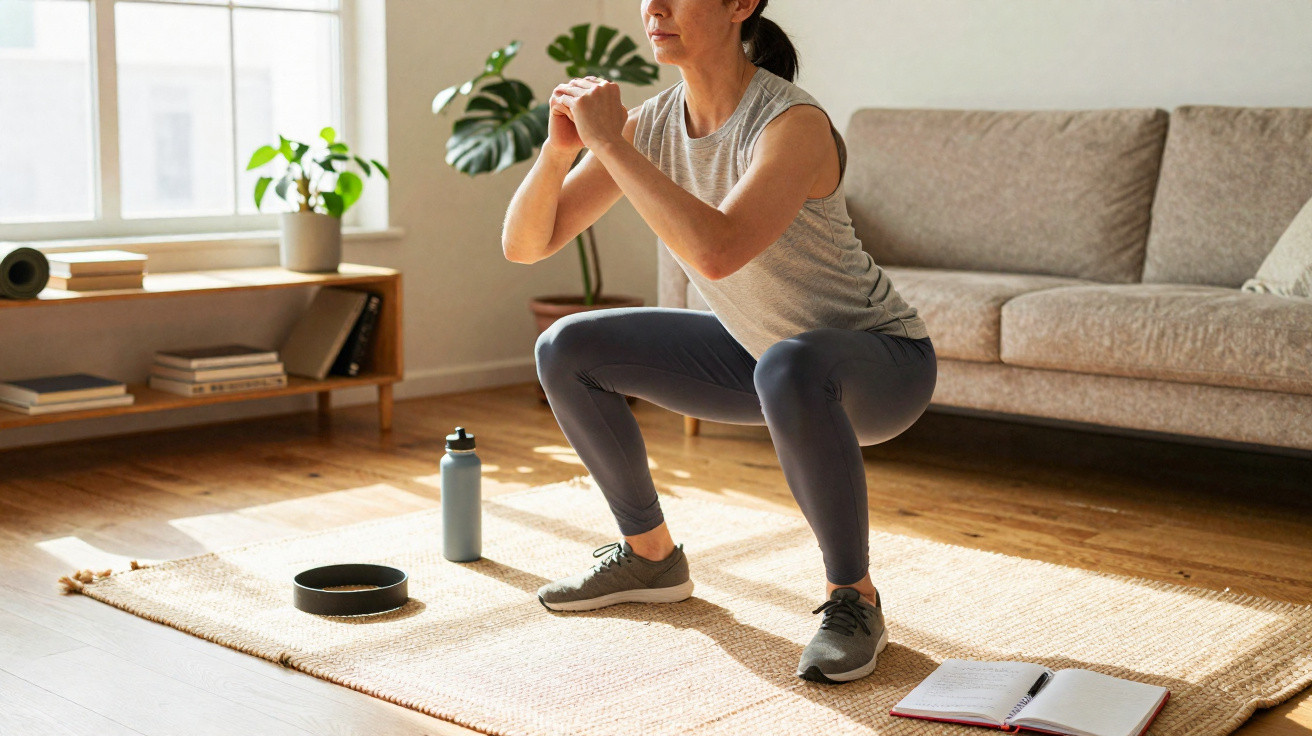
If your goal is to tackle cellulite and typical problem areas, a smart combination can help. Two water marching sessions a week pair well with light strength training-such as simple at-home exercises: squats, lunges and plank variations for the abdomen and back.
If you enjoy jogging or cycling, water sessions can serve as a joint-friendly counterbalance. Deep core muscles have to work hard in water, which can improve posture in everyday life and help prevent back pain.
Risks, limits and what beginners should watch out for
Water sports aren’t entirely risk-free. Strong currents, high waves, steep shoreline drop-offs or sudden depth changes can become dangerous. Beginners should start only at supervised beaches or with knowledgeable local groups.
Cold water can also lead to overestimating yourself: the body cools down before you necessarily feel you’ve had enough. A wetsuit, or simply shorter sessions, makes it easier to adapt to the conditions.
Patience is important if your aim is body recomposition. Water marching isn’t a crash programme; it’s better viewed as a sustainable approach. Over time, many small effects-fat burning, fluid drainage in the tissue and greater muscle tone-add up, turning this supposedly “senior” activity into a genuinely serious way to train for your figure.


Comments
No comments yet. Be the first to comment!
Leave a Comment