
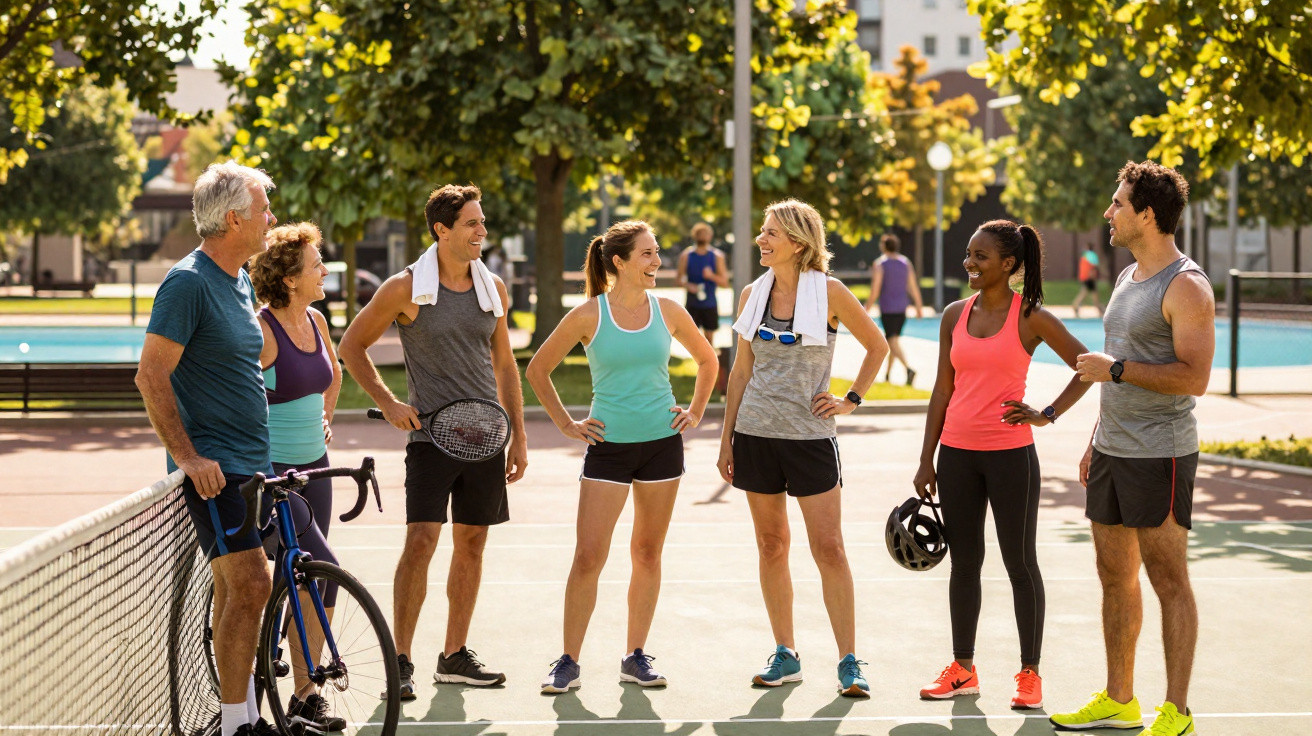
On the edge of the running track, an older man sits on a bench, rubbing his knees. He pushes himself up, slowly at first, then eases back into a gentle jog. Two lanes over, three women make their rounds with Nordic walking poles; they laugh loudly, pause for a moment, then set off again. A few metres behind them, a teenager drives a tennis ball over the net with such force that even a mum pushing a pram slows down to watch.
You can almost feel it: this isn’t only about breaking a sweat - it’s about bargaining for time. Statistically, some of these movements pay straight into your account of “extra years”. The most intriguing question is which ones actually do.
1. Tennis & Co.: Why racquet sports can feel like a real lifespan booster
When you look at the figures from large long-term studies, one sport keeps appearing right at the top: tennis. People who play tennis, badminton or squash regularly live, on average, several years longer than those who do no sport at all. They even outperform classic joggers. That surprises plenty of people who grind away on a treadmill, alone, staring at their reflection.
Racquet sports combine cardiovascular training, rapid changes of direction and - crucially - social interaction. That particular blend seems to act like an invisible protective layer around the heart and brain.
A widely cited Danish study of over 8,500 adults made the point very clearly: tennis players gained on average almost ten extra years of life, while badminton fans gained nearly seven. Plain jogging was noticeably lower. Researchers suspect the decisive factor is the mix of moderate-to-vigorous exertion, tactical thinking, and time spent with other people.
You can see it on any club court: people swear, laugh, argue about a line call, then share a glass of water after the match. That’s far more than “cardio”. It’s a ritual that pushes back against loneliness - something that makes many people ill as they get older.
Look closer and it makes sense. Racquet sports force your body into short sprints, sudden stops and twists - training heart, muscles and coordination at the same time. Your brain is constantly working too: where will the ball land, which way do I move, what shot do I choose? Then there’s the gentle social accountability: if you’ve booked in for Tuesday night doubles, you’re much more likely to show up than if you merely plan to “go for a run sometime”.
Let’s be honest: very few people voluntarily run solo three times a week, year after year. A tennis slot with your name in a WhatsApp chat feels different - and that difference can end up extending your life as well.
2. Swimming: Kind to the joints, and a quiet champion for heart and lungs
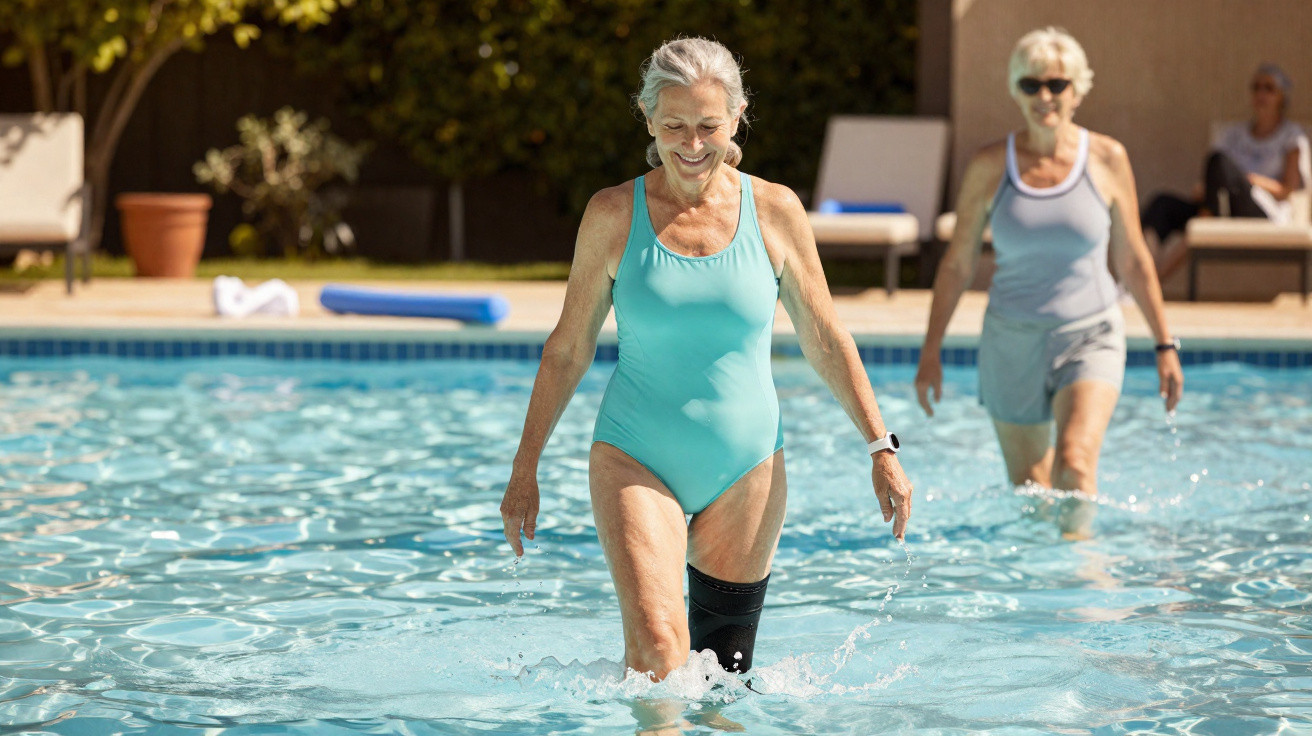
Early in the morning at the leisure centre pool, you’ll spot them: grey heads moving steadily up and down the lanes. No spectacle, no applause - just the regular splash, a near-meditative hiss of water. In many rankings of life-extending activities, swimming appears high up, ahead of more fashionable fitness trends.
The water supports the body, taking pressure off the joints, yet nearly every muscle group is still working. Many people underestimate how demanding it is for the heart and lungs - especially if you swim at a decent pace rather than a relaxed breaststroke with your head held out of the water.
In a large British analysis involving thousands of participants, regular swimmers lived on average several years longer and showed a markedly lower risk of cardiovascular disease. A 55-year-old man who swims moderately two to three times a week can reduce his mortality risk more than someone who relies only on walking.
In real life, it often looks like this: people with knee trouble, excess weight or back pain discover the pool as a training space where movement doesn’t hurt. One woman told me she had “felt young again in the water at 62”, because it was the first time in years she wasn’t bracing for the next sharp pain in her knee.
Swimming is so effective because it delivers cardio without repeated impact. Water pressure supports circulation, and the body works against resistance without the joints taking a battering. At the same time, the breathing rhythm - particularly in front crawl - demands a kind of respiratory discipline that functions like natural lung training.
Many also experience the pool as a refuge: no phone, no emails, just your body in its element. That mental reset is difficult to quantify, but in interviews with long-term swimmers you hear the same line again and again: “I come out of the water a little lighter each time than when I went in.” That’s where healthier, longer life begins.
3. Cycling & brisk walking: The practical, everyday life-extenders
Cycling and brisk walking don’t sound glamorous - almost dull, even. But when you dig into the data, they reveal themselves as quiet heroes of longevity. People who build cycling or walking into daily life accumulate training minutes week after week without ever needing to book a “workout” into their diary.
The 63-year-old neighbour who cycles 10 km to work every morning doesn’t need a fitness tracker; he’s living the habit. And his body records every one of those rides, every purposeful fast walk to the station.
The famous “10,000 steps” rule may be a bit shaky scientifically, but the principle behind it holds: regular, brisk movement in daily routines lowers blood pressure, steadies blood sugar and keeps blood vessels supple.
One long-term study of commuters found that people who cycle to work have a significantly lower risk of heart attack and early death. A GP friend of mine always puts it like this: “A bike is my favourite medicine on two wheels.” If you don’t cycle but you do walk quickly, you end up in a similar league - what matters is that your pulse rises noticeably while you can still talk.
The real magic is consistency. Cycling and fast walking don’t require extra time; they replace car journeys or part of a public-transport trip. That built-in movement is far more resilient in everyday life, especially when work, family and fatigue all sit at the same table.
You can cancel an evening class at the gym, but you still have to get home from the office. Over the years, that adds up to hundreds of hours of moderate effort - enough to train the heart without draining it. People who live this way collect bonus years quietly, like loose change that eventually fills a jar.
4. Team sports & social movement: Why community can literally add years
Picture a Tuesday evening on the small artificial pitch behind the sports hall: ten men, different waistlines, the same shirts. They pant, swear, stumble, pick themselves up and go again. Afterwards they sit in a loose circle, faces flushed, sharing water, terrible jokes and brief moments of genuine closeness.
Sports such as football, handball and volleyball repeatedly show up in studies linked to longer life - not just because of the cardio, but because of the group. If you belong, you turn up. And if you turn up, you stay mobile - physically and emotionally.
Research into loneliness is blunt: years of isolation increase mortality risk in a way comparable to smoking or severe obesity. Team sport is a direct countermeasure. If you have a squad, you have fixed sessions, a job to do, a role to play. Some people train less for the match than for the conversation in the changing room afterwards.
Let’s be honest: would many people in their forties still choose to sprint for a ball without that group? Probably not. With the group, “exercise” becomes an evening you look forward to.
“People come because of the ball; they stay because of the others,” an old football coach once told me. “And that’s exactly what keeps them young.”
In these groups, three things happen that matter for a long life:
- You move regularly in a moderate-to-vigorous heart-rate zone.
- You feel noticed, needed and included.
- You offload stress, because laughing, swearing and winning open release valves that otherwise stay shut.
Anyone who still has a team, a walking group or a weekly volleyball meet-up later in life isn’t only building muscle - they’re building a social safety net against slowly fading out of real life.
What these four sports have in common - and what that means for your life
When you line up tennis, swimming, cycling/brisk walking and team sports, a pattern appears: it’s never just about calories or the “perfect” heart-rate zone. It’s about movement that fits into your life, rather than hanging over it as an extra obligation.
The activities most associated with longer life tend to be those where you meet people, develop rituals, and keep nudging yourself a little beyond your comfort zone. A tennis match, a favourite lane at the pool, the daily cycle commute, or the weekly kick-about - these are the building blocks of a routine in which ageing doesn’t simply happen to you.
The plain truth is that you don’t need a marathon to measurably extend your life in the statistics. Far more powerful are those 150 to 300 minutes of moderate movement per week that you can realistically sustain.
What looks like an abstract number in a study often feels like this in practice: two evenings of tennis, one swim, and three fast trips to work. Or: indoor football twice, one cycle, and a long weekend walk with someone you can talk to easily. None of that is flashy, but it quietly builds resilience - for the heart, blood vessels, immune system and mind.
Perhaps the most useful question isn’t “Which sport adds the most years?”, but “Which of these life-extending movements fits my routine so well that I’ll still be doing it in five years?” If you can answer that honestly, you’ve almost pocketed the statistical advantage already.
And maybe one day you’ll be sitting in the park, watching the older man stand up, the Nordic walking group pass by, the football team sweat - and you’ll recognise yourself among them. Not younger, but unexpectedly alive.
| Key point | Detail | Benefit for the reader |
|---|---|---|
| Tennis & racquet sports | Combination of intense movement, tactical thinking and social contact | Understand why arranged matches are easier to maintain long term and can add more years |
| Swimming | Full-body workout, joint-friendly, strong effect on the heart–lung system | Especially suitable with excess weight or joint problems; starting later in life is realistic |
| Cycling & brisk walking | Everyday movement instead of “extra exercise”, high consistency | A simple strategy to live statistically longer and healthier without major time costs |
FAQ:
- Does every sport extend my life equally? No. Studies show differences: activities with moderate-to-vigorous exertion and a social component tend to outperform purely solitary exercise.
- From how many minutes per week do you see an effect? Many studies cite 150 minutes of moderate movement per week as the threshold at which mortality risk and disease likelihood clearly fall.
- Am I too old at 60 to benefit from exercise? Quite the opposite: even starting regular movement later in life noticeably lowers cardiovascular risk and improves quality of life.
- Is intense training better than moderate? In the short term, intense training boosts fitness more; over the long term, a mix of moderate sessions with occasional harder efforts tends to be the most sustainable and stable.
- What if I can’t find a group? Begin with practical habits like cycling or brisk walking, and in parallel look for classes, clubs or open meet-ups - small, stable groups often form exactly where people turn up regularly in the same place.


Comments
No comments yet. Be the first to comment!
Leave a Comment