
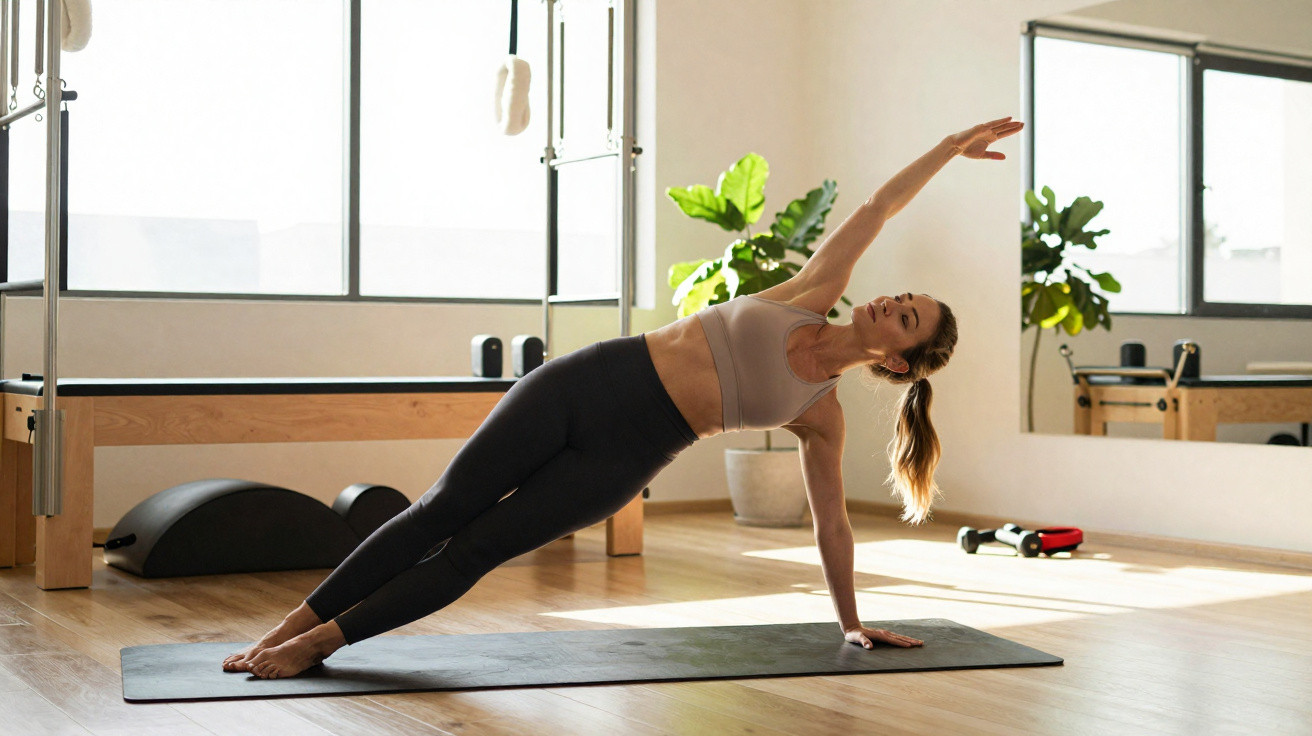
Pilates has grown rapidly in recent years and has become one of the most sought-after forms of exercise among people looking to improve posture, ease aches and pains, and build a stronger body. Available in gyms, specialist studios and even via online classes, the method appeals to a wide range of ages. Even so, one question still comes up frequently among beginners-and even among those who practise regularly: can Pilates on its own deliver meaningful muscle strengthening, or does it need to be paired with other types of training?
How does Pilates strengthen the body’s muscles?
The method focuses mainly on the deep muscles that support stability and keep the body properly aligned. During each session, you perform controlled movements that require concentration, balance and continuous muscle engagement.
Progress tends to be steady rather than instant, largely because the emphasis is on how well each movement is performed. With consistent practice, many people notice improvements in functional strength, motor coordination and muscular endurance-qualities that matter for everyday tasks.
What are the main benefits of Pilates?
Beyond building strength, the method brings several advantages that help explain why it has become so popular. The exercises encourage an integrated, whole-body approach, supporting physical health and overall wellbeing.
This sense of bodily balance is one of the foundations of Pilates. It is far more than stretching: it supports posture, improves flexibility and strengthens the core. To explore in detail how this practice can affect your quality of life, watch @MarcioAtalla’s explanation in the video below:
Is Pilates enough to build muscle strength?
Pilates can lead to strength gains, particularly for people who are sedentary or returning to exercise after a break. Because the stabilising muscles are worked consistently, practitioners often develop better body control and improved muscular endurance.
To see where the method tends to stand out, it is helpful to look at some of its key outcomes:
- Strengthening deep musculature.
- Improved body stability.
- Greater localised muscular endurance.
- Injury prevention linked to poor posture.
- Enhanced balance and coordination.
Even with these benefits, specialists note that anyone aiming for a substantial increase in muscle mass or very high levels of strength may need additional stimuli-particularly those achieved through progressive resistance exercises.
When is it worth combining Pilates with other activities?
Pairing Pilates with other training methods can be an excellent option for people with specific goals. Weight training, for instance, provides a stronger stimulus for hypertrophy, while aerobic activities support cardiovascular health and increase calorie expenditure.
By acting as a foundation for stability, mobility and movement control, Pilates fits well alongside many training plans. In this way, you can benefit from the method while also developing other physical capacities in line with your personal objectives.



Comments
No comments yet. Be the first to comment!
Leave a Comment