
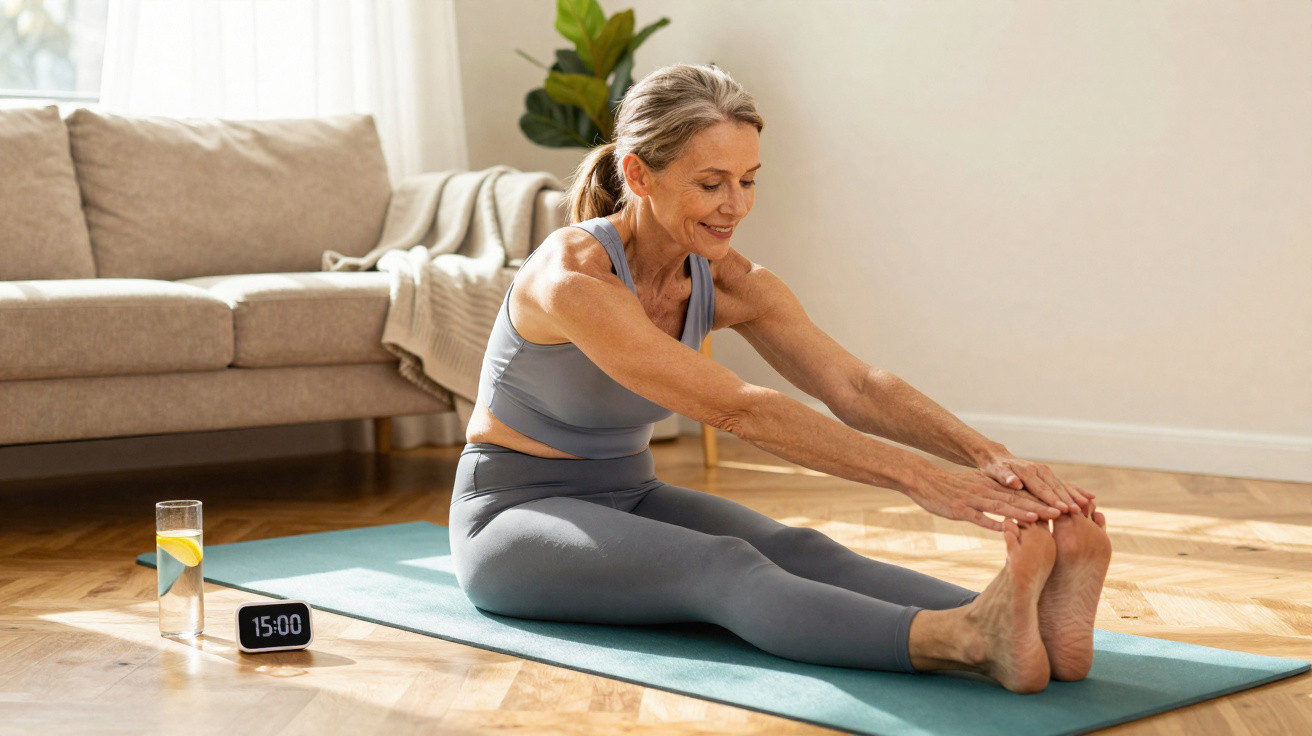
Spending 15 minutes on daily stretching can support people aged over 60 by easing stiffness, improving mobility and making everyday movements feel more comfortable. The National Institute on Aging notes that flexibility exercises help maintain and enhance your ability to move, while physical activity guidance also underlines the value of building balance, strength and mobility into older adults’ routines.
Why can 15 minutes of stretching make a difference?
After the age of 60, muscles and joints often lose elasticity more readily, particularly if someone spends long periods sitting down or moves very little. A brief stretching routine can help joints feel more lubricated, get blood flowing and reduce the sensation of the body feeling “stuck”.
The earliest changes often show up in simple tasks: standing up from a chair, putting on shoes, reaching for items, turning the neck, or walking with more ease. Studies and clinical reviews indicate that flexibility work can increase range of motion within a few weeks when practised consistently.
Which stretches are most suitable after 60?
The most helpful options are stretches that target the neck, shoulders, spine, hips, hamstrings and calves without requiring awkward or demanding positions. The aim is to build day-to-day mobility, not to push until you feel pain.
- Gentle neck tilt to reduce tension around the shoulders.
- Chest opening with the arms to support better posture.
- Calf stretch using the wall for support.
- Seated hamstring stretch using a chair.
- Light torso rotation to loosen the spine.
- Ankle mobility work to support walking.
How can you do it safely at home?
Stretch in a stable area, avoid loose rugs, and keep a chair nearby for support. Each position should feel comfortable, held with steady breathing and without sudden movements.
- Warm up with a few minutes of easy walking around the house.
- Hold each stretch for 15 to 30 seconds.
- Do not bounce while holding a position.
- Breathe normally-do not hold your breath.
- Stop if there is severe pain, dizziness or shortness of breath.
- Seek professional guidance if you have had recent falls, surgery, ongoing pain or heart disease.
What benefits might you notice in the first few weeks?
In the first weeks, you may find you feel less stiff on waking, movements come more easily, and you feel more confident walking, climbing steps or doing household tasks. Progress is usually gradual, but regular practice helps the body respond.
Stretching can also sit alongside walking, strength work and balance activities. The NHS recommends that older adults do strength, balance and flexibility activities on at least 2 days a week, as well as staying active every day within their capabilities.
How do you stay consistent without it feeling like a chore?
A practical approach is to link the habit to a set point in the day-such as after getting up, after a shower, or before bed. Fifteen minutes is enough to establish a simple routine, as long as movements are done mindfully and adjusted to each person’s comfort level.
Daily stretching after 60 works because it is gentle on the body while improving how you manage basic movements. With patience, support and consistency, this practice can increase mobility, reduce stiffness and help you feel safer handling everyday life with independence.


Comments
No comments yet. Be the first to comment!
Leave a Comment