
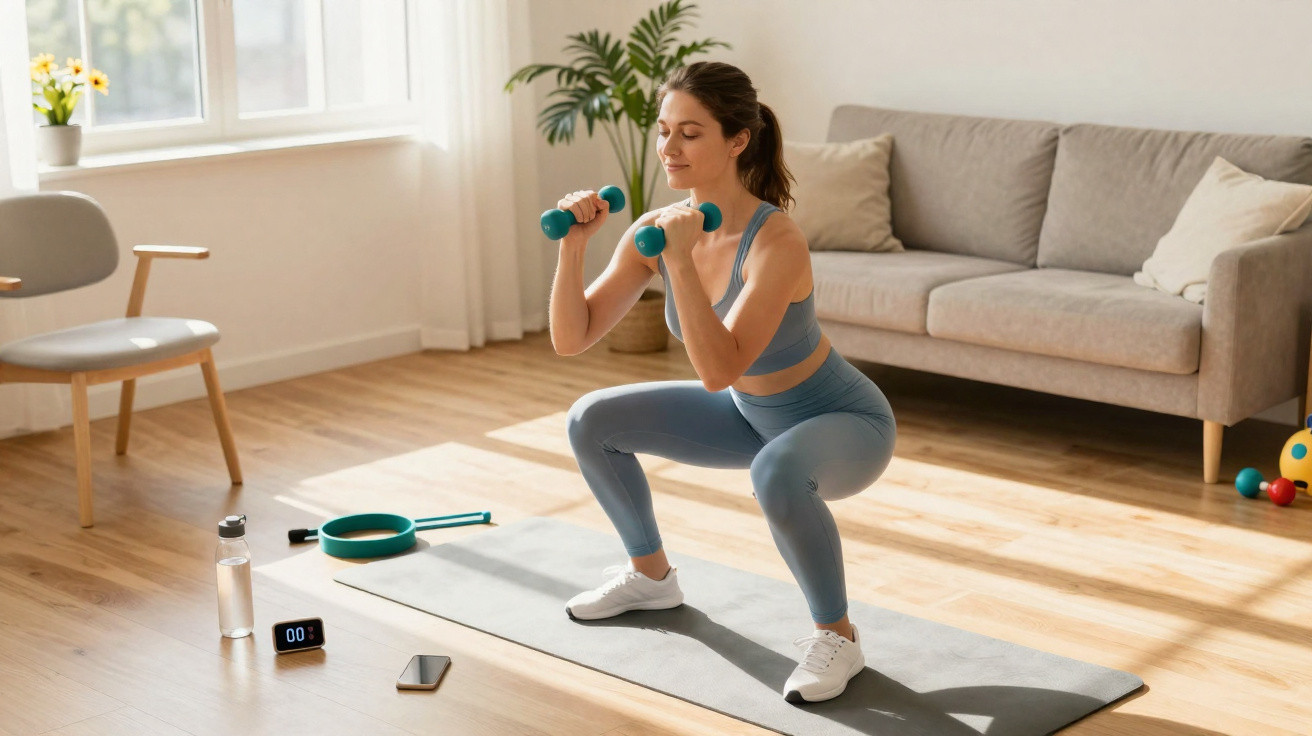
When people think of strength training, they often picture heavy dumbbells, tightly scheduled training plans and hours spent in the gym. A large analysis of more than 30,000 people now paints a different picture: even short, straightforward routines can produce measurable improvements in strength, health and day-to-day function - as long as you keep at it.
Why simple strength exercises work so well
For a long time, the prevailing belief was that progress requires the perfect plan: precise sets and reps, complex periodisation and specialised equipment. The latest position statement from the American College of Sports Medicine (ACSM), drawing on 137 systematic studies, pushes back against that idea.
"Consistency beats perfection: what matters is training all the major muscle groups at least twice a week - with noticeable effort, but without turning it into elite sport."
Whether you use a barbell, dumbbells, resistance bands or just your own bodyweight, the body primarily responds to two things: challenge and repetition across weeks and months.
The researchers’ updated message is simple: the best training plan is the one you can repeat again and again without a big internal battle. More complex programmes only offer an advantage if people actually stick with them long term - and for most of the general population, that’s uncommon.
From nothing to something: small steps, big effects
One result stands out clearly: the biggest leap in benefits happens when someone goes from doing no training at all to doing “a little bit”. Even very basic beginnings can shift a lot.
- Everyday life feels easier: climbing stairs takes less out of you.
- More stability: you feel steadier on your feet, trip less often and recover your balance more easily.
- Noticeable strength gains: after a few weeks, many people can handle more load.
- Muscle growth: the size of the trained muscle increases measurably.
None of this demands a gym contract or 90-minute sessions. Many studies used short workouts of 20 to 40 minutes, two to three times per week. What mattered was that exercises were done with real effort, not as a token “going through the motions”.
More than muscles: health benefits you don’t see straight away
Strength training has an image problem: many people think first of biceps, six-packs and mirror selfies. Research has been focused on something else for a long time - long-term health.
According to the studies included in the analysis, people who do strength training regularly have:
- a lower risk of cardiovascular disease,
- better blood glucose measures and fewer cases of diabetes,
- stronger bones and fewer fractures in later life,
- fewer falls because coordination and balance improve.
Alongside that, many people report sleeping better, having more energy and feeling generally more “put together” in their bodies. You don’t always notice these changes after the first week; they build gradually and accumulate over years.
"Strength training works like a quiet shield: you barely notice it in everyday life, but it reduces risks that often only become visible decades later."
No gym? Not a barrier
One of the most important takeaways from the updated recommendation is that effective strength training doesn’t require a high-tech gym. The evidence clearly shows that basic tools and bodyweight exercises are enough to achieve meaningful results.
Simple exercises that work almost anywhere
Common foundational exercises that appeared frequently in studies, or whose effects are well supported, include:
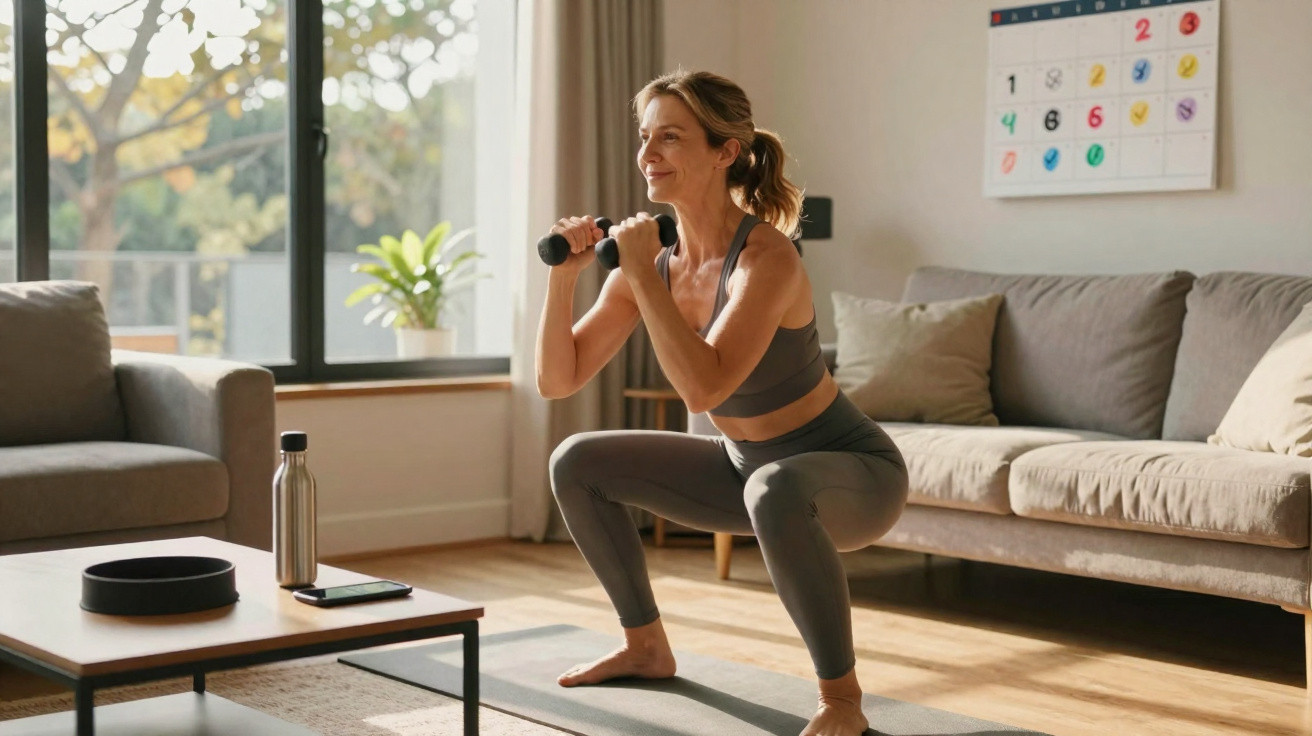
- Squats (with or without added weight)
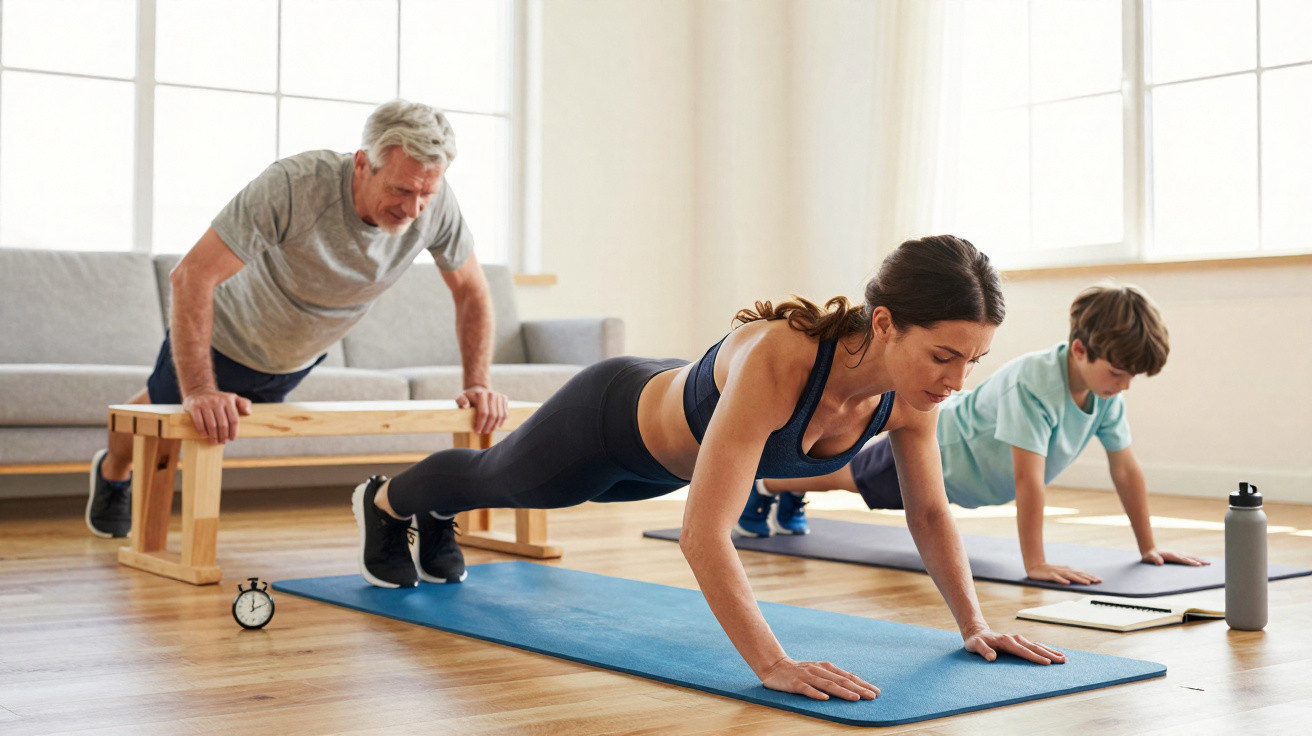
- Press-ups - if needed, start against a wall or with hands on a bench
- Rows using a resistance band or dumbbells
- Lunges for legs and glutes
- Planks (forearm hold) for core and back
- Overhead pressing with bands, weights or even water bottles
All you need is some clear space in the living room, at the office or in a park. If you like, you can add an inexpensive set of resistance bands. The barrier to entry drops when there’s no travel time and no membership required.
How much you really need: guidance instead of dogma
The position paper’s authors offer broad guidelines rather than rigid rules. A practical framework for healthy adults looks roughly like this:
| Area | Recommendation |
|---|---|
| Frequency | 2–3 sessions per week |
| Muscle groups | Legs, glutes, back, chest, shoulders, core |
| Duration per session | 20–45 minutes is usually enough |
| Intensity | The final reps should feel clearly hard |
Exactly how many sets and repetitions are “ideal” matters less than was once assumed. Across many studies, a common pattern is 1–3 sets per exercise and around 8–15 repetitions - performed so the muscles genuinely have to work towards the end.
Sticking with it beats the perfect plan
The analysis shows a clear trend: most people eventually abandon complicated programmes. A simple, everyday-friendly routine is less likely to be dropped - and over time, it tends to deliver more.
"The key question isn’t: ‘Is this the optimal training stimulus?’ It’s: ‘Can I still do this programme next week and next month?’"
Anyone working shifts, caring for children or commuting a lot needs options that can flex around real life. Ten minutes in the bedroom in the morning, a short block after work, or two sharp sessions at the weekend - all of these show up in studies as realistic approaches.
Common mistakes that drain motivation
- Starting too aggressively and overloading yourself straight away
- Doing something different every day and never building a routine
- Focusing only on appearance and ignoring functional improvements
- Comparing yourself to fitness professionals on social media
When you lower the pressure a little and prioritise habit, you’re more likely to keep going - and it’s that long-term consistency that produces the biggest gains for health and everyday life.
How strength training genuinely changes day-to-day life
Beyond the study numbers, the practical question is: what changes do you actually notice in real life when the exercises start working? Common feedback from research and real-world experience includes:
- Shopping bags feel easier to carry without stopping.
- You can stand up from a squat without using support.
- Back tightness reduces because the core provides more stability.
- The risk of falling after a trip or stumble drops noticeably.
Especially later in life, regular strength training acts like a kind of “ageing brake”. People stay independent for longer, need less help with dressing, standing up or carrying things, and feel less fragile.
Terms that often cause confusion
In conversations about strength training, certain buzzwords repeatedly lead to misunderstandings:
- Hypertrophy: the increase in muscle mass. You don’t need bodybuilding competitions for this - even moderate training can lead to measurable hypertrophy.
- Maximal strength: your absolute top strength, such as a single very heavy lift. For everyday life, it’s enough to improve practical strength without constantly pushing to the limit.
- Functional training: exercises that mirror everyday movements, such as lifting, carrying and standing up. This is exactly where major advantages lie for people who simply want to move through life well.
Practical starting point: a 20-minute plan for two days per week
One possible equipment-free start, aligned with the key findings from the studies:
- Day A: squats, wall press-ups, plank
- Day B: lunges, band row or towel row, side plank
For each exercise, do 2 sets of 8–12 repetitions (for holds, around 20–30 seconds). If the final reps are barely still tidy, the intensity is roughly right. Over time, you can increase the challenge gradually - for example by slowing the movement, adding resistance or doing a third set.
If you find the training fits your life well, you can add a third day or try new exercises. The evidence strongly supports the idea: start small, stay consistent and build the plan step by step, rather than failing with a programme that’s too demanding.



Comments
No comments yet. Be the first to comment!
Leave a Comment