
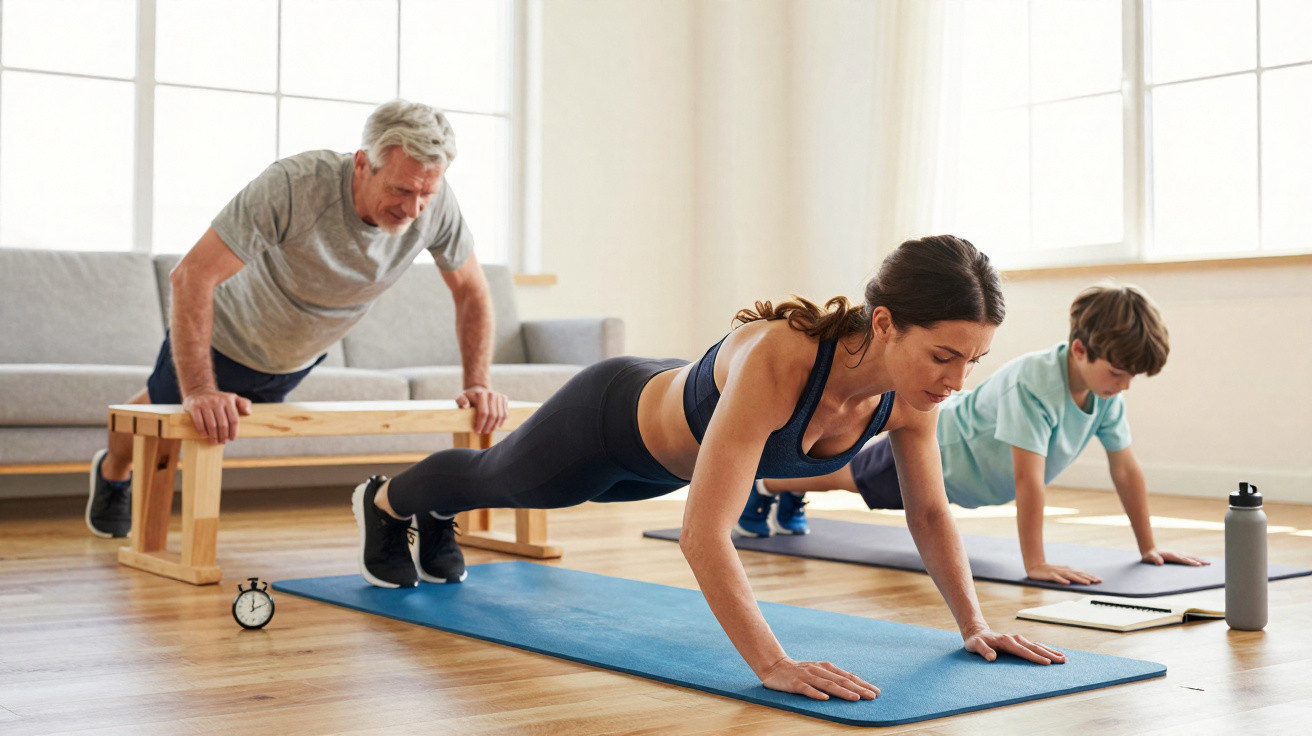
Press-ups are often used as a straightforward strength check because they call on the chest, shoulders, arms, core, back and whole-body stability at the same time. Whether you are 20, 40 or 70, the number you can complete can hint at your fitness level-but it only means anything if each rep is smooth, continuous and free from compensations that place extra stress on the joints.
How many press-ups are expected at each age?
Targets can shift depending on the testing protocol, sex, body weight, training background and joint health. Even so, broad ranges can be useful for anyone wanting to gauge their own bodyweight strength. The guide below assumes well-performed press-ups done consecutively, with no rest part-way through.
- Women aged 20–29: about 20 press-ups.
- Women aged 40–49: about 14 press-ups.
- Women over 70: about 8 press-ups.
- Men aged 20–29: about 28 press-ups.
- Men aged 40–49: about 16 press-ups.
- Men over 70: about 8 to 10 press-ups.
These figures are not a verdict. Someone might have strong stamina, walk well, cycle regularly and still manage only a small number of press-ups. This check reflects upper-body and trunk strength and endurance in particular, rather than overall physical health.
Why does technique completely change the result?
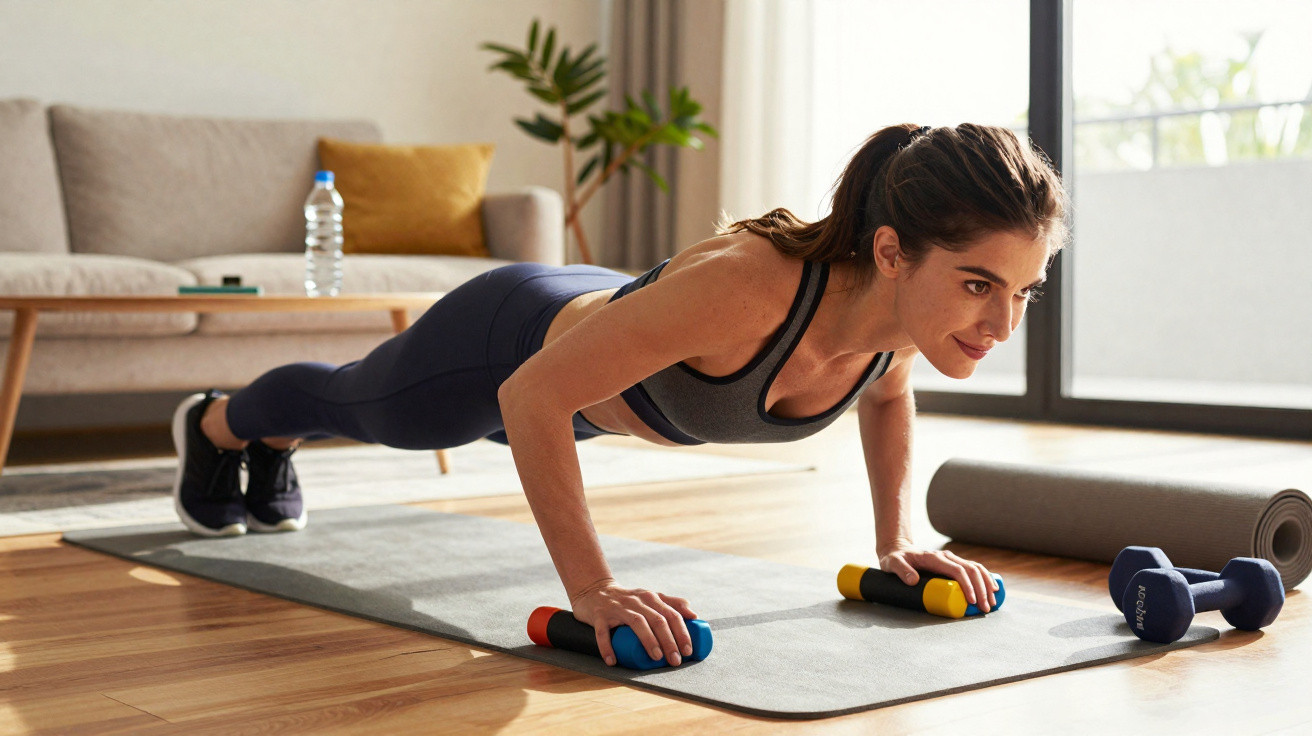
Form is what determines whether a press-up is a genuine strength test or just a way of inflating the count. Your body should stay rigid from head to heels, with the abdominals and glutes lightly braced. Hands sit close to shoulder line, and the chest lowers towards the floor under control.
If the hips sag, the head juts forward or the elbows flare too widely, each repetition becomes easier but far less informative. It can also shift load poorly onto the shoulders, wrists and lower back. One well-executed press-up is worth more than several rushed, partial reps.
What mistakes most undermine the test?
Errors often show up precisely when someone is chasing a higher number than they can maintain with good form. The body starts taking shortcuts to keep moving, but those shortcuts reduce movement quality and make the test less accurate.
- Not lowering far enough and counting half reps.
- Letting the hips drop during the push back up.
- Thrusting the neck forwards instead of keeping alignment.
- Flaring the elbows too much and overloading the shoulders.
- Losing control on the way down to gain speed.
For an honest assessment, it is better to stop as soon as posture begins to break down. The last repetition performed correctly is more dependable than forcing crooked reps simply to hit an age-based target.
How to improve if your number is still low
If standard press-ups are not yet possible, begin with easier variations. Placing your hands on a bench, a wall or a sturdy table reduces the load while letting you practise the same movement pattern with better control.
You can also use knee press-ups, as long as the torso remains braced and steady. Ideally, train two or three times per week, leaving rest days between sessions, using short sets and keeping one or two reps “in reserve”. This approach builds strength without turning every workout into exhaustion.
Progress matters more than hitting a single benchmark
Press-ups are useful for tracking strength, stability and muscular endurance over time. Moving from 3 to 8 clean repetitions is already a meaningful improvement, even if it still sits below the reference for your age group.
The most practical way to use the test is to repeat it after a few weeks of training and compare your own results. Sustainable strength comes from sound technique, consistency, adequate rest and the absence of pain. The age-based number can guide you, but real progress is shown by completing more correct reps safely and with control.




Comments
No comments yet. Be the first to comment!
Leave a Comment