
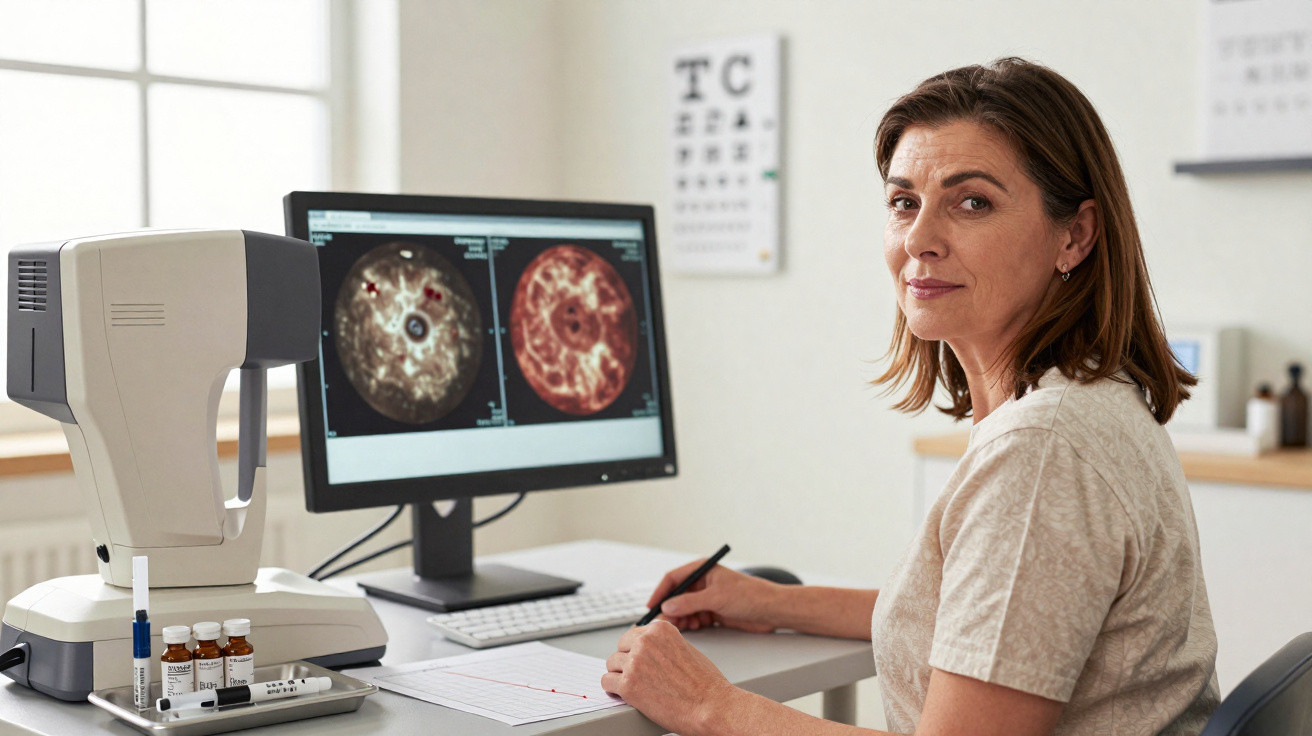
People using a weight-loss drug such as Ozempic, Wegovy, Mounjaro, or Zepbound are often advised to keep a close eye on their vision. The reasoning is familiar: these medicines can bring blood glucose down rapidly, and abrupt falls may strain the delicate blood vessels at the back of the eye.
That caution became standard after two large clinical trials of semaglutide flagged a possible short-term worsening of eye disease. Concern about tirzepatide followed largely by analogy - it sits in the same broader drug family and acts on much of the same underlying biology.
A new analysis involving around 174,000 patients suggests that assumption does not hold.
Origin of the worry
Diabetic retinopathy occurs when persistently raised blood sugar injures the tiny blood vessels lining the retina. It can remain unnoticed for a long time before advancing to leakage and swelling, and in later stages can lead to blindness.
A recent paper estimating prevalence in the United States reported that roughly 10 million people live with some form of diabetic retinopathy. It continues to be one of the main causes of vision loss among adults of working age.
The specific anxiety around weight-loss medications stems from two major semaglutide trials. In those studies, retinopathy in some patients worsened for a period, which investigators linked to blood sugar falling too quickly.
Dr Szilárd Kiss, an ophthalmologist at Weill Cornell Medicine in New York, expected to observe a similar pattern among patients taking tirzepatide, marketed as Mounjaro and Zepbound. In his day-to-day practice, he was not seeing it.
“We were seeing fewer patients who had worsening retinopathy while on tirzepatide,” said Kiss. That observation prompted a closer look using routine clinical data.
Records across systems
To test whether the pattern held up at population scale, Kiss’s group analysed electronic health records drawn from 70 health systems across the United States. The dataset included about 174,000 people with type 2 diabetes who were overweight or living with obesity.
They divided patients into two matched groups. One group initiated tirzepatide; the comparison group used lifestyle approaches only - nutritional therapy and exercise counselling - without a weight-loss drug.
The two groups were matched for age, sex, existing eye disease and other health indicators, aiming to keep the comparison as balanced as a records-based study can manage. Eye outcomes were then followed over the subsequent 12 months.
Tirzepatide eye disease
Across almost every outcome examined at 12 months, the tirzepatide group showed less new and worsening eye disease. Early mild retinopathy was recorded in about 0.5% of patients taking tirzepatide, compared with more than 1% in the lifestyle-only group.
The apparent benefit extended to more severe disease. The risk of proliferative retinopathy - where abnormal new vessels spread across the retina - was around 30% lower in patients on tirzepatide.
The likelihood of fluid-related swelling in the central retina fell by roughly 40%. Bleeding into the gel that fills the eye and a more serious form of retinal detachment also occurred less frequently among those receiving tirzepatide.
Use of the two main “rescue” treatments declined as well: there were fewer laser procedures to seal damaged vessels and fewer injections used to suppress uncontrolled vessel growth.
Two drugs diverging
Semaglutide and tirzepatide both act on GLP-1, a hormone released from the gut after meals that encourages the pancreas to make more insulin. With improved insulin signalling, blood glucose decreases - and weight tends to fall too.
Tirzepatide, however, does more than semaglutide. It also stimulates a second hormone pathway that semaglutide does not target, and that additional signal appears to enhance insulin responsiveness and contribute to greater weight loss.
A smaller European study published last summer suggested tirzepatide might still cause the same early worsening of retinopathy that had been reported with semaglutide. In this far larger United States cohort, that pattern was not observed.
One proposed explanation is that tirzepatide may reduce blood glucose more steadily, easing pressure on retinal vessels. Another possibility is that the additional hormone pathway could directly protect the eye’s small blood vessels - and the current data cannot yet disentangle these mechanisms.
Limits of the evidence
This work used health records rather than retinal imaging. Eye disease was identified through diagnosis and billing codes, which can miss cases and can also incorrectly label others.
The follow-up period was limited to 12 months. Tirzepatide has only been in use for a relatively short time, so slower changes in the retina that emerge after longer treatment would not be captured.
In addition, this was not a randomised trial. People who choose weight-loss drugs may differ from those who do not in ways that are difficult to fully adjust for, even with careful statistical matching.
What changes now
Clinicians prescribing these medicines have been balancing metabolic gains against anxiety about retinal harm. For tirzepatide, the feared tirzepatide eye disease risk does not appear to be supported here - the direction of association points towards less retinopathy rather than more.
For people with diabetes who already have early eye disease, the implication is practical. Tirzepatide not only appears not to aggravate the retina, it also seems to reduce the likelihood of requiring laser treatment or repeated injections.
The findings also underline that drugs within the same class may not affect the retina in the same way. For patients and prescribers weighing retinal risk, tirzepatide and semaglutide should not be treated as interchangeable when eye health is central to the decision.
Kiss’s team intends to continue this work. The next stage will link patient records with retinal photographs and thickness measurements - detail that diagnosis codes alone cannot provide.






Comments
No comments yet. Be the first to comment!
Leave a Comment