
No trip to the gym, no pricey membership, no mirror getting on your nerves: with clear, simple movements at home, you can reclaim your body step by step.
Many people kick off January full of motivation at the gym - and by March they’re back stuck in traffic or glued to a laptop. Work, children, appointments, stress: by the end of the day there’s nothing left for the bench press. Meanwhile your back makes itself known, your neck feels tight, and your jeans start to pinch. This is exactly where a straightforward idea comes in: one month of consistent training in your own living room, built around ten effective full-body exercises, with no equipment at all.
Why living-room training often works better than the gym
Working out at home removes the biggest obstacles in one go: travelling there, changing, hunting for parking, loud music, and packed changing rooms. That makes it far easier to get started. Roll out a mat and begin - it even fits between two video calls or before the children wake up.
Rule number one: it’s not the hardest session that changes your body, but the regular one.
Even 15–20 minutes a day is enough to:
- boost your metabolism
- mobilise joints that otherwise stay “parked” at a desk
- clear your head and reduce stress hormones
- stabilise your back and core
The real win is that you set the pace. No ultra-fit colleague beside you on the treadmill making you feel rushed, no trainer pushing “two more reps” when you’re already done inside. You can focus on proper technique and on how your body actually feels.
One month as a deal with yourself
Your body adapts faster than most people expect. Give yourself four consistent weeks and your muscles, heart and brain start laying down new pathways. What feels clumsy on day one often becomes automatic by day 21.
Common changes after about 30 days of steady home training include:
- better stamina on the stairs
- a steadier back during long periods of sitting
- calmer sleep
- noticeably more body tension in everyday life
Accept that the first few sessions feel uncomfortable. That isn’t failure - it’s a fresh start.
The 10 movements that get your whole body moving
The exercises below cover legs, glutes, core, back, arms and your cardiovascular system. All you need is a bit of space and a non-slip surface.
Strong foundation: legs, glutes and circulation
Your lower body contains the largest muscle groups. When you challenge them, you burn plenty of energy and quickly get your circulation going.
- Squats: Stand with feet about shoulder-width apart, toes slightly turned out. Bend your knees as if you’re sitting back onto an invisible chair. Keep heels down, back straight and eyes forward. Only go as low as your knees comfortably allow.
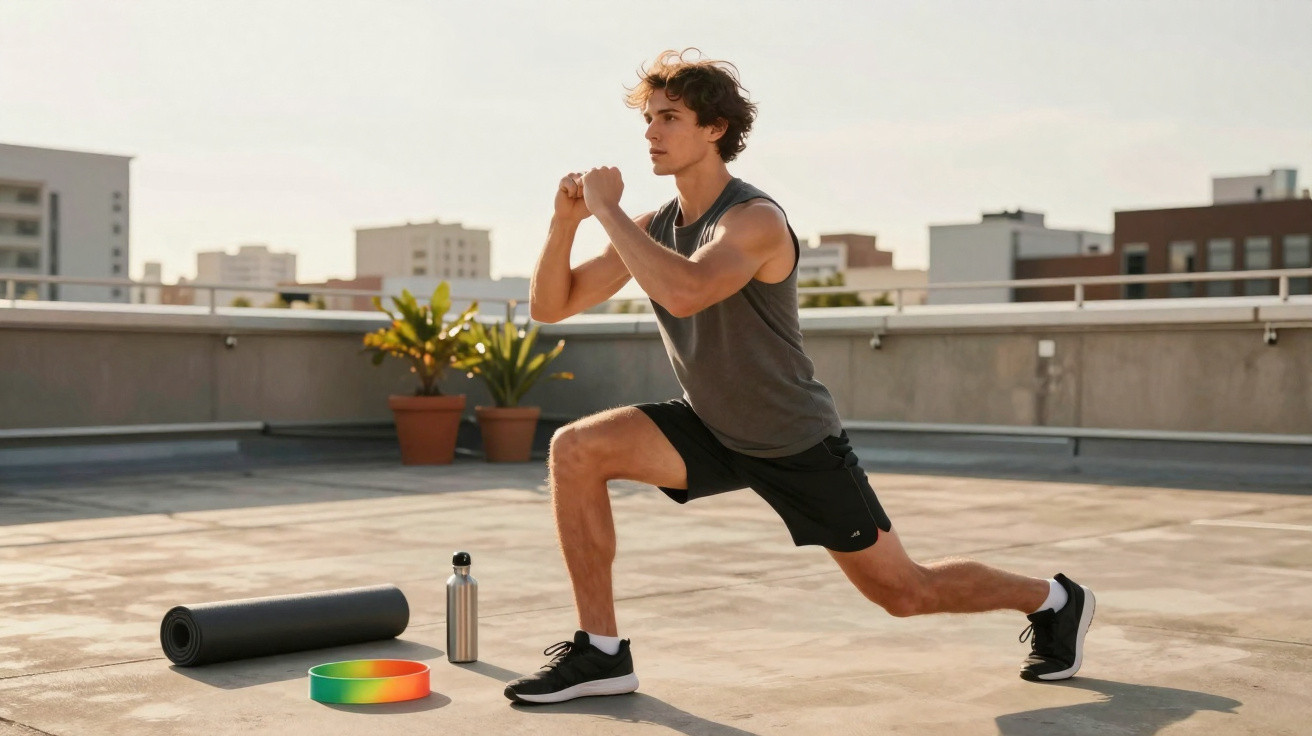
- Reverse lunges: Step one leg well back and lower the back knee towards the floor. The front knee stays above the foot and doesn’t travel past it. Push back up through the front heel. This is often kinder on sensitive knees than forward lunges.
- High knees: From standing, rapidly pull your knees up towards your chest one at a time, using your arms actively. It raises heart rate and breathing fast - ideal as a short cardio burst.
- Jumping jacks: From standing tall, jump your feet out while sweeping your arms overhead, then jump back in. A classic full-body wake-up, perfect for warming up.
- Side-to-side skater jumps: Hop laterally from one foot to the other, leaning the torso slightly forward while the free leg swings behind the standing leg. Builds balance, hip strength and lateral stability.
Strong core: securing posture, back and abs
A stable core takes pressure off your shoulders, neck and lower back. Instead of rushed sit-ups, prioritise controlled holds and pulling movements.
- Forearm plank: Support yourself on forearms and toes, body in a straight line. Brace your abs and glutes so your lower back doesn’t sag. Start with 15–20 seconds, then build up.
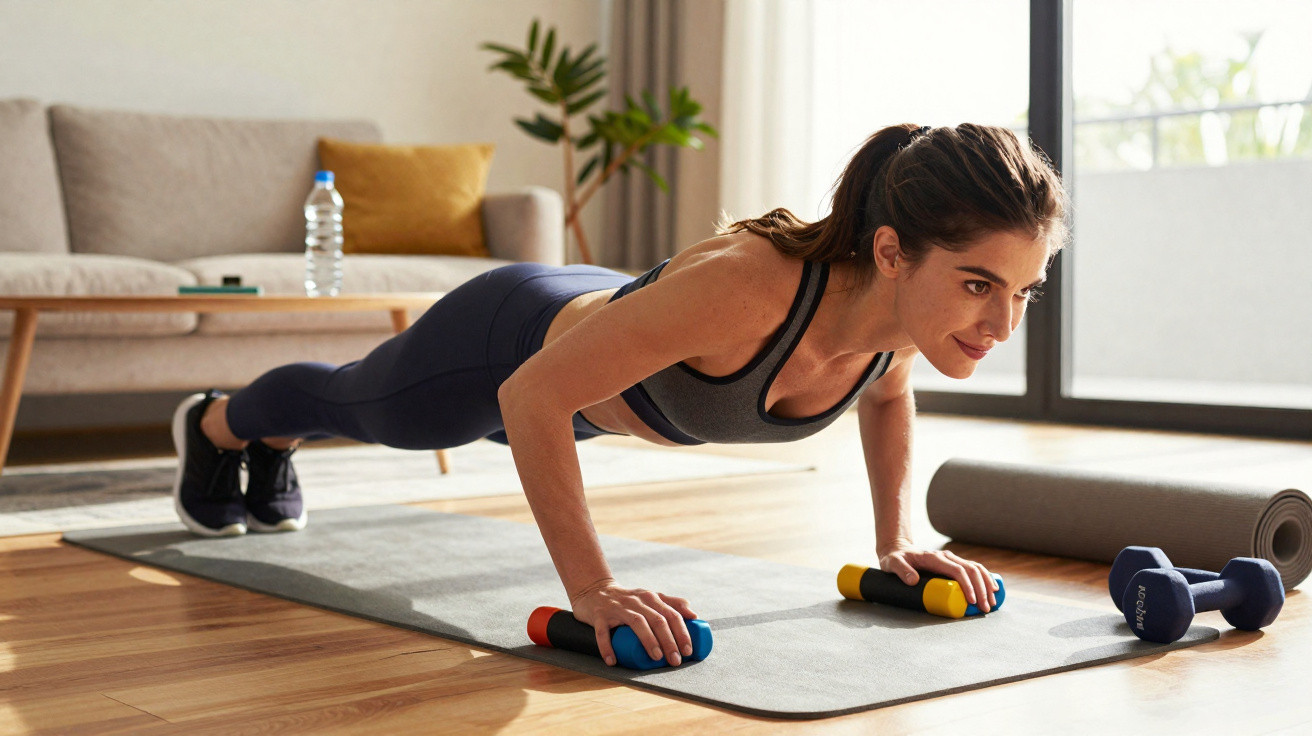
- Press-ups: Place hands slightly wider than shoulder-width. If you’re starting out, keep knees on the floor. Guide elbows slightly back, lower your chest towards the floor, then press up again. Four clean reps beat ten with a collapsed lower back.
- Mountain climbers: From a press-up position, alternate drawing each knee towards your chest. Keep the upper body steady; only the legs move. Adjust the speed to match your fitness.
- Superman: Lie on your stomach with arms stretched forwards. Lift arms, chest and legs slightly off the floor together, hold briefly, then lower. Strengthens the back muscles along the spine.
- Glute bridge: Lie on your back with knees bent and feet close to your glutes. Drive heels into the floor and lift hips until shoulders, hips and knees form a line. Hold briefly at the top, squeeze your glutes, then lower with control.
How to turn this into a 30-day programme
You don’t need a complicated plan - a simple structure repeated every other day is enough. On the days in between, at least go for a short walk or keep your body moving gently.
| Phase | Duration | Content |
|---|---|---|
| Warm-up | 3–5 minutes | easy marching on the spot, shoulder circles, light jumping jacks |
| Legs & glutes block | 8–10 minutes | squats, reverse lunges, high knees, skater jumps |
| Core & upper-body block | 8–10 minutes | forearm plank, press-ups, mountain climbers, superman, glute bridge |
| Cool-down | 3–5 minutes | gentle stretching for legs, hips, back, shoulders |
Begin with a straightforward format, for example:
- 30 seconds work per exercise
- 30–40 seconds rest
- Complete all ten exercises in sequence - that’s one round
- At first, one round is enough; later, do two
Adjusting your training: making it easier or harder
If you’re getting back into it
If you’ve had a long break or you notice your joints complaining, deliberately scale your starting point down:
- reduce the range of motion (for example, don’t squat quite as deep)
- do press-ups against a wall or with hands on the sofa
- instead of jumping during jumping jacks, step out to the side and back in
- extend rests to a full minute if needed
If a movement starts to stab or burn in a joint, reduce speed and depth - control beats ambition.
If you want more
If after the first few days you feel clearly under-challenged, increase the difficulty with simple tweaks:
- take three seconds for the lowering phase in squats and reverse lunges
- cut rests down to 20 seconds
- complete two or three rounds back-to-back
- add 10–15 seconds of hold time to your plank each week
Use your head: how to actually stick with the month
Physically, 20 minutes is usually doable; mentally, it often falls apart because the sofa, your phone or sheer tiredness wins. Small tactics help:
- block training into your calendar like an appointment
- lay out your kit in the morning
- set a fixed “emergency rule”: at least five minutes of movement, no matter how tired you are
- record progress: number of squats, plank time, how you feel afterwards
Those mini-sessions on tough days are what keep the habit alive. Once you’ve started for five minutes, it often becomes ten.
The only session you truly regret later is the one you never started.
What these exercises actually do for everyday life
People often underestimate how much a programme like this carries over into day-to-day life. Typical changes after a few weeks include:
- you lift crates of drinks with less effort
- longer sitting makes your back feel less tired
- you can drop into a squat more easily when playing with children
- sleep feels more restorative because your body has been challenged during the day
If you want the “why”: squats and reverse lunges strengthen the same muscles you rely on for stairs and lifting. Planks, superman and glute bridges stabilise your core, easing load on discs and small spinal joints. Cardio elements like high knees and jumping jacks improve oxygen delivery - and your brain benefits from that immediately.
A realistic 30-day aim isn’t a six-pack, but a body that feels like “you” again: more alert, steadier, more mobile. If you keep going afterwards, you can stick with the same ten movements and simply raise the intensity gradually - no membership, no kit-filled gym, just a few square metres at home.

Comments
No comments yet. Be the first to comment!
Leave a Comment