
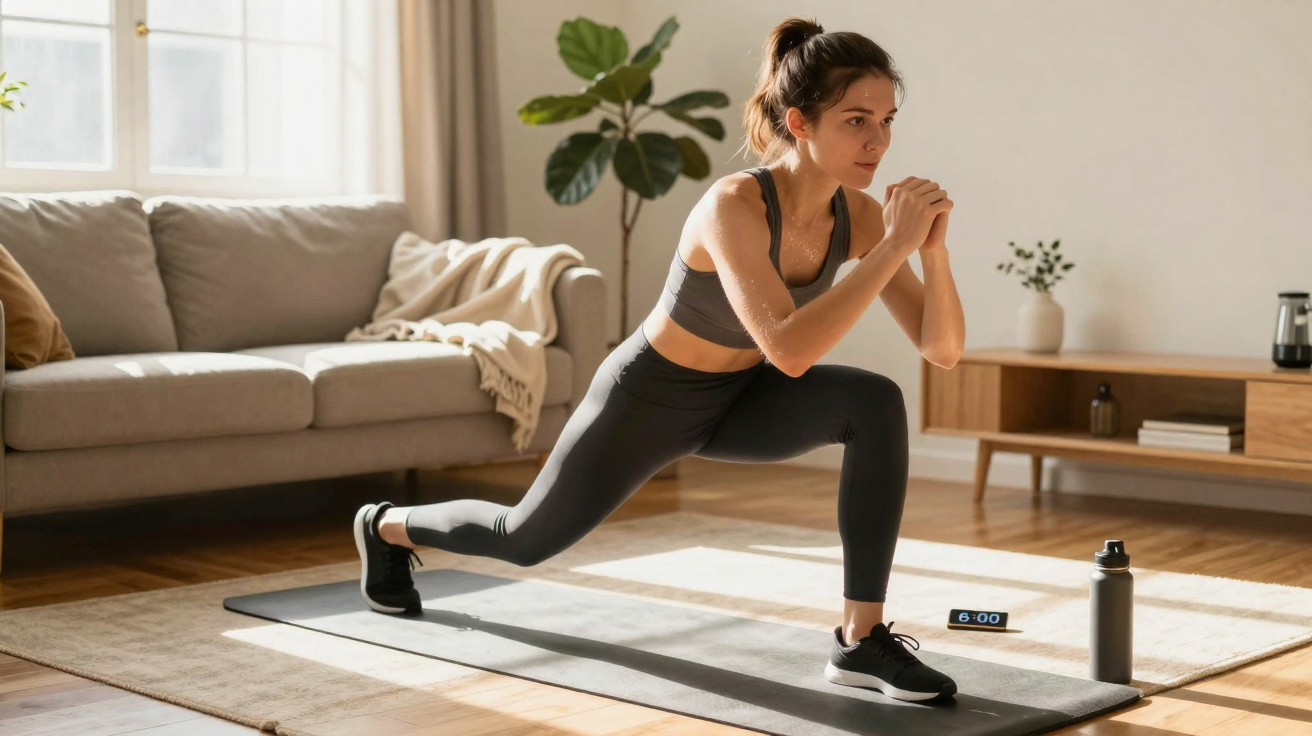
A cardio session that lasts only six minutes promises serious intensity - no gym required.
The momentum behind short, hard-hitting workouts is still growing. A compact blend of cardio and strength using only your bodyweight is meant to burn calories, boost stamina and firm up the whole body - in roughly the time it takes the kettle to boil. It sounds like a social-media claim, but there is genuinely some sports-science logic behind it.
How the 6-minute cardio works without equipment
The concept is straightforward: five exercises performed one after another in timed intervals. The session combines strength work with cardio, similar to a HIIT workout - just much shorter, and easy to scale up or down.
"All you need is a mat, a bit of space in the living room, and the willingness to push yourself properly for a few minutes."
For the basic version, the structure looks like this:
- 5 exercises
- 30 seconds work each
- 30 seconds rest each
- about 6 minutes total training time
If you’re already fairly fit, you can extend the work phases and trim the breaks - for instance, 45 seconds work, 15 seconds recovery. Beginners are better starting with 20 seconds effort and 40 seconds rest, or by doing only 2–3 rounds instead of the full version.
Conveniently, you can time everything with your phone’s timer or a free interval app. No fuss, no subscription, no equipment.
The 5 exercises at a glance
1. Lateral lunge with knee drive
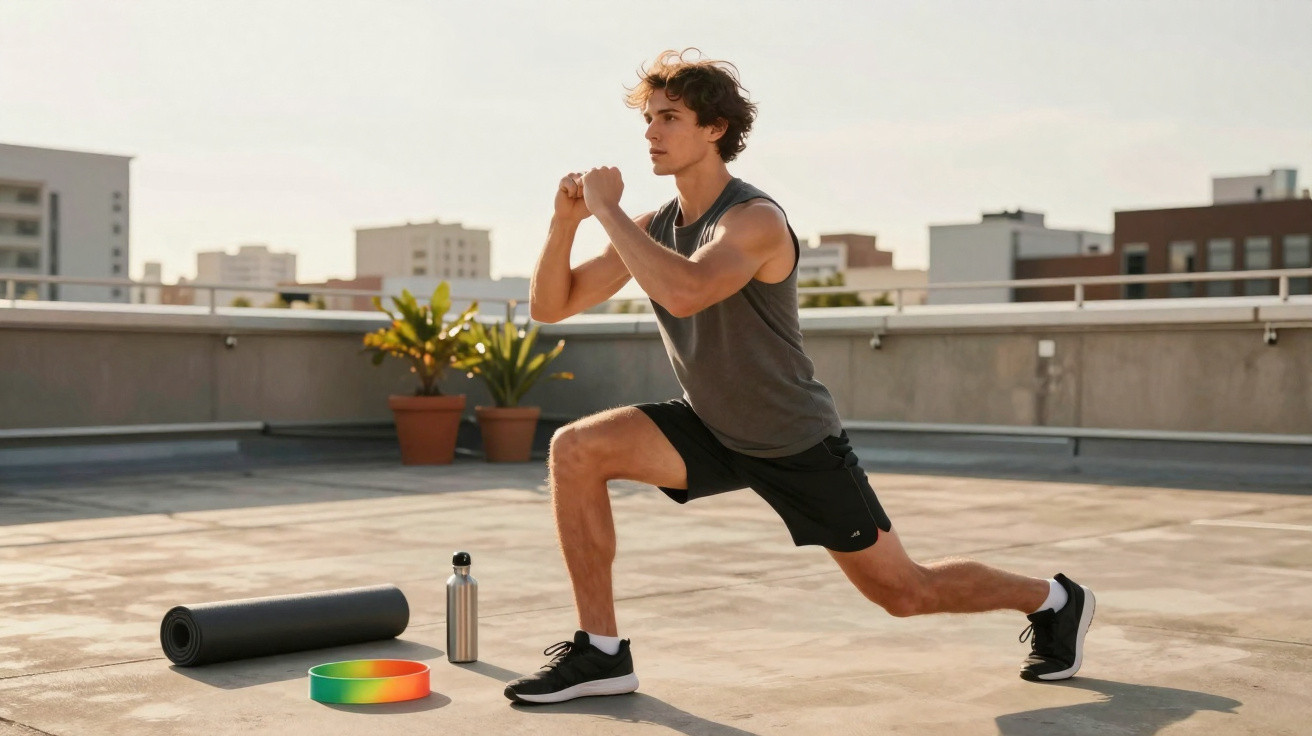
Begin standing tall with your feet slightly wider than hip-width. Step out into a big side lunge, bend the working leg and send your hips back as if you’re lowering on to an invisible chair. From there, drive strongly off the floor and lift the outside leg, bringing the knee up towards your chest. Then switch sides.
- Important: Keep your back long, load your weight onto the working leg, and brace your core.
- Harder: Add a small hop as you lift the knee.
- Very challenging: In the lunge, briefly touch the floor with your hand before driving back up.
2. Walk-out to plank with press-up and jump
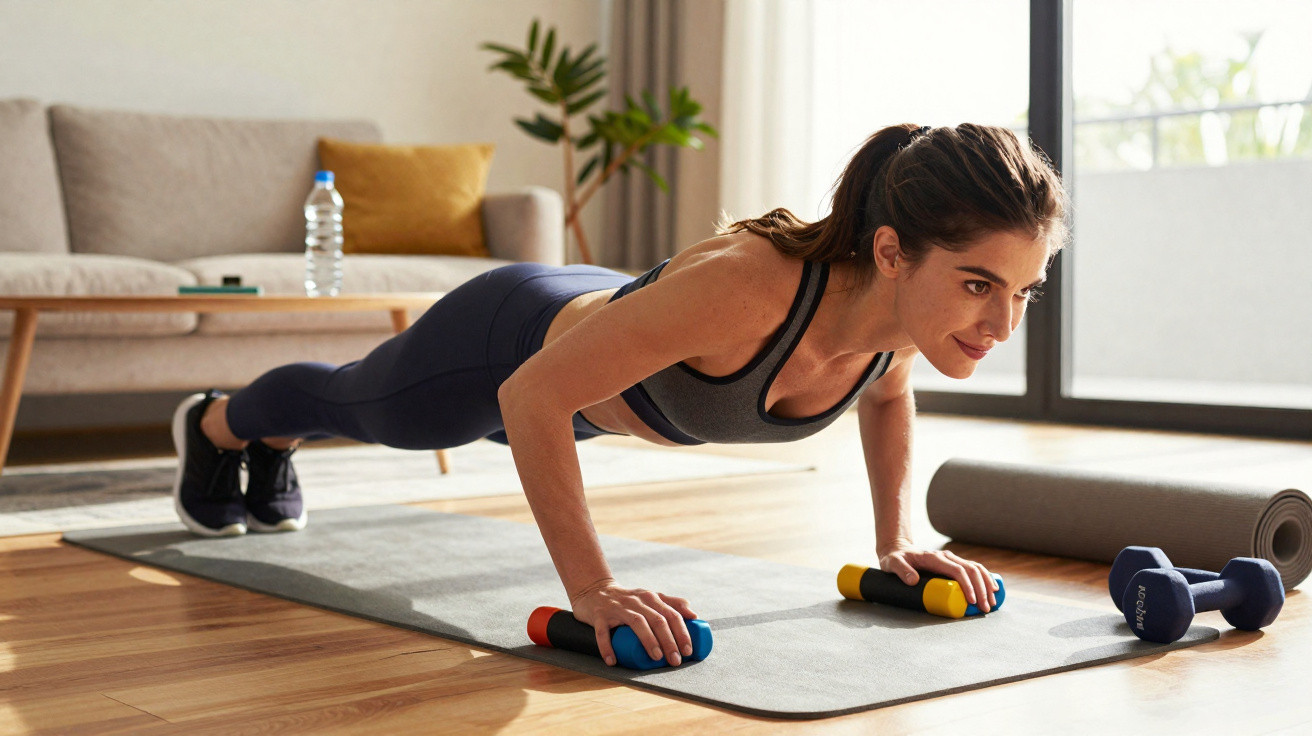
Stand upright, hinge forwards, place your hands on the floor, then “walk” your hands out until you reach a solid plank position. Perform a press-up there. Next, bring your feet back towards your hands using one or several small steps, then jump up explosively - ideally turning 180 degrees so you face the opposite direction for the next rep.
- Easier option: Skip the press-up or do it on your knees.
- Harder option: Make the return more explosive with a “half-burpee” style jump.
3. Side-to-side jumps “over the tyre”
Stand side-on to your mat and imagine a thick tyre beside you that you need to clear. Jump briskly from side to side, lifting your knees noticeably. This quickly raises your heart rate and works your legs and core.
- Gentler: Instead of one big jump, do two smaller, fast lateral hops.
4. Commando burpees
This version is a true full-body hitter. From standing, drop down into a plank, lower all the way to the mat, press yourself back up, then drive your right and left knee towards your chest in alternation. Step (or jump) your feet back towards your hands, stand tall and jump up - optionally adding a turn again.
This move challenges your arms, chest, core and legs - and your lungs at the same time.
5. Optional extra: a low-impact move to bring things down
Depending on your fitness level, you can build in a fifth element with fewer jumps - for example, slow standing high knees with strong arm drive, or brisk marching with long steps. This keeps your pulse elevated without putting unnecessary strain on your joints.
How to get real results in 6 minutes
The impact doesn’t come from one lone session - it comes from consistency. If you slot this mini-workout into your week several times, you accumulate lots of short but intense training signals.
"One run-through lasts about six minutes - three back-to-back run-throughs add up to just under 20 minutes and can beat an improvised jog in terms of effect."
Here’s how you can tailor the session to your level:
| Fitness level | Work / rest | Rounds | Total time |
|---|---|---|---|
| Beginner | 20 s / 40 s | 2–3 | 5–9 minutes |
| Intermediate | 30 s / 30 s | 3–4 | 9–12 minutes |
| Very fit | 45 s / 15 s | 3–4 | 15–24 minutes |
Each extra round increases calorie burn and ramps up the training stimulus for your cardiovascular system and your muscles.
What this mini-workout does for your body
The format follows HIIT principles (High Intensity Interval Training): brief, very demanding bursts paired with short breaks. During the work phases, you push close to your limit, which can lead to several outcomes:
- your heart learns to pump faster and then recover more effectively
- your lungs use their capacity more efficiently
- your metabolism stays elevated for several hours after the workout
- muscles in your core, legs, glutes and arms get stronger
Many people who dislike running - or who struggle with it because of joint issues - find these sessions a solid alternative. You can control the intensity, reduce jumps, or swap them for step-based versions.
How to get the most out of it - without getting injured
Going fast is tempting, but it’s not helpful if your form falls apart. If you want noticeable progress, clean technique matters.
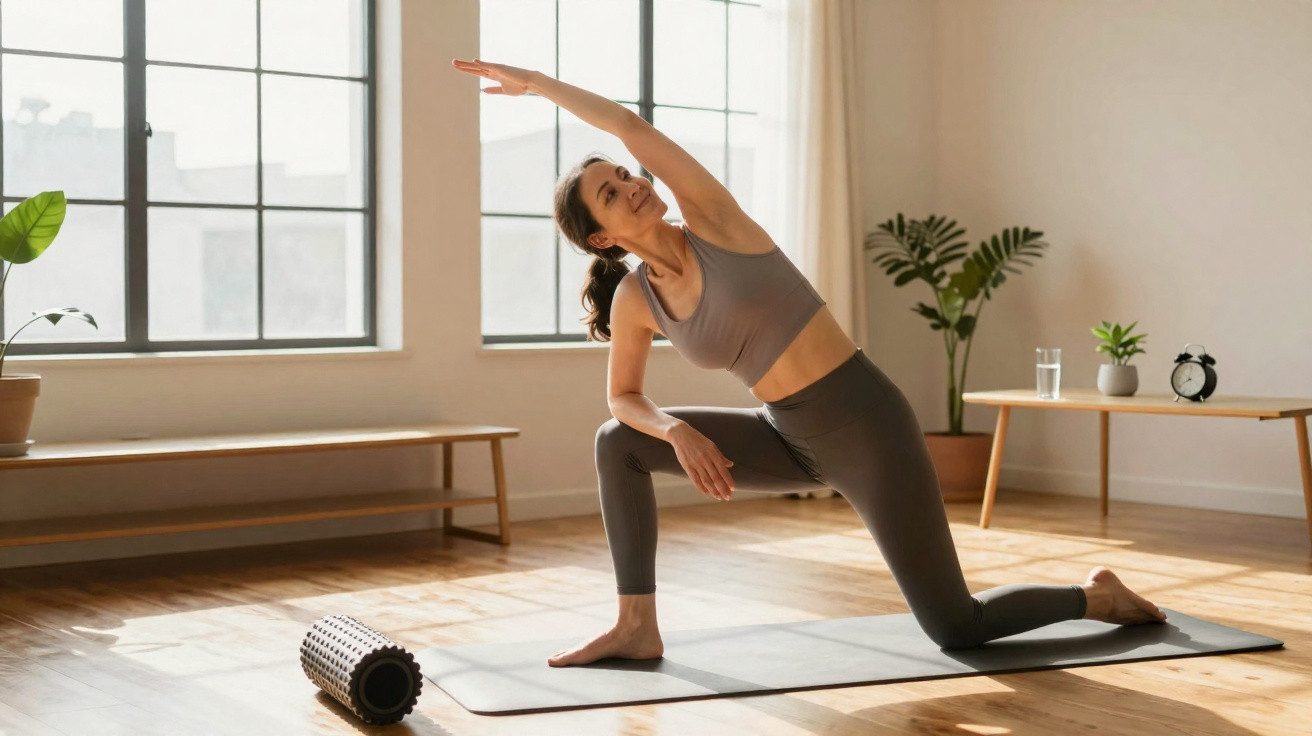
- Warm up for 3–5 minutes before each session: light hops, arm circles, shoulder mobility, a few squats.
- Keep an eye on body tension during the moves, especially through your core.
- Don’t hold your breath: exhale on effort, inhale on the easier phase.
- During the rests, don’t sit down - walk loosely or march on the spot.
If you notice your heart rate won’t come down at all, or you feel dizzy, do fewer rounds or lengthen the rest. The aim is to challenge your body, not overwhelm it.
Who this training suits - and where the limits are
The 6-minute workout is a good match for people who:
- have a busy routine and can’t fit in long sessions
- don’t enjoy going to the gym
- want to move at home without equipment
- already have a basic fitness level or are carefully building back towards it
If you haven’t exercised for a long time, have significant excess weight, cardiovascular conditions, or joint problems, you should discuss the programme with a doctor beforehand. Many movements can be adapted, but not everyone needs to start straight away with burpees and jumps.
How to fit the mini-workout into your day
You’re most likely to stick with it if you attach it to a reliable routine. For example:
- every other morning, do one 6-minute round right after brushing your teeth
- in your lunch break, complete a quick run-through before heading back to your desk
- in the evening, instead of scrolling on the sofa: put on a playlist and push through two rounds
After a few weeks, many people notice stairs feel easier, their pulse settles faster, and waistbands or T-shirts sit more loosely. Even if you begin with just one round: doing something short consistently beats doing nothing at all.



Comments
No comments yet. Be the first to comment!
Leave a Comment