
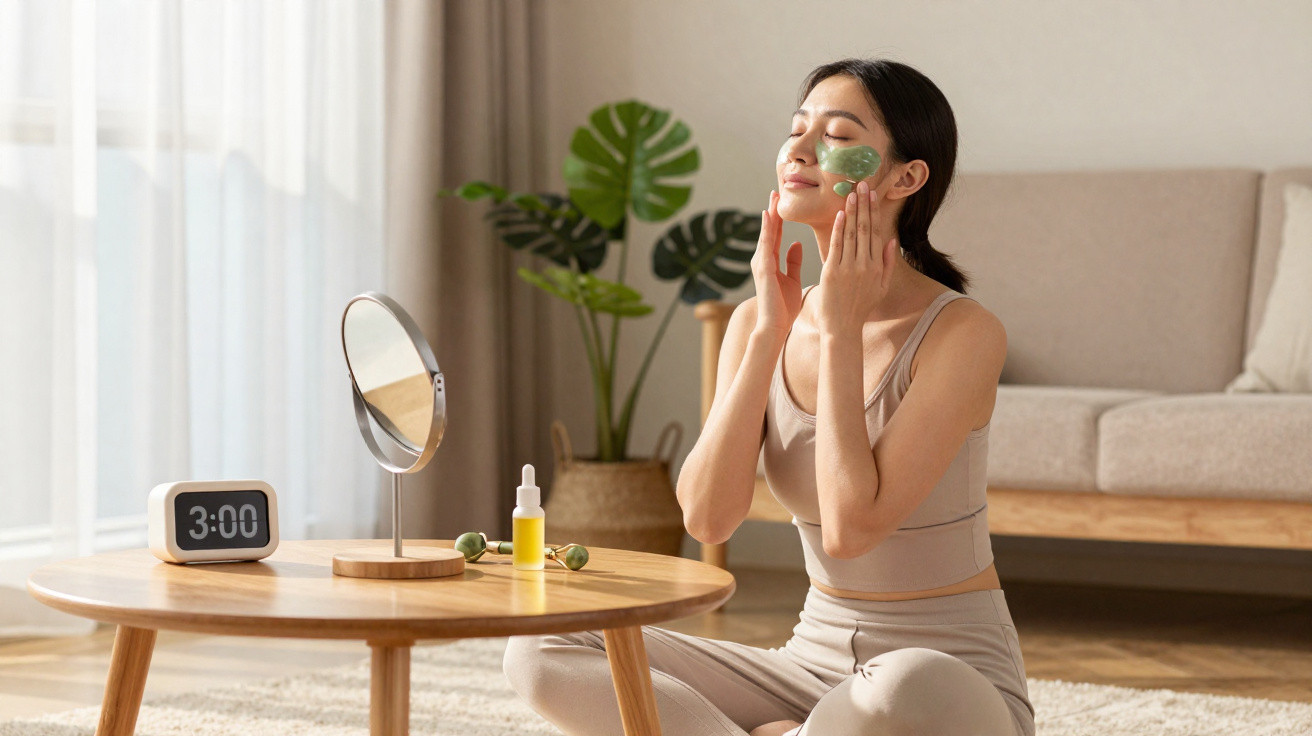
A facial yoga is a straightforward technique that strengthens the muscles of the face, eases built-up tension and can help reduce puffiness in just a few minutes, making it a practical addition to your daily routine.
What is facial yoga and why has it become so popular?
Facial yoga brings together targeted movements, stretches and exercises designed to activate the muscles of the face. It has become widely known for promising a more refreshed-looking appearance without relying on invasive procedures.
When it is paired with self-massage, it can also encourage relaxation, improve body awareness and help ease tension linked to everyday stress.
How does self-massage help to relieve stress in the face?
A lot of emotional tension tends to settle in the jaw, the forehead and the area between the eyebrows. Massaging these points can create an immediate feeling of comfort and calm.
Beyond general wellbeing, gentle strokes also stimulate local circulation and support the body’s natural fluid drainage, which can help reduce a puffy-looking face.
What benefits may appear with regular practice?
Although results differ from person to person, practising regularly may lead to a more well-rested appearance and a greater sense of relaxation over the weeks.
Commonly reported effects include less muscular tightness, improved circulation, reduced morning puffiness and increased awareness of habits that trigger facial tension.
How to do a 3-minute at-home facial yoga routine
A quick sequence can be enough to wake up the facial muscles and take the edge off tiredness. Before you begin, cleanse your face and apply moisturiser or a facial oil to help your hands glide.
A simple routine can include these steps:
- 30 seconds: circular motions over the temples and forehead.
- 30 seconds: sweep your fingers from the sides of the nose towards the cheekbones.
- 30 seconds: gently massage the jawline moving towards the ears.
- 30 seconds: apply light pressure beneath the eyes, without using excessive force.
- 1 minute: finish with upward strokes from the neck towards the face to encourage circulation.
Does facial yoga replace aesthetic treatments?
This technique does not replace dermatological procedures or treatments recommended by professionals. Its main purpose is to promote relaxation and naturally stimulate the muscles of the face.
For better results, specialists advise keeping a consistent routine alongside moisturising, sun protection, adequate sleep and a balanced diet, creating a broader approach to skin health.
Who can add facial yoga to their routine?
Facial yoga is often suggested for adults who want to relieve stress and look after their appearance in a simple way, as long as the movements are gentle and do not cause discomfort.
Anyone with recent injuries, facial surgery, inflammation or skin conditions should seek medical advice before starting any self-massage technique on the face.

Comments
No comments yet. Be the first to comment!
Leave a Comment