
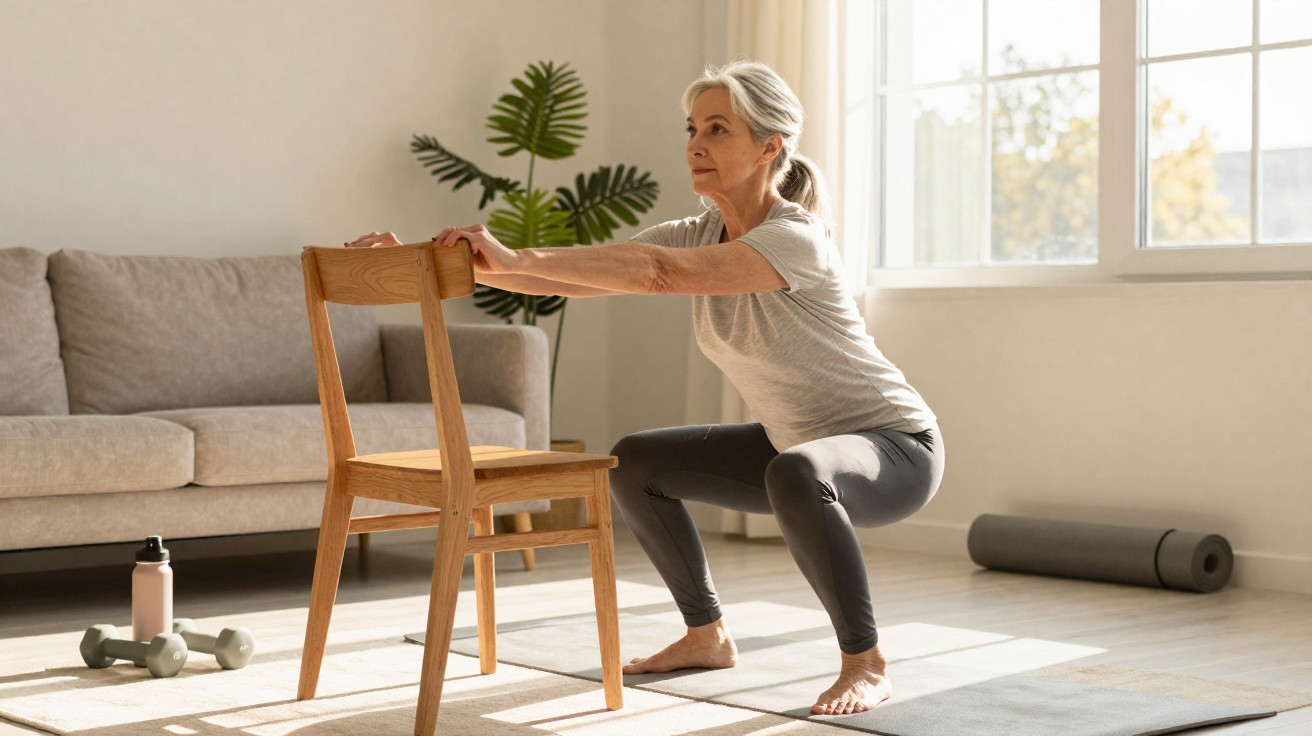
The supported squat has been highlighted by specialists as one of the most well-rounded exercises for people over 70 who want to stay mobile without leaving home. It is straightforward to do and can be adjusted to suit different fitness levels. This movement strengthens key muscles used in day-to-day tasks, supports better balance, and helps people remain independent. It is also a safe, low-impact way to train, placing minimal stress on the joints-making it a strong option for anyone aiming to age with a better quality of life.
Why is the supported squat so strongly recommended after 70?
As we get older, it is natural to lose muscle strength-particularly in the legs. That decline can make everyday actions such as sitting down, standing up, and walking confidently much more challenging. The supported squat helps slow this process by building the muscle groups most closely linked to independence.
Another advantage is that the movement closely mirrors actions we perform every day. As a result, the body develops greater stability and confidence for routine activities, which can lower the risk of falls and injuries.
What benefits does this exercise offer the body?
The gains are not limited to stronger muscles. When done consistently, this exercise supports several functions that directly affect quality of life in later years.
Key benefits commonly reported include:
- Strengthening of the legs and glutes.
- Improved overall balance.
- Greater stability while walking.
- Lower risk of falls.
- Increased physical stamina.
- Maintained functional independence.
How to do the supported squat correctly at home
Proper technique is essential to get the benefits without discomfort. Ideally, use a sturdy chair or another stable support so you feel secure throughout the movement. Keep your feet about shoulder-width apart, and maintain a comfortable, upright posture.
To make it easier to learn, coach @OlenaStarodubets put together a video tutorial showing the exact step-by-step for this movement-ideal for anyone who wants to start practising at home with confidence.
How often can you feel the benefits in the first few weeks?
Most specialists suggest doing the exercise two to four times per week. This tends to be enough to stimulate the muscles and gradually improve functional ability, without creating excessive strain.
Early changes often show up after a few weeks of consistent practice. Many people notice it becomes easier to stand up from chairs, walk steadily, and manage household tasks. Because it is simple, accessible, and effective, the supported squat stands out as one of the best choices for maintaining strength, balance, and independence after 70.


Comments
No comments yet. Be the first to comment!
Leave a Comment