
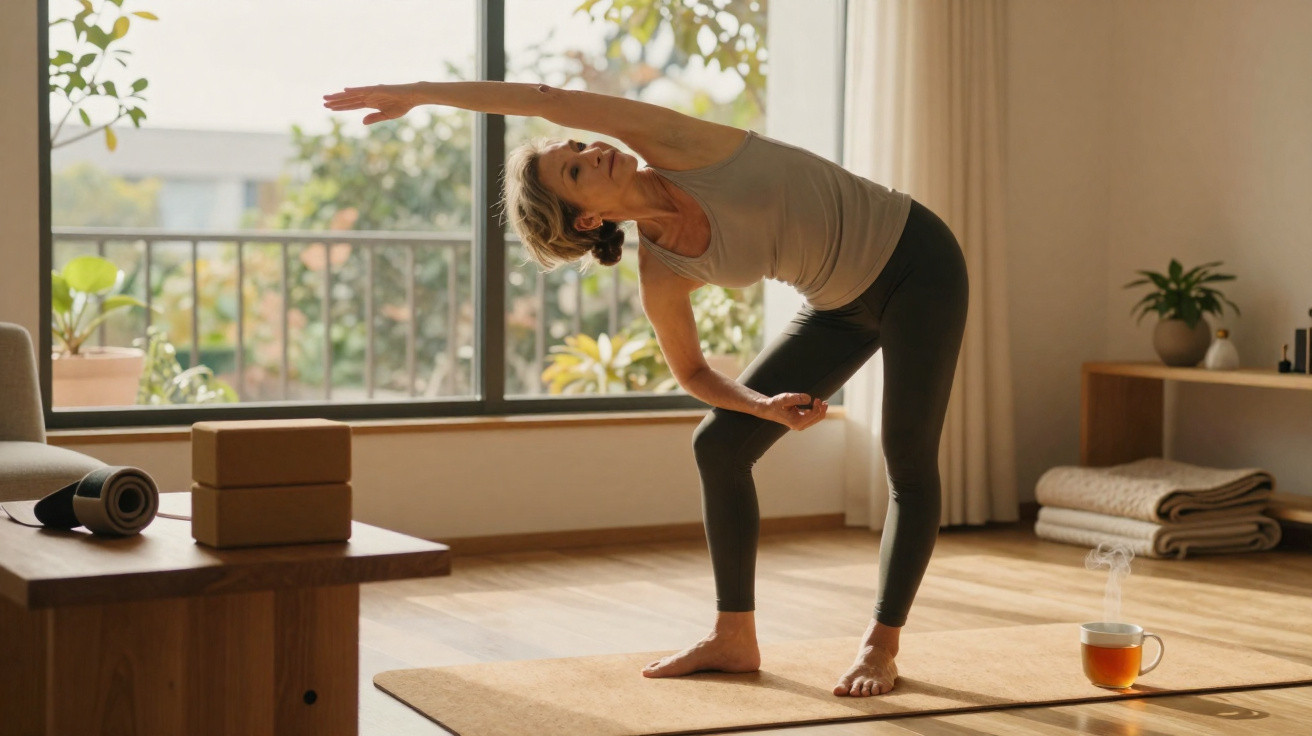
Many people over 60 notice that life in their body starts to feel more demanding: joints ache, sleep becomes lighter, and focus is not quite what it was. At the same time, the aim of staying independent for as long as possible becomes even more important. This is exactly where one activity comes in-no speed, no noise and no pressure to perform-yet it can noticeably strengthen both body and mind.
When ageing suddenly becomes noticeable
Figures show that more and more people are living to 60, 70, 80 and beyond. Lifespans are increasing, but that does not automatically mean more years in good health. At some point, the familiar companions of ageing start to appear-quietly at first, then more clearly.
Many older adults recognise the pattern: getting going in the morning takes longer. You become more cautious on the stairs. Sleep issues become more common, and memory can feel less dependable than it used to.
Common challenges that often show up from around 60 include:
- cognitive difficulties and reduced ability to retain information
- problems falling asleep and staying asleep
- low mood and lack of drive
- diabetes and high blood pressure
- joint complaints such as osteoarthritis or back pain
- reduced eyesight, for example due to cataracts
- breathing conditions such as chronic bronchitis or COPD
On top of that, people often lose their professional role. The rhythm of the working day disappears, social contact becomes less frequent, and some suddenly feel “no longer needed”. That can intensify uncertainty and lead to inactivity-creating the conditions for further health problems.
“If you hardly move in later life, you raise the risk of falls, chronic pain, loneliness and psychological strain-a vicious circle you have to step out of deliberately.”
Why traditional sports do not suit everyone
Walking, Nordic walking, swimming, cycling-these are the standard recommendations. They offer plenty of benefits, but they do not fit every reality. Some people have knee or hip problems and do not feel confident about longer distances. Others feel unsafe at the swimming pool, or live too far from leisure centres and sports facilities.
There is also the language barrier: at a certain age, the word “sport” puts many people off. It can sound like performance, speed and competition. What many people actually need is gentle movement that allows breaks and does not depend on fitness levels or specialist kit.
This is where an activity takes on fresh importance-one that was long dismissed as “new age” and is now well studied scientifically.
The surprising answer: yoga in later life
The activity in question does not require running shoes or a pool, and you can begin in your own living room: yoga. For some it still sounds like awkward poses on social media, but in reality it is a highly adaptable system combining physical postures, breathing guidance and deliberate relaxation.
“Yoga for over-60s is not about acrobatics, but mindful, unhurried movement adjusted to how you feel that day-often on a simple rug or mat.”
When it is tailored appropriately, yoga offers a range of effects that matter particularly as we age:
- improved mobility
- gentle muscle building without weights
- better posture and a stronger core
- improved balance and coordination
- stress reduction and a calmer nervous system
- support with high blood pressure and sleep difficulties
- pain relief for long-term complaints
Medical journals report that yoga can reduce chronic pain and may lower the need for painkillers. For back and joint pain in particular, this can be a genuine day-to-day relief.
How yoga strengthens older adults’ bodies
Flexibility without overdoing it
With age, muscles, ligaments and fascia tend to stiffen. Movements can start to feel “rusty”. Gentle yoga stretches can ease tightness without pushing you to extremes. The key guideline is: no pain-only a stretching sensation.
Even simple practices such as the cat–cow movement on hands and knees help mobilise the spine and take pressure off the lower back. If kneeling is not possible, similar motions can be done seated on a chair.
Better balance, fewer falls
Falls are among the biggest risks in later life. They often lead to fractures and a loss of independence. Yoga specifically trains steadiness and responsiveness. Poses such as tree pose-one foot lightly lifted, with the option to hold on to a wall-build balance within a safe set-up.
“Practising regularly trains not only muscles but also proprioception: the body notices earlier when it is losing balance and can correct itself.”
Joint-friendly strength building
From around 50, muscle mass declines unless you actively counter it. Yoga uses your own bodyweight as resistance. That protects the joints while strengthening arms, legs and core. A classic wall sit or a gentle press-up against a table can help rebuild everyday strength-for example, for carrying shopping bags.
The effect on heart, breathing and blood pressure
Yoga is not limited to postures. Breathing exercises are a central element. They slow and deepen the breath, which can lower pulse rate and calm the autonomic nervous system.
| Yoga element | Possible effect in later life |
|---|---|
| Calm, deep breathing | Reduced strain on the cardiovascular system, support with high blood pressure |
| Gentle upper-body twists | Improved circulation, looser back muscles |
| Relaxation at the end | Better sleep quality, less inner restlessness |
Many older people say that after a few weeks of yoga they fall asleep more calmly and wake less often during the night. The mind settles, and palpitations and rumination ease.
What yoga can do for the mind
Retirement can transform daily life overnight. Where there were once appointments, deadlines and meetings, there can suddenly be empty spaces. Yoga can fill those gaps-not only in terms of time, but psychologically too.
“The mix of movement and inner focus gives the day structure, creates space for self-care and strengthens the feeling of doing something active for yourself.”
A consistent practice can support concentration and body awareness. You become more attentive to signals such as tiredness, stress or pain before they escalate. Conscious breathing can act like an anchor during moments of anxiety or overwhelm.
Those who practise in a group also gain social contact. A chat before and after class, or a brief exchange about aches or progress, can reduce the risk of loneliness-something that is often underestimated in older age.
Getting started after your 60th birthday
Step by step, not perfection
Many people hesitate because they feel too stiff or “not sporty”. Yet those are often the people who benefit most. A sensible way in could look like this:
- check with a doctor, especially if you have heart issues, significant joint pain or osteoporosis
- look for classes labelled “senior yoga”, “gentle yoga” or “chair yoga”
- begin with short sessions of 10–15 minutes, two to three times a week
- build up gradually to 30 minutes, adjusting for good and bad days
- have a clear stop rule: if you feel dizzy, experience strong pain or become short of breath, pause immediately
If there is no suitable class nearby, you can start with simple exercises at home-ideally after an introduction from a qualified professional. Many movements can be done seated, which is a major advantage for anyone with balance concerns.
What you need for your first session
The barrier to entry is low. For most styles, you only need:
- a firm rug or a non-slip yoga mat
- comfortable clothing that does not restrict you
- a chair without armrests for support
- a blanket or cushion for knees and back
High-tech gadgets, fitness watches or expensive outfits add little. More important is a quiet space where you deliberately leave your phone to one side.
Where the risks are-and how to avoid them
Yoga is generally gentle, but it is not completely risk-free. Sudden movements, exaggerated backbends or holding demanding positions for too long can cause problems. Extra care is needed with osteoporosis, unstable joints, an acute slipped disc or severe high blood pressure.
“The safest approach in later life: communicate clearly with the teacher, avoid ambition that pushes you past your limit, and perform simpler postures well.”
Good teachers offer alternatives: sitting on a chair instead of cross-legged on the floor; practising standing at the wall instead of lying down. If you listen to your body, you can significantly reduce the chance of injury.
How yoga works alongside other activities
Many people wonder whether yoga on its own is enough. For some with limited mobility, the answer is yes-at least at the beginning. If you can move more freely, the effect is often stronger when yoga is paired with light endurance activity.
- yoga + walks: improved balance, less breathlessness when walking
- yoga + swimming: joints stay mobile, muscles strengthen in a joint-friendly way
- yoga + physiotherapy: therapy exercises become easier to carry out
In everyday life, the combined benefit may show up as: getting out of an armchair more easily, feeling safer on stairs, less fear of falling, and more enjoyment of activities with grandchildren or friends.
Practical scenario: what 12 weeks of yoga can look like
Imagine a 68-year-old woman with mild high blood pressure and recurring back pain. She starts gentle yoga twice a week for 20 minutes-partly on a chair, partly on a mat.
After four weeks, she notices she gets out of bed more easily in the morning. The back pain is not gone, but it occurs less often and feels less intense. After eight weeks, her GP records slightly improved blood pressure readings; she falls asleep faster and wakes feeling more refreshed. After twelve weeks, she feels confident again on uneven paths in the park because her balance seems steadier.
“These kinds of changes are not a miracle promise, but they show how small, regular sessions can gradually affect your whole life.”
Yoga terms explained briefly
Newcomers can be tripped up by unfamiliar words in class. Three terms come up particularly often:
- Asanas: the physical postures in yoga. Each pose has a name, such as “mountain”, “tree” or “warrior”.
- Pranayama: breathing exercises. These are used to deepen the breath, slow it down or guide it more consciously.
- Savasana: the relaxation phase at the end, usually lying down. This is where the body absorbs what came before.
Knowing these basics helps you feel more comfortable quickly. You do not need to study philosophy; the practical benefit is what matters.
Why now is a good time to begin
Medical progress may extend lifespan, but how we live those extra years is, to a large extent, in our own hands. For people over 60, yoga is a realistic way to influence wellbeing actively-without performance pressure, without major expense and without complicated technology.
What matters in the end is not how far you can fold forwards, but whether you wake with less pain, feel steadier on your feet and feel more at ease in your own body. That is where yoga can serve as a quiet, effective companion through the third stage of life.


Comments
No comments yet. Be the first to comment!
Leave a Comment