
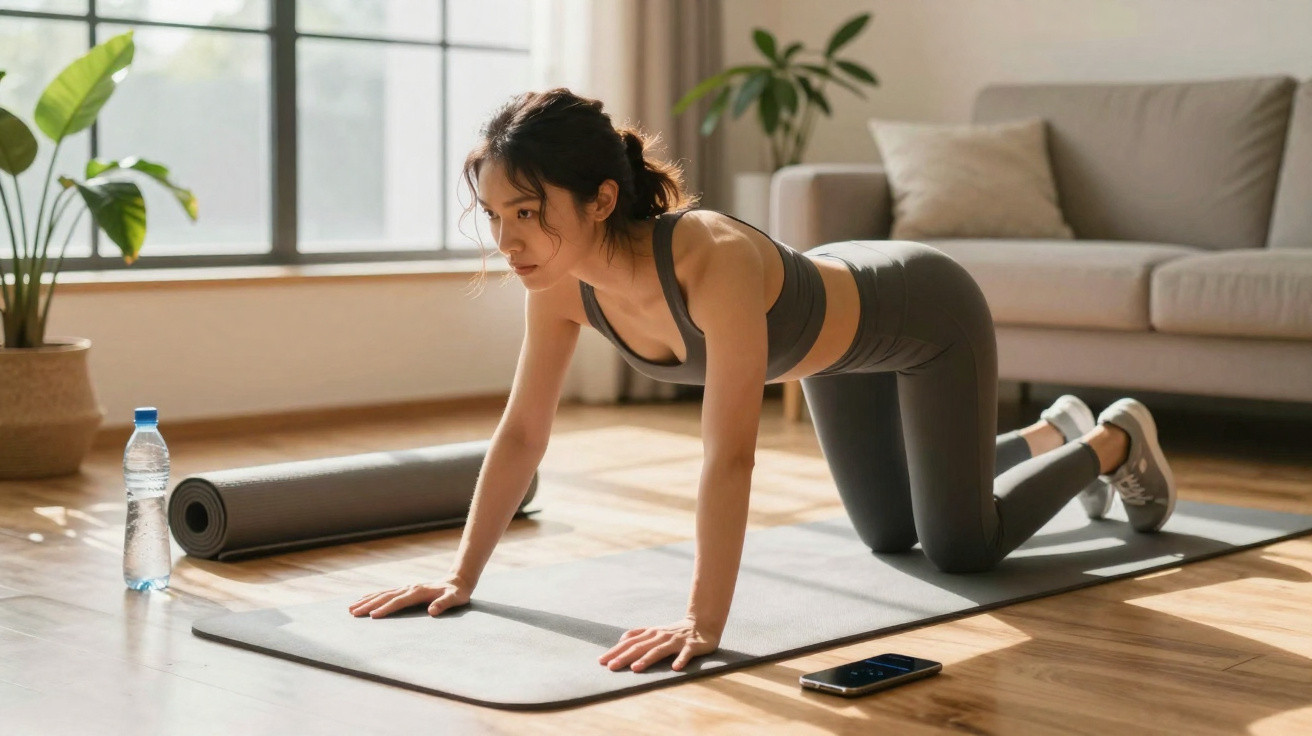
When people talk about working out at home, most immediately think of squats, press-ups or sit-ups. Yet there’s a lesser-known move that can bring multiple muscle groups into play at the same time and deliver strong results without any equipment. The bear crawl-also called the Bear Crawl-has been increasingly adopted by fitness professionals because it blends strength, endurance, coordination and stability into a single exercise. It’s straightforward to perform and can be scaled to suit different fitness levels.
What is the bear crawl?
The bear crawl is a functional bodyweight exercise done with your hands and feet on the floor, keeping your knees close to the ground without letting them touch. From this position, you travel forwards or backwards in a controlled manner.
Holding the shape demands continuous engagement through the shoulders, chest, back, abdominal muscles, glutes and legs. That’s why it’s often seen as one of the most complete ways to train using only your own bodyweight.
Which muscles does the bear crawl work?
One of the biggest advantages of this exercise is how many areas it can stimulate at once. This happens because you need stability, strength and coordination from start to finish.
The main muscle groups involved include:
- Shoulders and arms to support bodyweight.
- Chest and back for trunk stabilisation.
- Abdominals to keep the body aligned.
- Glutes and quadriceps to drive the crawl.
- Calves to assist with movement.
How to do the bear crawl correctly?
Performing the movement properly is essential if you want to get the full benefits. Good positioning helps reduce compensations and improves muscle recruitment while you’re practising.
To see what a clean version of this movement pattern looks like, the professional behind the channel @Barbara Gosling Physiotherapy put together a quick, clear demonstration of the exercise “Bear Crawl”. Watch below:
How many repetitions are ideal for beginners?
If you’ve never trained before, you can begin with sets of 20 to 30 seconds of continuous crawling. The priority is keeping solid technique throughout, rather than speeding up before you’ve mastered the pattern.
As your fitness improves, increase the duration gradually to 40 or 60 seconds per set. You can also add extra sets or crawl in different directions. This progression supports safe gains in strength, endurance and coordination, making the bear crawl an excellent option for anyone who wants a complete home workout without relying on equipment.


Comments
No comments yet. Be the first to comment!
Leave a Comment