
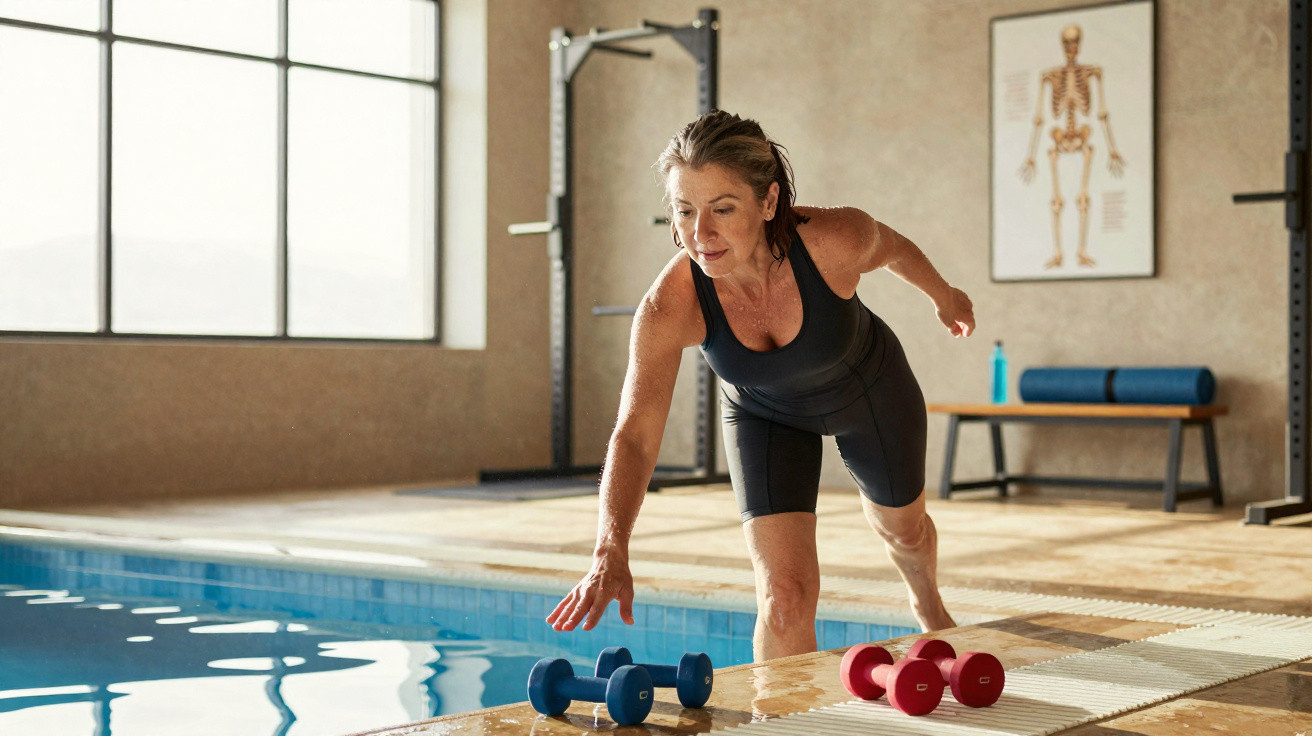
Swimming boosts fitness, is kind to the joints, and suits anyone who needs to keep moving with minimal impact. However, if your goal is to strengthen bones and help prevent osteoporosis, the most important activities are those where the body supports weight against gravity-such as brisk walking, climbing stairs, and progressive strength training.
Why swimming is not enough for bones
Swimming trains the heart and lungs and works the arms, back, and legs, but the buoyancy of water takes away a large share of your body weight. That is a major advantage for people with joint pain, restricted mobility, or anyone returning to exercise and needing a safer, lower-impact option.
Bones, though, respond more strongly when they are exposed to mechanical load. Walking, taking the stairs, squatting, and lifting light weights create small stresses within bone tissue, and that signal encourages the body to maintain-or gradually increase-bone mineral density over time.
Which exercise helps most to prevent osteoporosis?
Rather than relying on a single movement, the most effective approach is to combine weight-bearing exercises with resistance training. Together, these support bone and muscle strength while also improving balance and coordination-factors closely linked to the risk of falls and fractures.
- Brisk walking: stimulates bones in the legs, hips, and lower spine.
- Climbing stairs: increases loading through the legs and glutes without needing equipment.
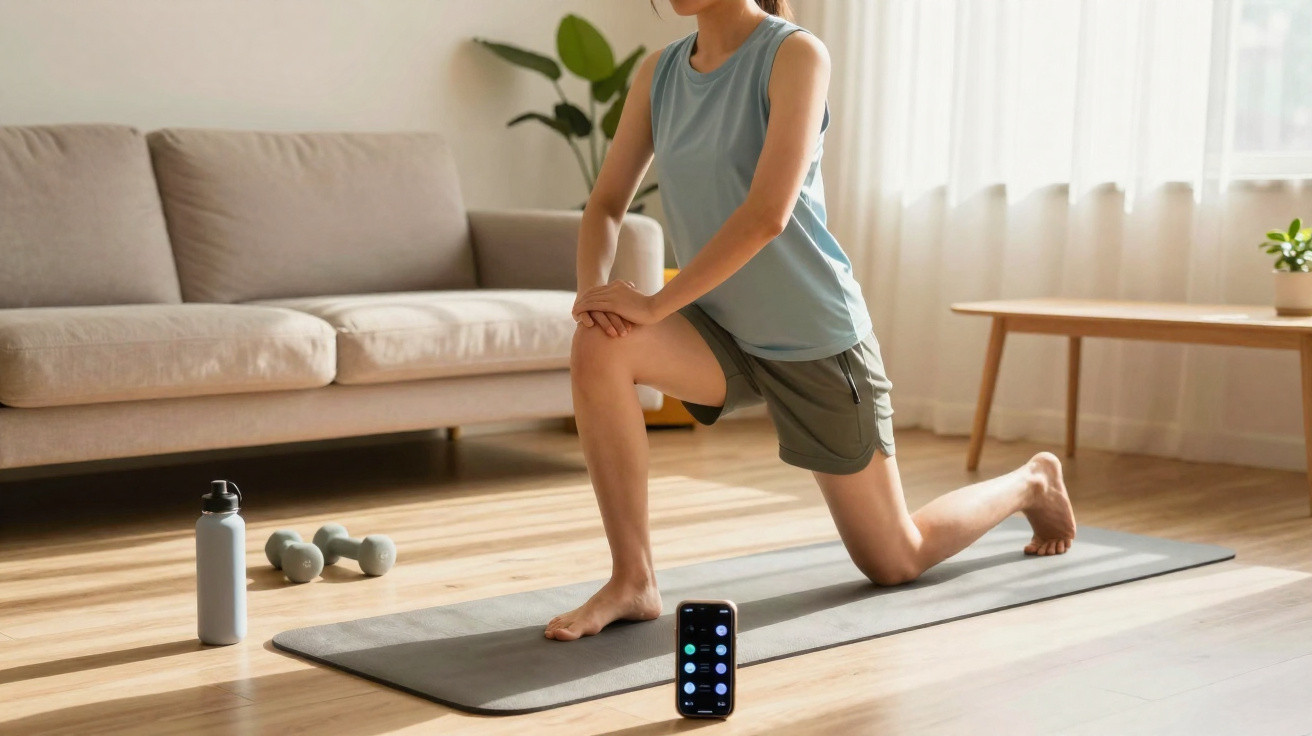
- Squats: strengthen the thighs, hips, and stabilising muscles.
- Training with weights or resistance bands: applies direct resistance to muscles and bones.
How strength training protects the skeleton
When a muscle contracts against a load, it pulls on the bone through the tendon. This controlled pulling is a key trigger for bone remodelling-the process in which the body renews older tissue and preserves structure.
Strength training also improves something especially important after the age of 50 or 60: the ability to respond to a loss of balance. Stronger legs, a steadier trunk, and better step control reduce the risk of falls, which are one of the main pathways to fractures in people with osteopenia or osteoporosis.
How to build a safe routine to get started
If you have been inactive, begin with light loads, slow movements, and support nearby. At first, the aim is not to push to exhaustion, but to repeat exercises with good posture and without joint pain.
- Walk for 20 to 30 minutes, 4 or 5 times per week, at a brisk pace.
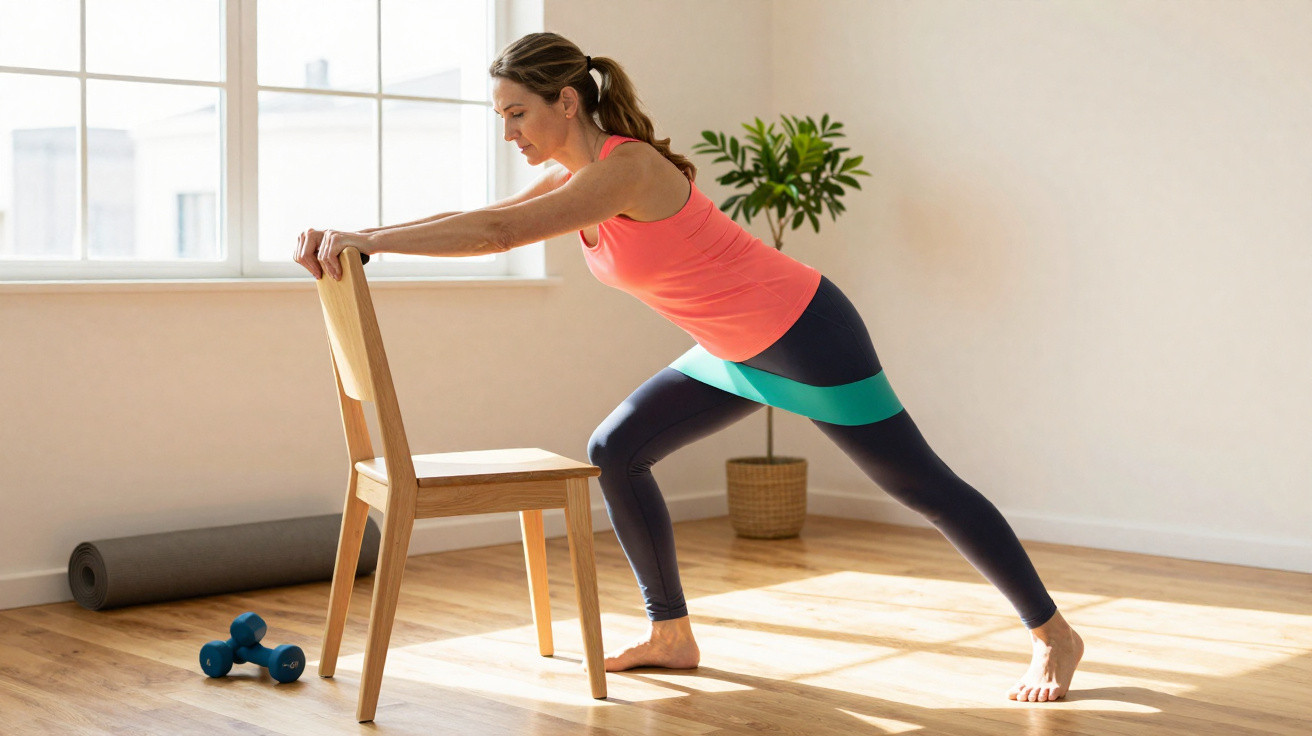
- Do 2 sets of 8 to 10 squats, holding on to a chair if needed.
- Add stair climbing in short blocks, without running and without skipping steps.
- Use light dumbbells, bottles, or resistance bands for rows, raises, and curls.
- Practise balance for a few seconds at a time, always near a wall or sturdy support.
Bone needs stimulation, not only movement
Swimming remains an excellent choice for overall health, particularly for people in pain, those who are overweight, or anyone who needs lower-impact exercise. The key point is that, for bone protection, it works best alongside walking, adapted strength training, stairs, and balance exercises.
Preventing osteoporosis calls for a routine that “speaks” to the skeleton: progressive loading, moderate impact, active muscles, and professional guidance when there is a diagnosis, persistent pain, or a history of fracture. The right training strengthens the body without turning prevention into risk.




Comments
No comments yet. Be the first to comment!
Leave a Comment