
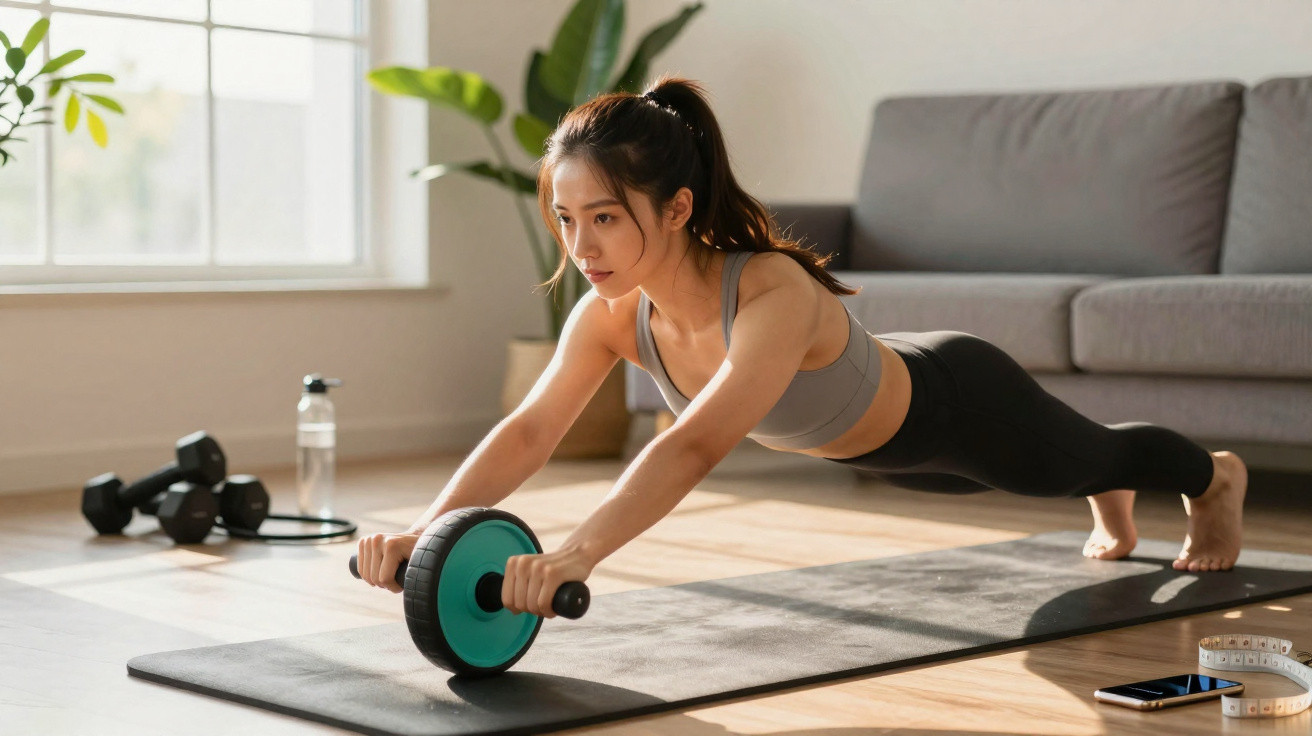
Anyone hoping to firm up their midriff often ends up wading through complicated moves, pricey subscriptions and bits of kit that eventually do nothing but gather dust. A straightforward option from the sports retailer shows there’s another way: a small 2-in-1 tool from Decathlon promises a tough abs session for little money - which is exactly why it’s in such high demand right now.
Why belly fat can feel so stubborn
For many people, fat around the stomach is the first thing they notice - and the last thing to shift. The body likes to store reserves there, especially if you sit a lot, feel stressed or eat irregularly. Even with dieting alone, that layer tends to reduce only slowly.
That’s where strength work for your core becomes crucial. When you challenge your trunk muscles consistently, you don’t just burn calories during the workout itself. A stronger midsection also adds stability in everyday life and can slightly increase your basal metabolic rate, because muscle tissue needs energy.
"A firm stomach comes from the combination of nutrition, targeted strength training and a bit of perseverance - not miracle promises."
There’s also a psychological boost: when you’ve completed a session, you often feel instantly more energised and “sorted”. That sense of achievement helps you stick with it, even if a six-pack isn’t visible yet.
The Decathlon 2-in-1 device in the spotlight
This is exactly where the current Decathlon gadget comes in. It’s an ab roller (often called an “ab wheel”) that’s paired with a guided elastic band. In the range, it’s listed as the “ab wheel evo” for abdominal training with or without elastic guidance.
The concept is simple: two classic fitness tools you’d normally buy separately are combined into one compact unit - and it costs 16,99 Euro. For plenty of people training at home, that’s a price point that makes it easy to buy without much hesitation.
- Wheel: challenges the entire core
- Elastic band: helps and limits the movement
- 2-in-1: fewer gadgets, more exercise options
- Price: well below typical studio equipment
How the ab wheel works
An ab wheel looks harmless - but the first time you try one, you quickly realise how demanding it is. You start kneeling on the floor, place your hands on the wheel’s handles and slowly roll your upper body forwards. Your core has to actively control the rollout, then bring you back again.
This targets, among other areas:
- the rectus abdominis (front abs)
- the obliques (side abs)
- the deeper core muscles along the spine
- the shoulders and arms as stabilisers
Using elastic guidance makes the move a little less brutal. The band reduces the chance of the wheel suddenly shooting forwards and pulling your body into an uncontrolled stretch. At the same time, you can still increase the challenge by rolling further, or simply moving more slowly.
"The elastic guidance works like a built-in brake - it lowers the risk of pushing too far, and increases control over every repetition."
What sets this model apart from standard ab wheels
Traditional ab wheels without any assistance are effective - but unforgiving. Many beginners drop into an exaggerated arch in the lower back, roll too far or lose abdominal tension. Over time, that can place strain on the back.
The Decathlon model takes a different approach:
- Guided support: the elastic band acts like a “return assist”, especially near the end of the forward phase.
- Adjustability: you can remove the band once you’re more confident and want to carry the full load yourself.
- Variable difficulty: intensity can be fine-tuned via range, tempo and rest.
If you’re just starting out, you can keep the band on and roll only a short distance. More advanced users can take the guidance off and work with a longer extension. Ideally, the device grows with your fitness level.
Who is this 2-in-1 tool worth it for?
A piece of kit for just under 17 euros won’t replace a full gym - but it can fill a gap. It’s particularly useful for:
- Home-training beginners who don’t have space for large machines
- Office workers who want to strengthen their core specifically
- Recreational athletes looking for a compact extra tool for core workouts
- Bargain-hunters who want to keep training costs down
One key point remains: if you have back pain or acute issues in the lumbar spine area, speak to a doctor or physiotherapist before training with an ab wheel. The movement loads the lower back heavily - which can be great for building stable muscles, but poor technique may make existing problems worse.
Sample workout with the ab wheel
To stop the device ending up in the corner, a simple starter plan helps. Here’s one possible routine for three sessions per week:
| Exercise | Sets | Repetitions | Note |
|---|---|---|---|
| Kneeling rollouts with band | 3 | 5–8 | roll only as far as your back stays stable |
| Side rollouts (slightly diagonal) | 2 | 5 per side | targets the obliques |
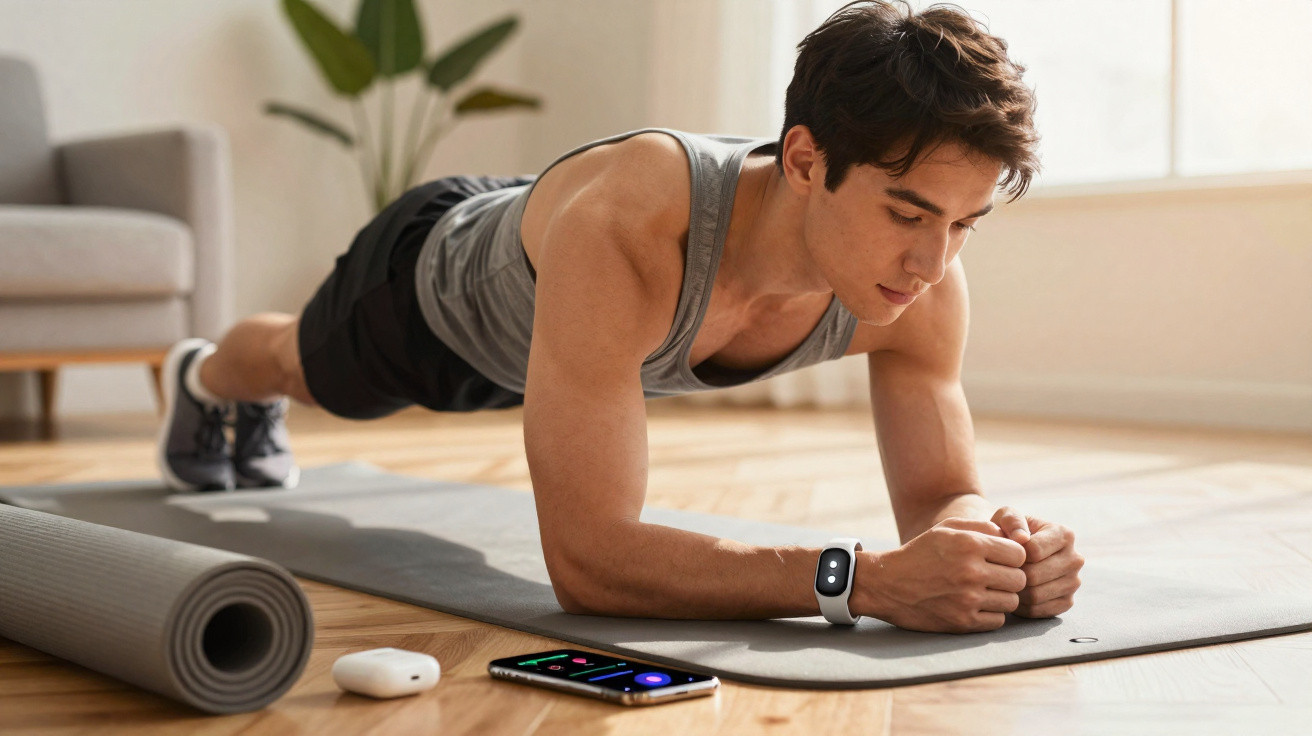
| Forearm plank (without the wheel) | 3 | 20–30 seconds | trains basic core bracing |
Between sets, a 60 to 90 second break is recommended. If you notice your form slipping, end the session or shorten the range of motion.
A flatter stomach despite small indulgences - how realistic is that?
No single device “burns” belly fat on its own. Your body decides where it draws on fat stores first. Pairing a calorie deficit with more daily movement and focused core work improves the chances that, over time, your waistband starts to feel looser.
Managing expectations is the best way to avoid frustration. The goal isn’t to achieve a model-perfect stomach in just a few weeks. Many users instead report effects like:
- trousers fitting more loosely even if the scales barely move
- a more upright posture and a back that feels more supported
- everyday tasks like lifting or carrying feeling easier
"The most noticeable result after the first few weeks usually isn’t a washboard stomach, but a more stable feeling in everyday life."
Common mistakes when training with an ab wheel
When you want quick progress, it’s easy to do too much too soon. With an ab wheel in particular, a few familiar errors crop up again and again:
- Rolling too far forwards: the hips sag and the lower back arches.
- No core bracing: you don’t consciously draw the stomach in; the shoulders do the work.
- Rushing the tempo: momentum replaces controlled muscle effort.
- Training too infrequently: a few reps every couple of weeks won’t do much.
A better approach is to begin slowly, prioritise technique and plan a small weekly progression - for example, one extra repetition, two seconds longer under tension or a few centimetres further on the rollout.
How to combine the gadget sensibly
The ab wheel delivers the best results when it sits within a broader plan. Useful additions include:
- two to three easy cardio sessions per week (walking, cycling, light jogging)
- one to two extra sessions using full-body strength moves (squats, lunges, knee push-ups)
- a largely protein-focused diet with a moderate calorie deficit
If you combine those building blocks, the 16,99-Euro device becomes an amplifier - not a stand-alone miracle fix. For people with limited space and a tight budget, that can be exactly what makes the difference: a compact tool that challenges you, keeps you motivated and can be slipped into a drawer once the workout is done.


Comments
No comments yet. Be the first to comment!
Leave a Comment