
Changing what people eat is often presented as a tough challenge - something that demands willpower, powerful motivation, or a major shove from public health campaigns.
Research from the University of Oxford, however, indicates that everyday eating habits may shift with a far simpler adjustment.
In the study, swapping just one meat-based lunch main for a vegetarian alternative led more customers to choose the meat-free option. At the same time, the overall food sold moved in a slightly healthier and more climate-friendly direction.
The trial took place in six workplace cafeterias in England, spanning both office environments and manual labour settings.
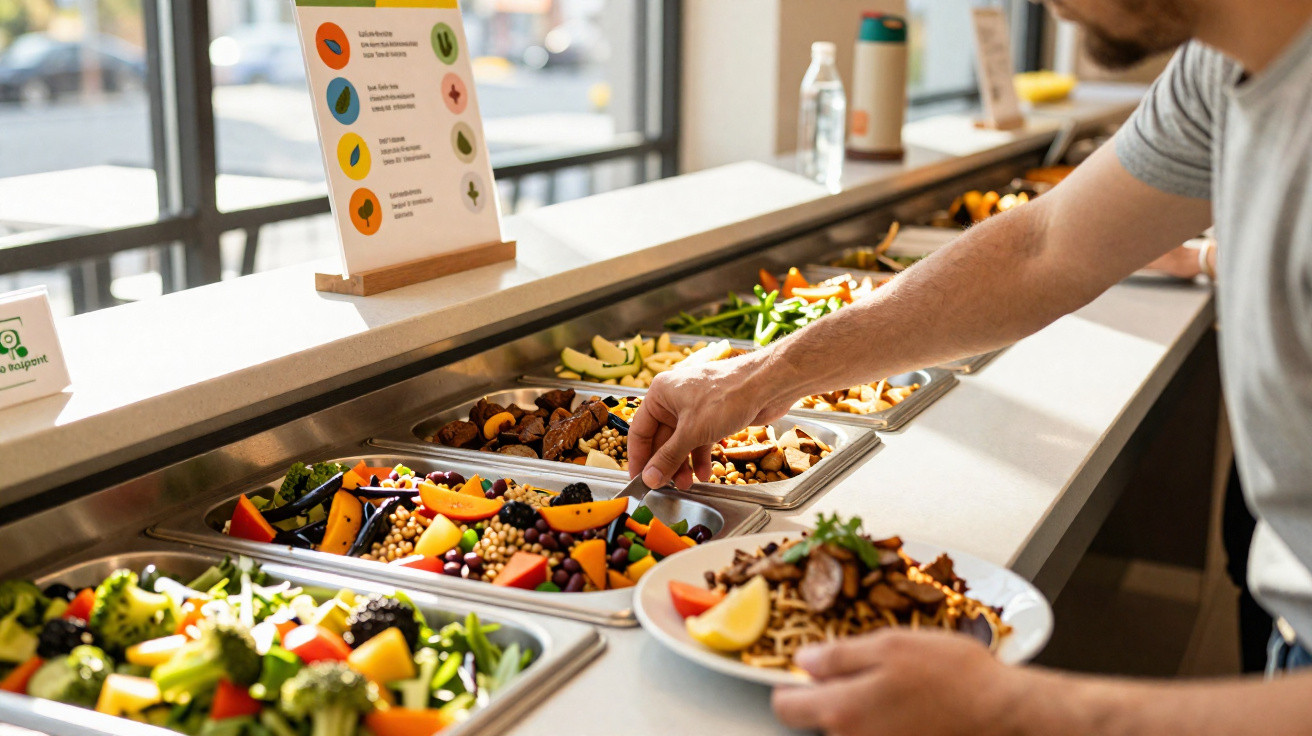
The intervention itself was deliberately minimal: cafeteria teams replaced one meat-based main dish with a vegetarian main, while keeping prices, the total number of options, and the rest of the menu exactly as they were. Customers were not informed that anything had changed, and meat dishes remained available.
Small menu change, big diet impact
What stands out is that the researchers did not try to convince people to change their behaviour - they asked almost nothing of them.
There were no warning labels, no moral appeals, no guilt-inducing messages, and no attempt to steer diners towards the “right” decision. Instead, managers made a small menu tweak and allowed lunchtime to run as normal, with diets being shaped quietly in the background.
It can sound too minor to make a difference. Yet many food choices - particularly at work - are made quickly and almost on autopilot. People are hungry, busy, and keeping an eye on the time, rather than carefully balancing nutrition against environmental impact.
That is the central question the trial explored: not whether people say they want to eat less meat, but whether a subtle shift in what is offered can nudge behaviour without fanfare.
The study ran for seven weeks and used a stepped-wedge cluster randomised controlled design. This meant the six cafeterias introduced the change at different, randomly assigned times.
As a result, the researchers could compare each site’s purchasing patterns before and after the intervention, rather than relying on a single point-in-time comparison.
People did choose differently
Across the main study window, the intervention covered 26,170 meal sales over 42 site-weeks. After one meat option was replaced with a vegetarian one, the chance of a customer selecting a vegetarian main increased by 41 percent.
That outcome is notable precisely because the adjustment was so modest. The cafeterias did not switch to an all-vegetarian offer, and meat was not removed. Diners also did not have to hunt for a niche option tucked away from the main choices.
Vegetarian dishes simply occupied a little more room within the standard lunch selection - and that alone shifted purchasing. The findings suggest many people’s eating habits may be more adaptable than is often assumed.
Rather than requiring lengthy persuasion, the better option may sometimes just need to be easier to choose, more visible, and seen as a normal part of the menu.
The workplace setting adds to the relevance of the results. This was not a laboratory experiment, nor a university canteen serving a narrow group.
Instead, these cafeterias catered to a wide range of workers with different schedules, tastes, and budgets - making the findings feel grounded in everyday life.
Meals got a bit healthier
The effect was not limited to higher vegetarian sales. On average, the meals sold during the intervention were also slightly healthier.
Each meal contained 26.1 fewer kilocalories (about 26 Calories). Average levels of fat, saturated fat, salt, carbohydrates, and protein were also lower, while fibre and sugar did not change.
A single lunch will not transform someone’s health. But small improvements, repeated across thousands of purchases, can add up.
This is what the data point to: even a small shift in the menu can improve the overall nutritional profile of what people actually buy - and therefore what they eat.
The environmental indicators moved in the same direction. Greenhouse gas emissions fell by 0.16 kilograms of CO2-equivalent per meal, which the researchers said amounted to an 8.5 percent reduction.
The authors did not claim the environmental figures were exact. The estimates came from ingredient information linked to environmental databases, rather than tracking the full supply chain for every component of each dish.
Even so, the signal is clear: when vegetarian mains were given slightly greater prominence, the average meal sold carried a smaller environmental footprint.
No downside for cafeterias
A common concern with interventions like this is that they might provoke backlash. People may feel choices are being restricted, or they might spend less - leaving cafeterias with higher waste and lower takings.
In this trial, the researchers found no significant negative impact on total meals sold, cafeteria revenue, or food waste (measured by either weight or value).
That matters for feasibility. A healthier, lower-carbon change is far more likely to spread if it does not penalise the people running the service. Here, the intervention appears to have been straightforward to deliver without triggering the problems managers might anticipate.
Comments from staff and customers supported that view. The change was seen as acceptable and easy to operate, and was largely unnoticed.
Some feedback did suggest vegetarian dishes could be made more attractive through improvements in taste and pricing.
The menu shapes diet choices
“The findings show that small changes to food environments can have a big effect without requiring customers to make extra effort, read labels, or use self-control,” said lead author Elisa Becker, a postdoctoral researcher in the Nuffield Department of Primary Care Health Sciences.
“Instead of placing the burden on consumers, we found that simply offering more options that are better for health and the environment shifts eating behavior.”
The results underline that eating patterns are not just a series of isolated personal choices. The surrounding environment shapes decisions - often in subtle, quiet ways.
Researchers say the findings could inform UK workplace food policy and encourage similar approaches in other settings. The study is compelling because it demonstrates a small, plausible change rather than an unrealistic overhaul.
Only one lunch option was replaced. No one was forced, no one was lectured, and yet purchasing still shifted.
The research is published in the International Journal of Behavioral Nutrition and Physical Activity.






Comments
No comments yet. Be the first to comment!
Leave a Comment