
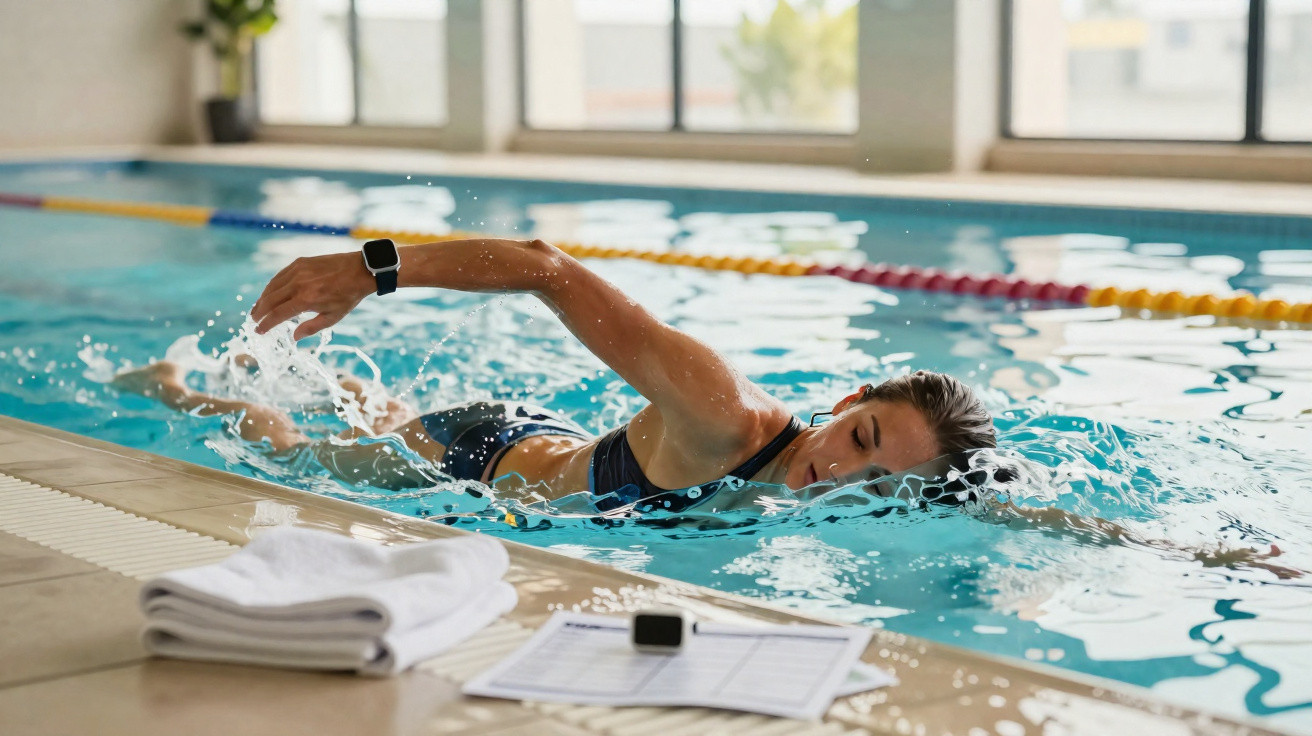
Swimming is often seen as the secret weapon for anyone wanting to shift belly fat without grinding down their joints. A swimming coach has explained how long you should spend in the pool, which strokes are worth your time, and how a simple routine can lead to a visibly firmer midsection.
Why swimming shapes your stomach so effectively
Swimming trains the whole body. Your arms, legs, back and glutes all work hard - and your entire core is involved too. Because you’re pushing against the resistance of the water, your body has to stay stable, and that’s exactly when your abdominal muscles switch on automatically.
If you deal with back or neck pain, there’s another plus: water supports much of your body weight, taking pressure off the spine and avoiding impact altogether. That means you can train hard without feeling completely battered afterwards.
"A flat stomach doesn’t come from a single exercise, but from the combination of calorie burn, an active metabolism and targeted core work."
Even so, you can’t “train fat away” from one specific spot - your body decides where it uses up stored energy. Swimming helps because:
- you burn a lot of calories, especially at a brisk pace,
- your heart rate stays moderate to high, challenging your cardiovascular system,
- your abdominals have to stabilise continuously rather than only working in short sets,
- your basal metabolic rate increases, meaning you also burn more energy after the session.
With consistent swimming, your waist can look slimmer, your posture more upright, and your stomach smoother - even if the number on the scales only changes slowly.
The ideal duration: how long you should swim
When it comes to swimming to reduce belly fat, stroke choice matters less than time and intensity. A swimming coach puts it plainly: if you want visible results around your middle, you need endurance - literally.
"A swim session of at least 45 minutes is recommended, at a pace that challenges you without completely overwhelming you."
The reasoning is straightforward. During the first minutes your body ramps up gradually as heart rate and breathing adjust. Once you can sustain the effort for longer, calorie expenditure properly kicks in and fat stores play a bigger role.
The coach suggests choosing a speed where you’re breathing noticeably faster but could still speak in short sentences if someone asked you a question from the poolside. If you’re totally out of breath after five lengths, you’re going too fast. If, after 45 minutes, you feel like you barely worked, you took it too easy.
How many calories you burn in the pool
The exact number depends on your body weight, technique and pace, but these rough guide values are useful:
| Stroke | Calories per 30 minutes (guide) | Typical use |
|---|---|---|
| Breaststroke | around 340 kcal | steady to moderate sessions |
| Butterfly | around 380 kcal | very intense training, generally for experienced swimmers |
| Front crawl / back crawl | similar to breaststroke, higher depending on pace | interval work, cardiovascular boost |
More important than the precise calorie figure is this: your sessions need to be long enough to feel demanding, without forcing you to stop halfway through.
Specific plan: 45-minute programme for a firmer stomach
So what does an ideal swim session look like in practice? The coach recommends a structure that ambitious beginners can manage too - as long as they’re confident swimmers.
Phase 1: Easy warm-up swim (10 minutes)
Begin with a relaxed warm-up. The goal is to mobilise your joints and settle your breathing into a rhythm.
- 5 minutes easy breaststroke or back crawl, no time pressure
- 5 minutes alternating 1 length breaststroke, 1 length back crawl
At this stage you should still be able to chat comfortably. It’s genuinely just about getting your body “switched on”.
Phase 2: Cardiovascular main set (25 minutes)
This is the block that really challenges your belly fat stores. The principle is intervals: faster efforts alternate with calmer sections.
- 3 × 4 minutes brisk front crawl or back crawl, with 2 minutes slow breaststroke in between
- 5 minutes using a kickboard or pool noodle, legs only, moderate pace
That variation keeps your pulse up without you completely fading. Especially with front crawl, your core has to work harder to keep you stable and streamlined - which is precisely what makes your abdominals work.
Phase 3: Core focus in the water (10 minutes)
To finish, you target your midsection more directly - still in the pool, without classic mat crunches.
- Kick with a board: 3 sets of 2 minutes, 30 seconds rest. Hold the board in front, keep your body long, brace your stomach and squeeze your glutes.
- Slow front crawl with emphasised rotation: 4 lengths, swimming very deliberately. Rotate your upper body slightly with each arm pull to engage the obliques.
- “Pool-edge knee tucks”: Hold the pool edge with your hands, body in the water, and pull your knees towards your chest. 3 sets of 15 repetitions.
"These last minutes make the stomach visibly firmer instead of just ‘coming along for the ride’."
How often you should swim for real change
One session mainly leaves you feeling good - genuine changes around the stomach require routine. The coach recommends aiming for:
- swimming 2 to 3 times per week,
- at least 45 minutes per session,
- with roughly half of that time in a moderately demanding zone.
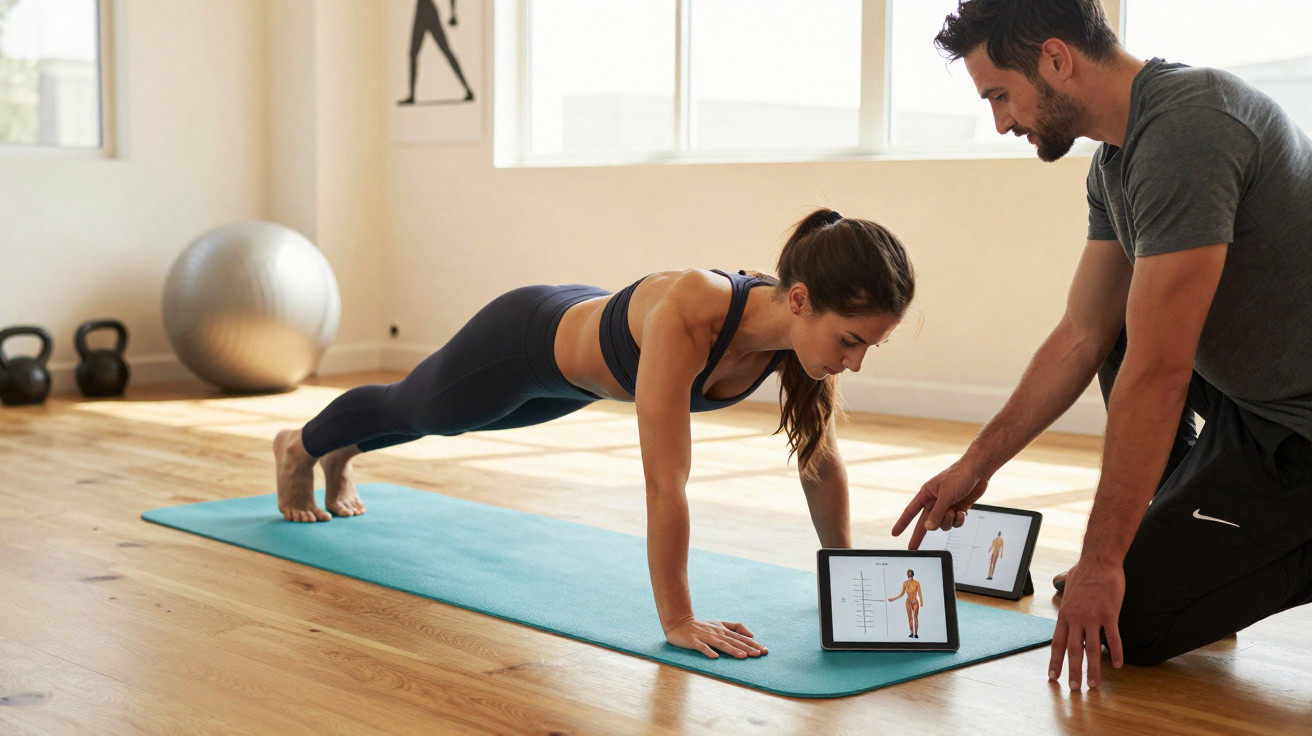
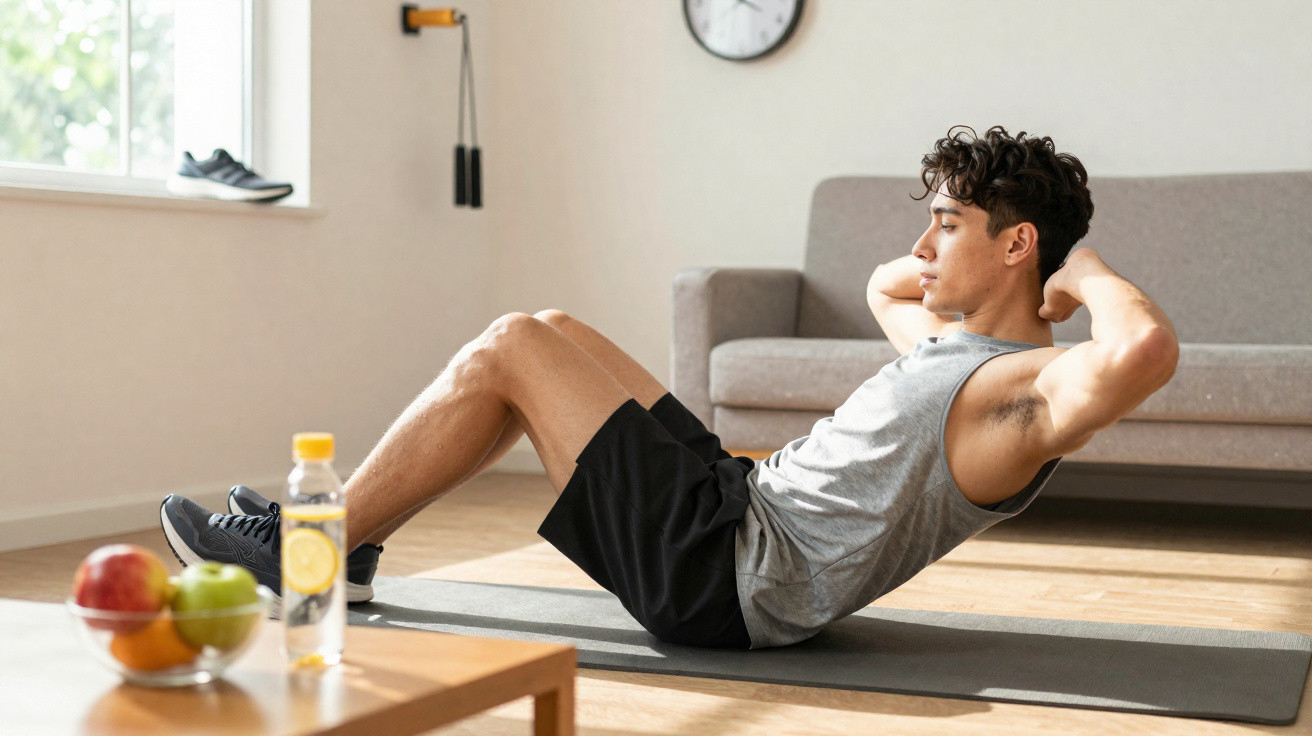
If you can’t get to the pool, you can top up on land: planks, side planks, slow sit-ups, or exercises with a gym ball can reinforce the effect. If you swim regularly and don’t let your diet slide completely, you can notice changes around your stomach and waist within a few weeks.
Nutrition and recovery: without them, the effect fizzles out
Swimming on its own often isn’t enough if it’s followed immediately by big fast-food meals or random snacking. If you want to firm up your stomach, aim for a small calorie deficit and cut back on very sugary drinks.
Practical rules of thumb:
- use carbohydrates around training (fruit, oats, wholegrain foods),
- after swimming, prioritise a portion of protein (quark, yoghurt, pulses, eggs),
- drink at least 1.5 to 2 litres of water per day - more for longer sessions.
Sleep matters too. When you’re constantly tired, cravings tend to increase and you typically burn fewer calories. Two to three nights of good sleep per week often helps more than you might expect.
Who swimming is especially suitable for - and what to watch out for
Swimming suits almost anyone who wants to start without heavy impact. People with a higher body weight, knee issues or back discomfort can often become active again without risking pain. If you haven’t exercised for a long time, it’s sensible to get a quick medical check before you begin - especially if you have any cardiovascular concerns.
Technique is important. Poor body position in the water and tense movement waste energy and put unnecessary strain on the shoulders and neck. One or two technique sessions at a club or in a swimming class can be hugely worthwhile - you’ll swim more efficiently, faster, and burn more calories with less frustration.
If you want more variety, you can combine your swims with aqua fitness or aqua jogging. Both make strong use of water resistance for the legs and core and can amplify the stomach-focused benefits of swimming.
In the end, what matters isn’t perfect technique or an ideal pool length, but consistency. Three reasonably focused 45-minute sessions per week will do more for your stomach than a heroic, one-off marathon in the pool.


Comments
No comments yet. Be the first to comment!
Leave a Comment