
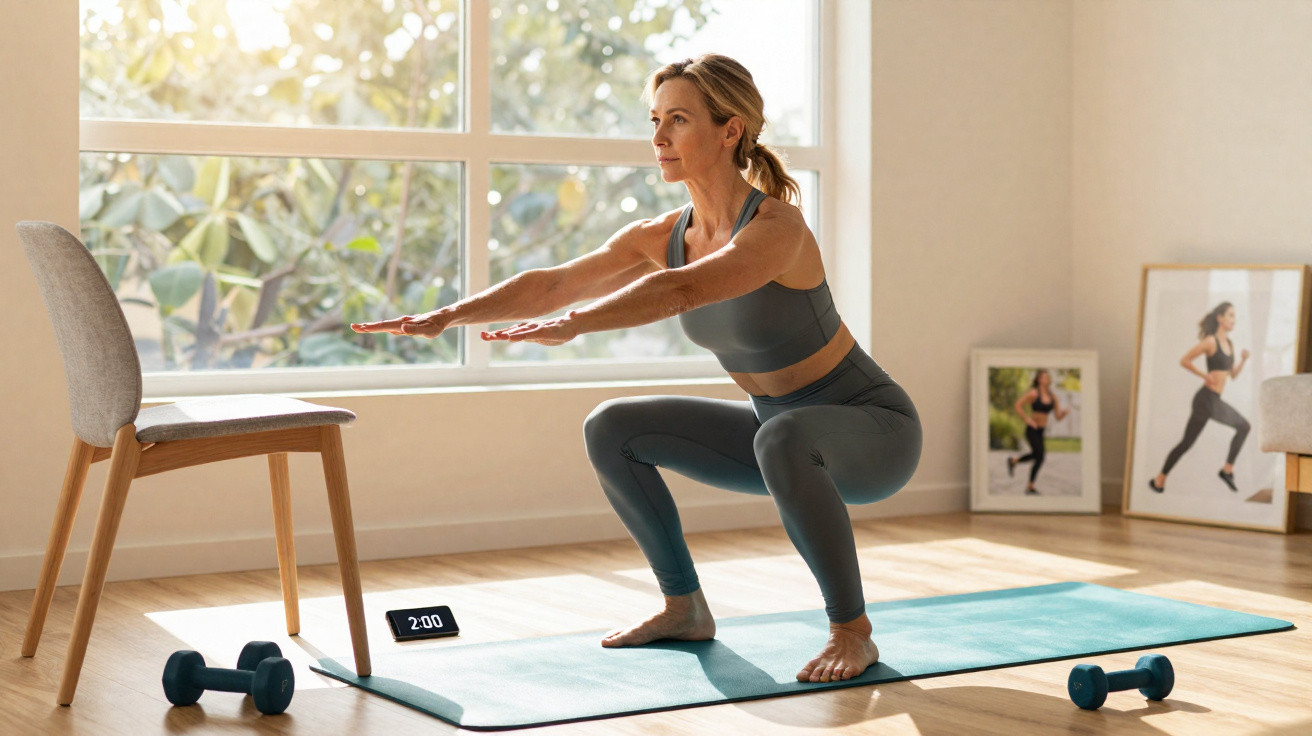
The squat is one of the foundations of conditioning in health, linked to building muscular strength, improving balance and enhancing body stability. When it becomes part of regular physical exercise, particularly in short 2-minute routines, it turns into a practical approach to support wellbeing, mobility and muscular endurance. This kind of habit is also associated with helping to delay ageing and encouraging greater vitality across the next 20 years of active life.
Why does the squat improve body stability?
The squat is widely used in health because it activates large muscle groups such as the glutes, legs and core, which supports stability and overall balance. This type of physical exercise also contributes to better posture, lowering the risk of injuries and improving joint mobility.
When you practise the squat consistently as part of a 2-minute routine, it promotes functional strengthening that helps the body cope with everyday demands. Keeping up with this physical exercise can also aid efforts to prevent early ageing and improve motor coordination.
How do 2 minutes of daily physical exercise affect the body?
Doing 2 minutes of physical exercise may sound modest, but from a health perspective it can be very effective at activating the metabolism and boosting blood circulation. In this setting, the squat is one of the most complete functional movement patterns.
With just 2 minutes each day of physical exercise, the body can start to develop greater stability, endurance and muscular strength. Key benefits include:
- Improved circulation and muscular oxygenation;
- Increased strength in the legs and the core;
- Reduced sedentary time within a health-focused routine;
- Support for the process of delaying ageing over the 20 years.
Can stability really delay ageing?
In health, body stability is one of the most important factors for maintaining independence and quality of life. The squat helps reinforce essential muscles that directly influence balance and mobility over time.
When paired with only 2 minutes of daily physical exercise, the body can respond with greater endurance and reduced functional wear and tear. This can meaningfully contribute to delaying ageing, especially across consistent 20-year cycles of practice.
What benefits does the training bring for health and longevity?
The squat is among the most comprehensive exercises in health, as it develops strength, balance and better body stability. Included within a physical exercise routine, it can enhance the body’s functional capacity.
A routine of just 2 minutes a day can lead to positive effects such as improved energy, better posture and stronger muscles. The main benefits of this practice include:
- Increased functional longevity over the 20 years;
- Help with the process of delaying ageing;
- Improved stability and overall body balance;
- Broad strengthening through consistent physical exercise.
Keeping the squat as part of a health routine is a simple and effective way to build stability, improve physical performance and help delay ageing over the 20 years, reinforcing the value of just 2 minutes of daily physical exercise.

Comments
No comments yet. Be the first to comment!
Leave a Comment