
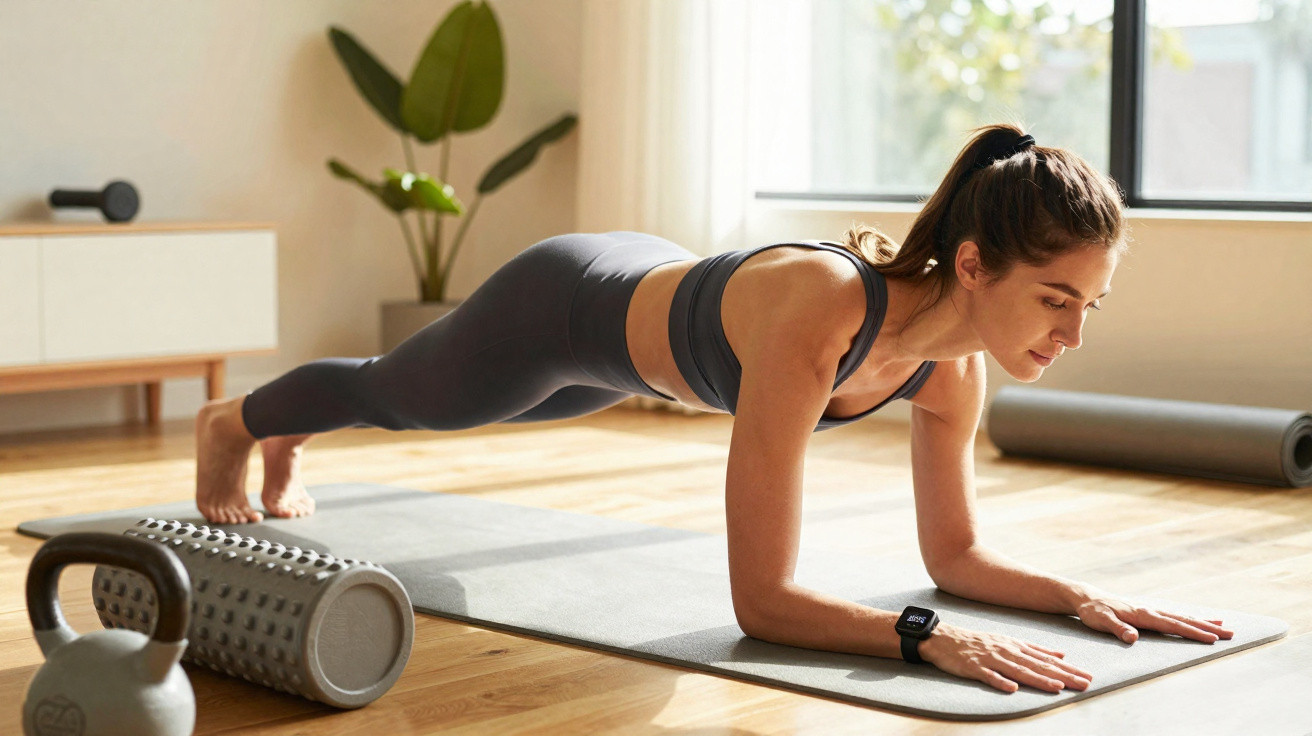
The abdominal plank is one of the most widely used exercises for building a stronger core and improving overall body stability. Plenty of people assume that holding the position for several minutes leads to faster progress, yet professionals stress that how well you perform it matters far more than how long you last. According to coach Kevin Carr, holding a plank for up to 60 seconds is usually enough to challenge the muscles effectively, while helping you avoid postural compensations that can limit the exercise’s benefits.
How long should I hold an abdominal plank?
Functional training specialists generally recommend a target time of 20 to 60 seconds for most people. The aim isn’t to stay in the position for as long as possible, but to maintain proper muscular tension from start to finish.
After roughly one minute, many people begin to lose body alignment. When that happens, the exercise becomes less effective and the likelihood of placing extra strain on the lower back may increase.
How can I tell if I’m doing the plank correctly?
Good technique comes down to keeping your body aligned and deliberately engaging the abdominal muscles, glutes and legs. Even minor technical faults can undermine results and make the movement feel more uncomfortable.
These signs can help you check whether your abdominal plank form is on track:
- Your body stays in a straight line from head to heels.
- Your abdomen remains braced throughout the hold.
- Your hips neither sag nor lift too high.
- Your neck stays in a neutral position.
- Your breathing is steady and controlled.
What are the most common plank mistakes?
Many people can hold the position for a long time, but do so with poor form. That reduces muscular engagement and may create unnecessary tension elsewhere in the body.
To help protect your spine and get the real benefits from this movement, it’s worth following the guidance from @patriciaandersen. In the video below, she highlights the most common plank errors and explains how to adjust your posture.
What should I do after I can hold a 60-second abdominal plank?
Once holding the position for a minute no longer feels challenging, simply extending the time isn’t always the smartest next step. At that point, it can be more useful to choose exercises that demand greater stability, co-ordination and body control.
Variations such as shoulder taps, bringing the knee towards the chest, and side-to-side movements increase the difficulty without requiring very long holds. These adjustments recruit different muscle groups and make training more well-rounded. This approach helps you keep progressing in core strength, improve muscular endurance, and achieve better results through sessions that are more efficient and safer.


Comments
No comments yet. Be the first to comment!
Leave a Comment