
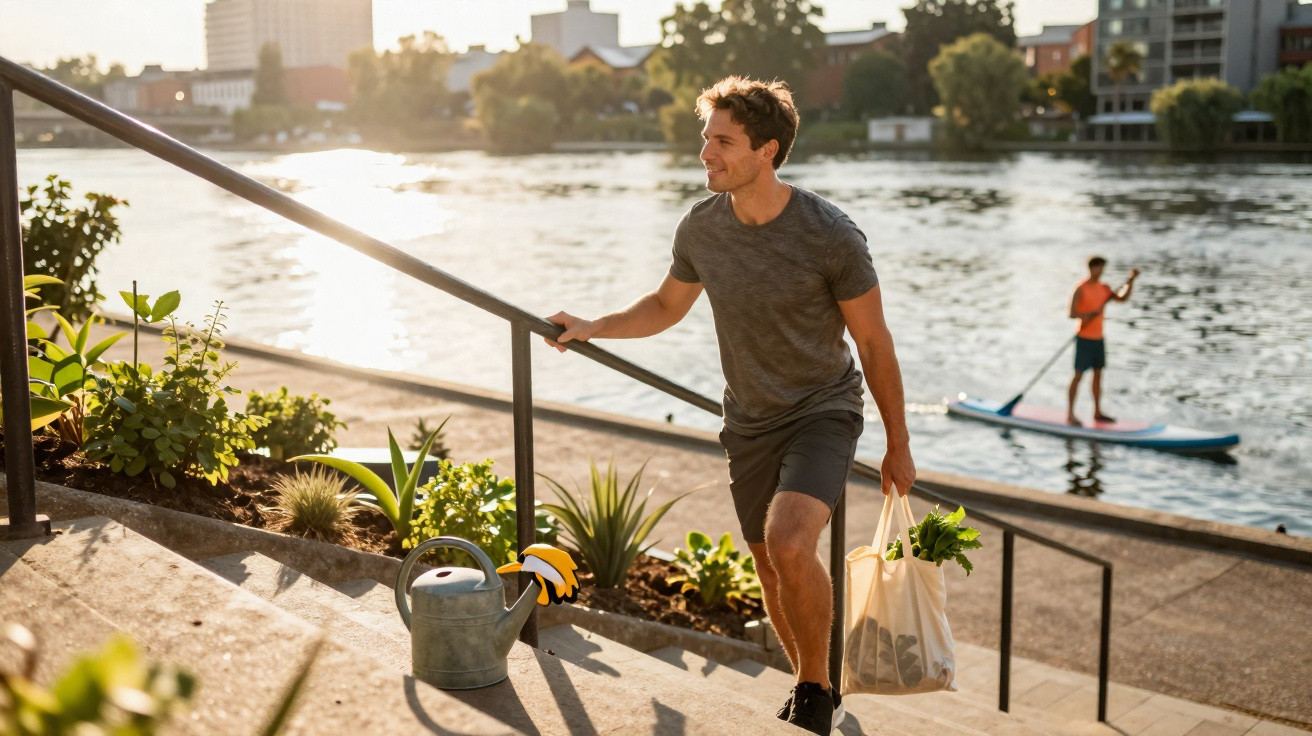
For many people, the gym is not the ideal place to get moving. The routine, the enclosed environment and the need to stick to fixed times can put off anyone who prefers more spontaneous activities. Even so, the body needs regular stimulus to maintain strength, posture and energy-especially from the age of 30, when muscle loss tends to speed up. One straightforward alternative is to turn everyday tasks and moments into genuine opportunities to exercise, spreading movement across the week.
How can you turn everyday life into an effective workout?
Rather than putting all your effort into long sessions, you can challenge your body several times a day in shorter blocks. Climbing stairs, carrying shopping bags, pushing a shopping trolley, squatting to pick things up from the floor or weeding a flower bed all demand coordinated muscular effort and, when repeated, help build strength and stamina.
This more active way of living is grounded in practical choices, without relying on machines or specific venues. Walking on steep paths, choosing the stairs over the lift, or paddling on a lake at the weekend can add up to a meaningful amount of movement for health over the course of a month.
Watch a video on the YouTube channel Treino em Foco about how to perform strength-training and calisthenics movements with correct posture to tone your body safely:
https://www.youtube.com/watch?v=G3w7B8n9M_U
Why do hills and stairs help so much with strength and stamina?
Walking uphill strongly activates the legs and glutes-large muscle groups that influence stability, joint alignment and energy expenditure. Hills, steep streets or staircases work like light-to-moderate strength training, increasing the demand on the thighs, calves and lower back.
With repetition, the body adapts, breathing becomes more efficient and that feeling of “heavy legs” usually eases. To make these choices more consistent and easier to organise in your routine, a few simple strategies can help.
- Short, frequent climbs help you keep momentum without too much strain.
- Stairs at home or at work can replace the lift for part of your journey.
- Planned breaks that include short uphill sections during your daily walks.
How does stand-up paddle work balance, strength and your heart?
Stand-up paddleboarding is a good outdoor option for anyone who wants to exercise without going to the gym. Standing on the board engages the abdominals, lower back and hips to maintain balance, while the paddling motion strengthens the shoulders, arms and back, with the legs acting as stabilisers.
At a moderate pace, paddling supports cardiovascular fitness and muscular endurance. To stay safe and progress gradually, a few practical guidelines make a big difference.
- Start in calm water, such as reservoirs or sheltered stretches of beach.
- Wear a buoyancy aid and, if possible, learn from a qualified instructor.
- Begin with short sessions and pay attention to how your body responds to the effort.
How can you keep an active routine with housework, the garden and small choices?
Household chores and gardening can serve as low-key conditioning sessions. Sweeping, scrubbing floors, moving light furniture and cleaning windows recruit the arms, legs and core, while weeding, digging and carrying soil build stamina and require good posture to protect the spine.
To shape an active routine, it helps to combine different moments: uphill walks on some days, stand-up paddleboarding at weekends, more thorough cleaning on specific dates, and small plant-care tasks throughout the week. Respecting personal limits, pain and medical guidance is essential; still, by turning commuting, chores and leisure into opportunities to move, your body benefits from a more active life without relying exclusively on the gym.

Comments
No comments yet. Be the first to comment!
Leave a Comment