
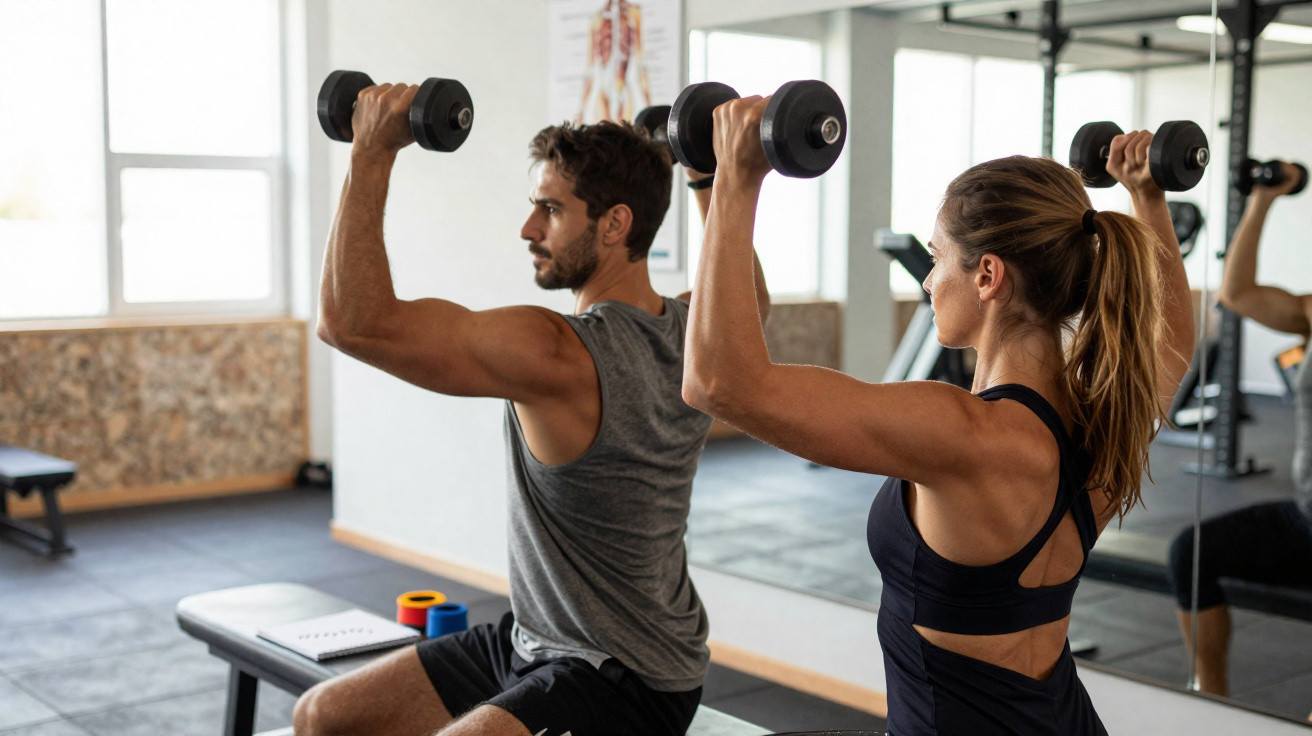
People looking to build their upper body often want an exercise that delivers visible progress without putting their joints at risk. If your goal is to strengthen and define the shoulders, the lateral raise stands out as one of the most effective choices. Done well, it trains the shoulder muscles in a balanced way, helps create a more proportional shape, and lowers the chance of overload. Rather than chasing heavier weights, the priority is to own the technique so you target the right muscles and protect the rotator cuff.
What is the best exercise to strengthen and define the shoulders?
The lateral raise is widely seen as one of the most efficient exercises for shoulder development. It places most of the demand on the lateral deltoid, the muscle chiefly responsible for creating the look of broader, more clearly defined shoulders.
Beyond aesthetics, this movement also supports shoulder joint stability. When you use control and a sensible range of motion, it offers an excellent balance between building strength and keeping the joint safe.
How does the lateral raise work the three deltoids?
Even though the lateral deltoid is the main target, good form also brings the other shoulder portions into play. That broader recruitment encourages more even development and can carry over to better performance in other lifts.
As you raise and control the arms, several muscles contribute to both movement and joint stability:
- Lateral deltoid: the primary driver of lifting the arms.
- Anterior deltoid: assists with the motion and helps control the upward phase.
- Posterior deltoid: supports stability and keeps the shoulders aligned.
- Rotator cuff: works to protect the joint throughout the entire movement.
What is the correct technique to avoid rotator cuff injuries?
Many injuries happen because people try to use weights that exceed their current capacity. That leads to compensations elsewhere in the body and significantly reduces how effective the exercise is. For that reason, technique should always come first.
To show exactly how the body tries to “cheat” and compensate when the load is too heavy, coach @laerciorefundini has put together a complete guide covering the biggest execution mistakes and how to correct your posture. Watch the video below and learn to train safely:
https://youtu.be/c7zMmbWkUPw?si=N-TicBG02ajCXQvr
How many repetitions are needed to get faster results?
The ideal number of repetitions depends on your fitness level and training experience. For most people, performing between 10 and 15 repetitions per set usually provides an excellent stimulus for strength gains and muscle definition.
In general, three to four sets are enough to produce consistent results over the weeks. What matters most is keeping the movement high-quality from start to finish, because controlled execution brings more benefit than simply increasing the weight you use.




Comments
No comments yet. Be the first to comment!
Leave a Comment