
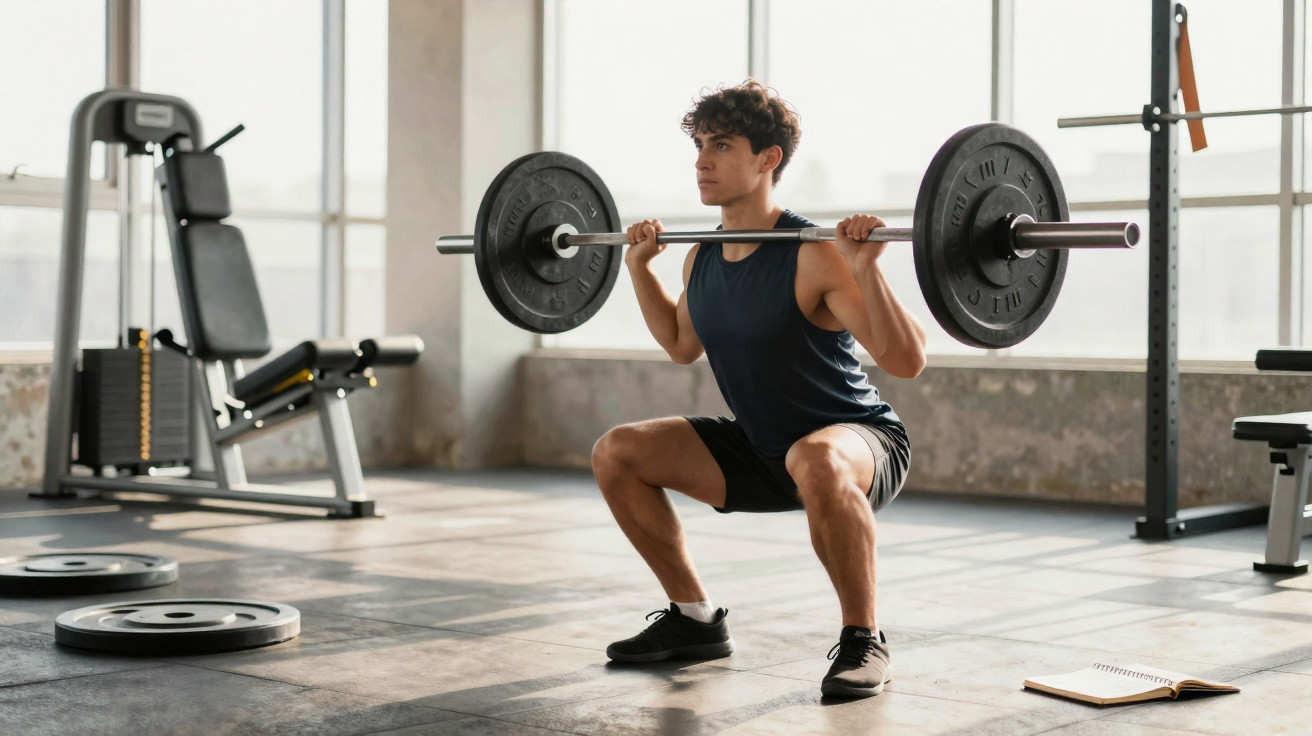
Among lower-body exercises most talked about in gyms, the free squat and the leg press machine often split opinion. In recent years, however, many fitness professionals have argued that doing squats every day-with sound technique and carefully managed load-can deliver broader benefits than relying solely on the leg press, particularly for anyone who also wants training options at home.
Why is the free squat more complete than the leg press?
The free squat is a multi-joint movement that uses the hips, knees, ankles and spine at the same time. It recruits several muscle groups together-quadriceps, hamstrings, glutes, calves, the core musculature and spinal stabilisers-which raises the demand for coordination and balance.
In everyday life, squatting mirrors actions such as sitting down and standing up, picking items up from the floor, or stepping up onto a bench. The leg press, while highly effective for thighs and glutes and allowing heavy loads, reduces the need for stabilisation because the torso is supported. That makes it easier to use, but it can limit overall development of functional strength.
Watch a video on Instagram from fabriciopacholok showing which of the two is the better option:
"View this post on Instagram"
How can you reduce the risk of knee discomfort when squatting?
Concerns about knee pain or injury lead many people to prioritise machines. Recent studies, however, suggest that when technique is correct and progression is well planned, squatting tends to strengthen tendons, ligaments and the supporting musculature rather than cause harm-provided the load is not increased too quickly.
To make squats safer, it helps to follow a few basic points that protect the knees and spine while improving movement quality:
- Work within your own range of motion, keeping a neutral spine and the heel firmly on the floor.
- Brace the torso, with the chest slightly open and the abdominals engaged, avoiding rounding the lower back.
- Keep the knees tracking in line with the toes, without letting them collapse inwards on the way down.
- Share the load through the mid-foot and heels, rather than tipping everything onto the toes.
Is it safe to do squats every day with different loads?
Squatting daily does not mean repeating the same heavy session every day. The approach is to rotate intensity, volume and purpose: some days are lighter and focused on mobility and control, while other days are more demanding, with fewer repetitions and more load-always in line with your current fitness level.
Three factors help determine frequency: the heavier the load, the more recovery you need; very high volumes call for more rest, especially for beginners; and more advanced trainees generally tolerate day-to-day variation better. With that in mind, you can mix heavy, moderate and light days, using the leg press as a supplement rather than the main foundation of the programme.
How do you fit daily squats into a home or gym routine?
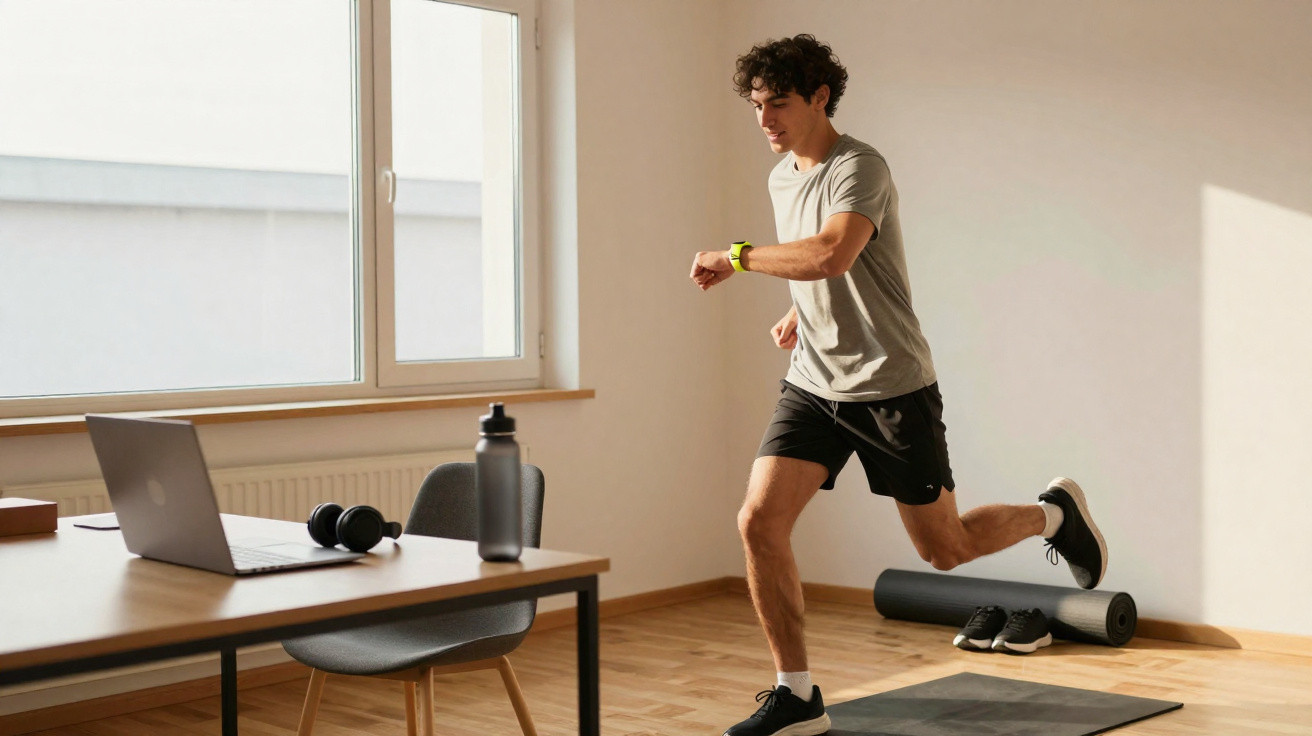
In the gym, free squats can be done with a barbell, dumbbells or on a Smith machine; at home, bodyweight may be enough, or you can use improvised loads such as rucksacks and water bottles. The key is not to treat every session as a max-effort test, but to use the movement to practise technique and build strength progressively.
One straightforward template is to alternate: one day of heavier free squats as the main lift; another day with a lighter variation (such as a goblet squat) to emphasise mobility and activation; and a third day where the leg press is added only to boost volume for the quadriceps and glutes. Done this way, daily squatting becomes a tool to improve coordination, posture and overall strength, reducing dependence on specific machines without compromising joint safety.




Comments
No comments yet. Be the first to comment!
Leave a Comment