
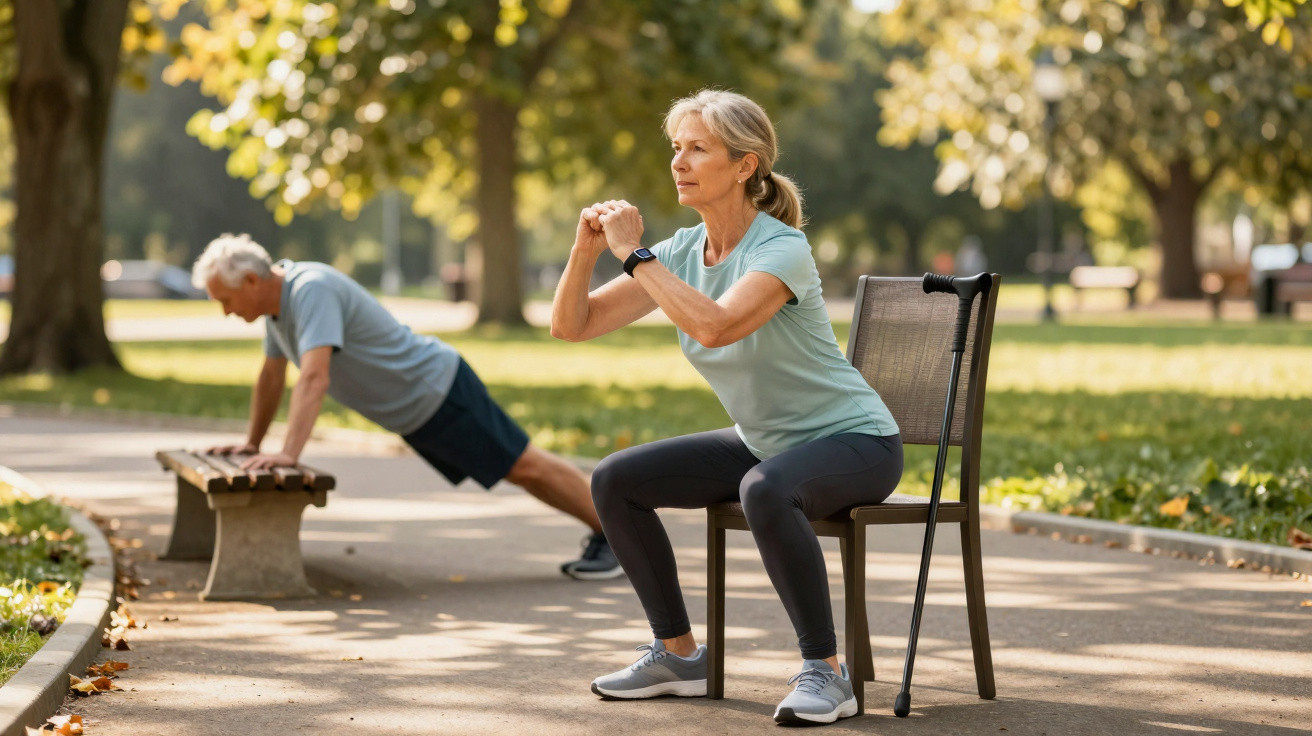
Walking remains valuable for cardiovascular health, but on its own it may not provide enough stimulus to maintain the full level of muscle strength many people need after 60. Exercises such as the chair squat and the bench press-up train everyday movement patterns and can sit alongside walking to support independence, balance and the ability to manage daily tasks.
Why might walking alone not be enough after 60?
Walking gets you moving, improves fitness and helps cut down time spent sitting, yet it usually places limited resistance on the arms, chest, back and parts of the leg musculature. As we age, keeping strength and power becomes particularly important for standing up, carrying items, climbing steps and regaining balance when you wobble.
- Walking supports heart health and stamina;
- Strength training challenges muscles that walking does not work hard;
- Functional movements make household and personal tasks easier;
- Stronger legs help you rise from chairs and sofas;
- Exercises for the trunk improve stability and posture;
- Combining activities delivers more rounded benefits.
Which goal is the chair squat most effective for?
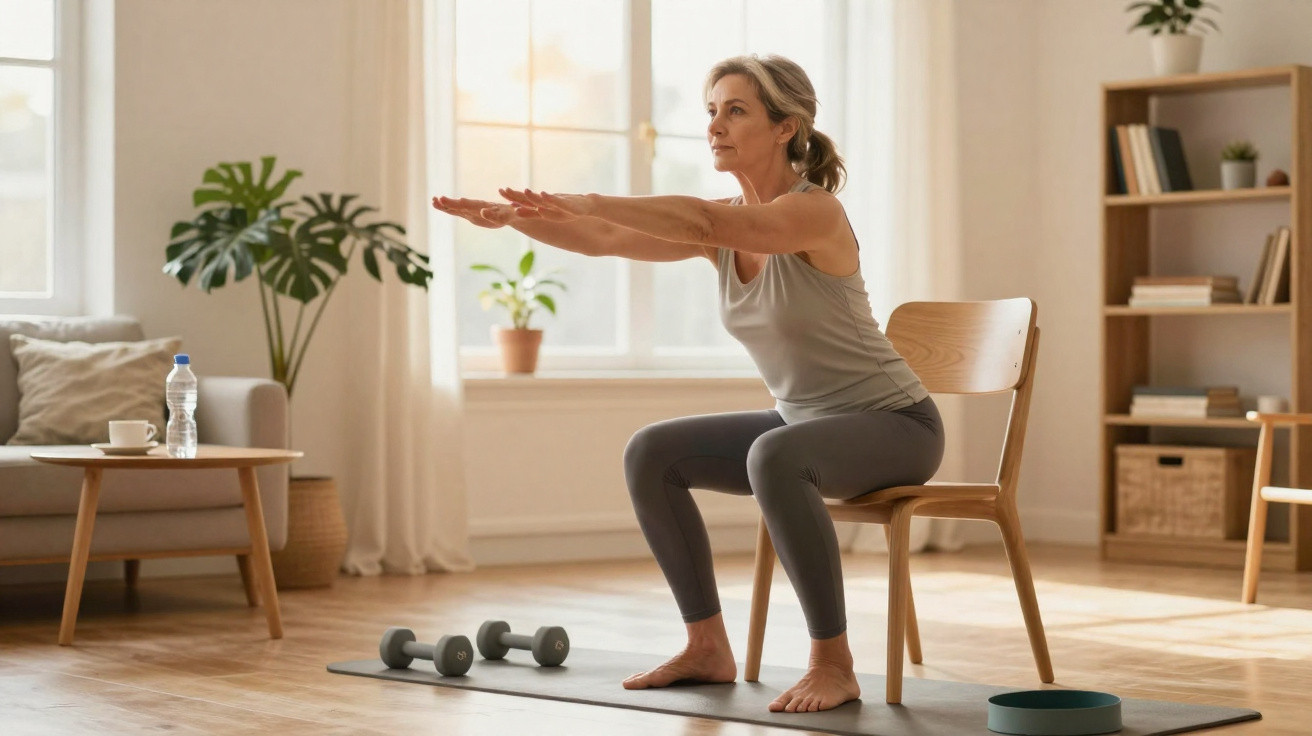
Sitting down and standing up from a chair targets the thighs, glutes and the muscles that stabilise the trunk. Because it mirrors a common daily action, it also allows you to control how far you move, making it an accessible way to build leg strength without starting with external weights.
The recommendation often made when comparing walking with functional exercises after 60 needs to be matched to the goal. If the aim is to strengthen the legs and make getting up easier, the chair squat is more directly targeted; if the aim is aerobic endurance, walking still plays a role that the squat cannot replace. Guidance for older adults advises combining aerobic activity, muscle strengthening and balance exercises.
How do you do supported squats and press-ups?
For the squat, choose a sturdy chair positioned against a wall. Stand with your feet roughly hip-width apart, push your hips back, touch the seat in a controlled way, then stand by pressing through the floor. For press-ups, place your hands on a stable worktop or bench, keep your body in a straight line, and lower your chest slowly towards the support.
- Start with one set of six to ten repetitions;
- Keep the movement slow and controlled;
- Avoid letting the knees collapse inwards;
- Pick a support that will not slide or tip;
- Keep the abdomen gently braced during press-ups;
- Stop if you feel sharp pain or dizziness;
- Increase repetitions only once the movement feels comfortable.
Is it better to replace a 20-minute walk with these exercises?
Not necessarily. A moderate walk supports cardiorespiratory fitness and may help with blood pressure, blood glucose and overall conditioning. Chair and bench exercises add a strength stimulus that ordinary walking does not provide at the same intensity.
A simple routine can set aside a few minutes for strength movements and keep walking on other days or within the same session. Older adults should aim to do strengthening activities on at least two days each week, alongside aerobic activity and practices that develop balance.
What precautions should you take before starting?
Intensity should match your current fitness and capability. Anyone with ongoing pain, poor balance, recent surgery or conditions that limit exertion may need adjustments guided by a physiotherapist or qualified fitness professional. Avoid using wheeled chairs, flimsy benches or slippery floors as supports.
The key point is not to drop walking, but to build a more complete routine. Pairing aerobic exercise with strengthening and balance helps preserve muscle, mobility and independence. If you have been inactive for a long time, a handful of well-performed repetitions and short walks are a safer starting point than trying to complete one intense session in a single go.




Comments
No comments yet. Be the first to comment!
Leave a Comment