

Toning your arms at home is achievable with a short, straightforward and well-structured session. A 15-minute circuit can target the biceps, triceps, shoulders and chest without bulky equipment, using only body weight, water bottles or light dumbbells-always prioritising control and safe movement.
Why can a short circuit work?
A circuit works because it strings together different exercises back-to-back, with minimal rest between them. That keeps your muscles working for longer and builds muscular endurance without the need for a lengthy gym workout.
Results come from consistency, not rushing. Doing 15 minutes properly, two or three times a week, is often more effective than overdoing it for a few days and then dropping the habit.
Which exercises should be in an arm circuit?
Ideally, pick movements that train the front, back and sides of the arms. This keeps the session balanced and helps reduce the risk of putting too much stress on a single joint.
- Incline press-up: place your hands on a sturdy table or worktop and lower yourself with control.
- Bench triceps dips: use a stable chair and keep your elbows pointing behind you.
- Biceps curl: use light dumbbells or full water bottles.
- Lateral raise: lift your arms to shoulder height without swinging.
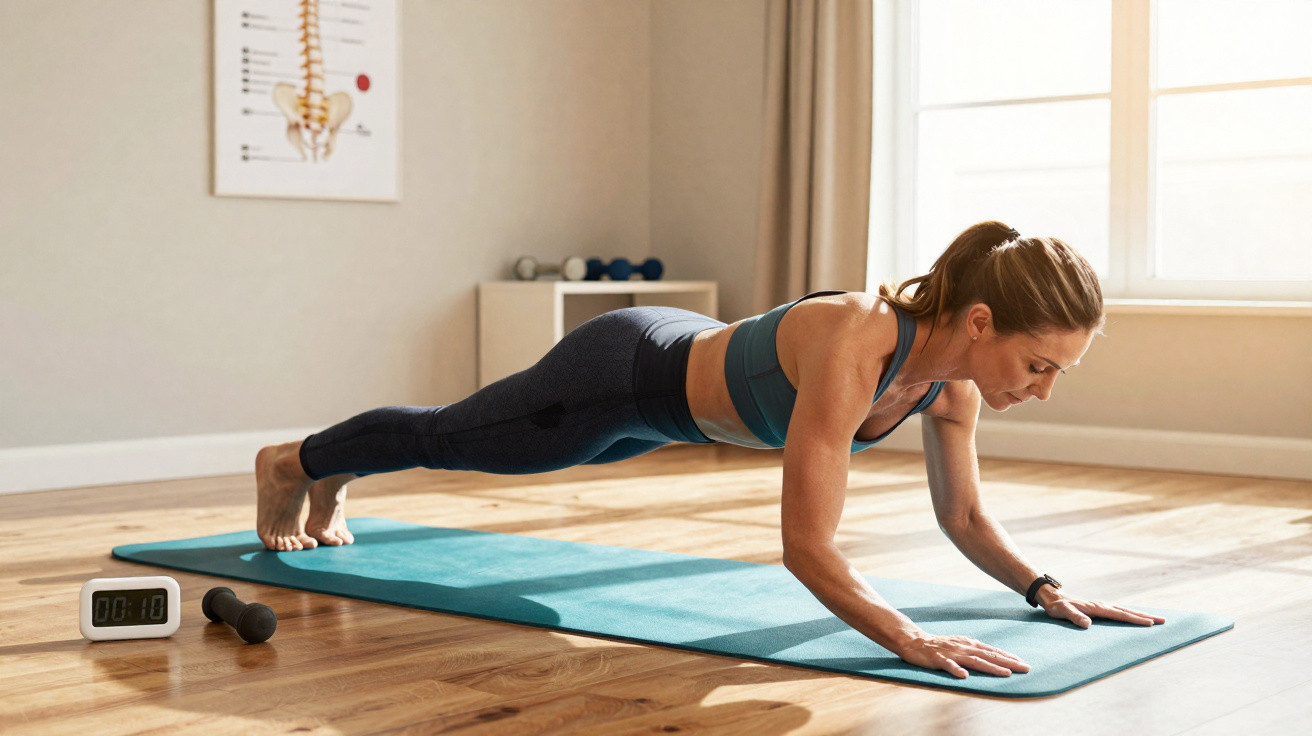
- Plank with shoulder taps: works arms, shoulders and your core at the same time.
How to set up the 15 minutes of training
You can organise it as three rounds of five minutes. In each round, work for 40 seconds and rest for 20 seconds, moving to the next exercise calmly rather than in a rush.
- Minute 1: incline press-up.
- Minute 2: bench triceps dips (on a bench or chair).
- Minute 3: biceps curl with a light load.
- Minute 4: controlled lateral raise.
- Minute 5: plank with alternating shoulder taps.
Which precautions help prevent pain and injuries?
Form matters more than volume. If your technique starts to break down, becomes too fast or begins to hurt, reduce your reps, pause for a few seconds, or switch to an easier variation.
Try not to hold your breath, lock out your elbows, or jump straight into heavy loads. Mild muscle soreness after training can happen, but sharp pain in the shoulders, wrists, elbows or chest is a sign to stop and seek guidance.
How to progress without overdoing it
Start with the simplest versions and build gradually: first improve execution, then increase the time or the load. It also helps to alternate training days with rest days, because muscles need recovery time to get stronger.
The 15-minute circuit does not claim to transform your body overnight, but it does build consistency. When done with good posture, controlled breathing and gradual progression, it becomes a practical, low-cost way to strengthen your arms at home.



Comments
No comments yet. Be the first to comment!
Leave a Comment