
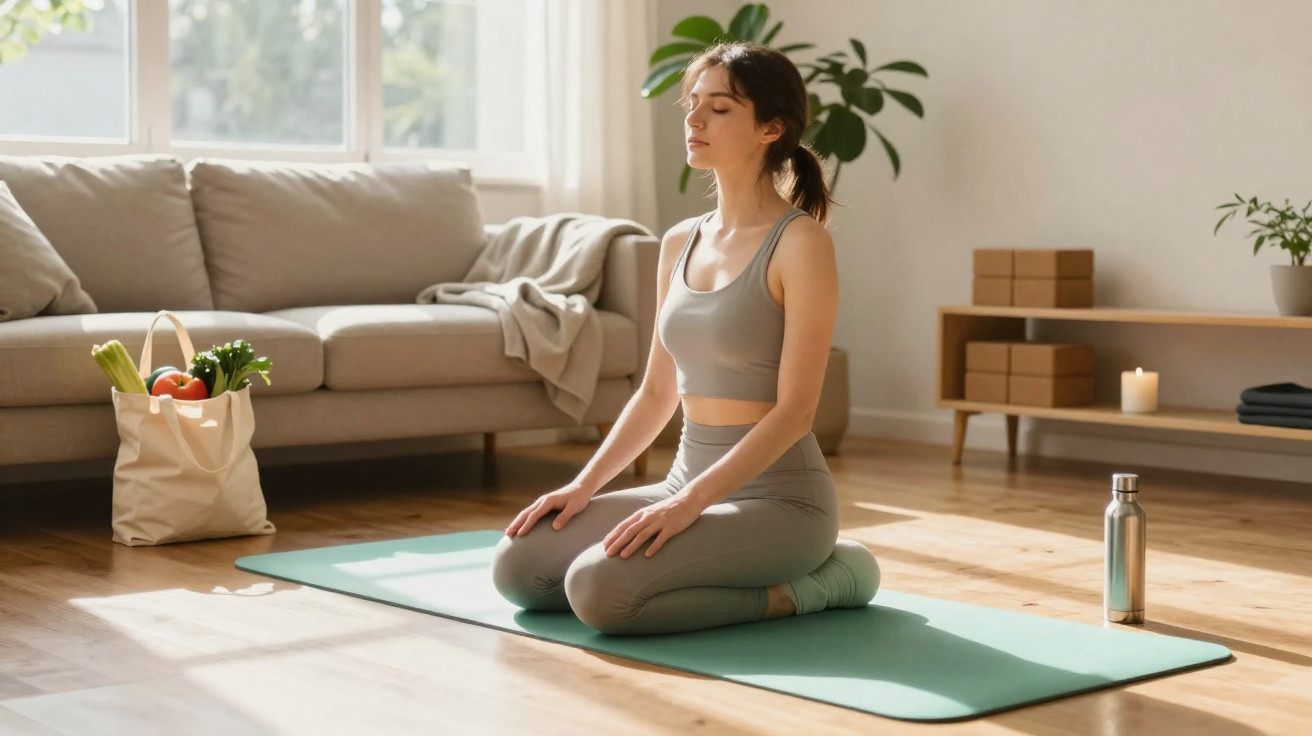
More and more people want to move their bodies at home, unwind, and ease strain in the back or neck. Yoga is ideal for that, yet many immediately picture pricey studios, fiddly kit and professional-grade mats. A current deal from Lidl suggests getting started can be much simpler - and much cheaper.
Yoga in the living room: why starting is easier than many think
For your first steps in yoga, you don’t need acrobatics or a designer outfit. What matters most is surprisingly basic: a reasonably quiet spot and equipment that lets you practise safely and comfortably. Discount retailers such as Lidl are responding directly to this home-workout trend.
Lidl’s current set of a yoga mat and meditation cushion is clearly aimed at beginners. The idea is to lower the barrier to entry, let you begin without a big outlay, and help your body ease into unfamiliar movements. Gentle stretches and mindful breathing can be particularly helpful for anyone with an office job or who sits for long periods.
"Beginner yoga at home works when the floor doesn’t slip, your posture stays stable and nothing hurts - you hardly need more than that at the start."
What’s in the Lidl set: cushion and mat in detail
The yoga cushion: small support, big impact on posture
The first key item is a round yoga cushion measuring roughly 30 cm across and about 13 cm high. It’s designed mainly for meditation, breathing exercises and relaxed seated poses - exactly the situations where many newcomers otherwise get uncomfortable quickly and give up.
- Filling: Buckwheat hulls (Trigo sarraceno) mould well to your shape while still offering steady support.
- Sitting height: The 13 cm height reduces load on hips, knees and the lower back, especially in cross-legged sitting or kneeling (seiza).
- Cover: A cotton outer cover that can be removed and washed - handy if you use the cushion every day.
- Carry handle: A stitched-on loop makes it easier to take with you to the bedroom, out to the balcony or into the office.
If you’ve been meditating on a regular chair or sitting straight on the carpet, you’ll notice the difference quickly: it’s easier to keep the spine upright, the shoulders drop naturally, and breathing tends to feel less restricted. What was tense effort can turn into a calmer pause.
The yoga mat: non-slip, lightweight and well suited to beginners
The second part of the set is a non-slip yoga mat around 173 cm long and roughly 0.5 cm thick. For most heights, these dimensions are more than sufficient. The mat is made from TPE foam - a lightweight yet durable material that works particularly well for home training.
Key features of the mat:
- Anti-slip surface: A textured underside helps it grip on tiles, laminate or parquet flooring.
- Cushioning: The 0.5 cm thickness cushions knees, elbows and the spine without feeling overly spongy.
- Reversible: Both sides can be used, often with a slightly different feel.
- Carry strap: A strap with elastic bands keeps the rolled mat compact and makes storage easier.
Especially if you practise on smooth floors, a dependable mat is essential. Anyone who has slid forward with their hands in Downward-Facing Dog knows the problem: without grip, motivation disappears faster than your heels sink.
Why budget beginner sets make sense
Plenty of people hesitate because they’re not sure whether yoga will really suit them. An expensive studio bundle or a high-end mat can put you off rather than encourage you. A set for under €15 removes that pressure: try it, see how it feels, fit it into your day - and if you enjoy it, you can always upgrade later.
"Starting with a low-cost set mainly means investing in a new habit - not in expensive looks."
To begin with, just a few minutes a day can be enough. A short Sun Salutation in the morning, gentle stretches after work, or a couple of breathing exercises before bed: with a mat and cushion to hand, there’s little standing in the way of that mini routine.
What a simple at-home routine could look like
With the Lidl equipment, you can put together a small session without much prior knowledge. One example for about 20 minutes:
- 2 minutes sitting on the cushion, breathing in and out calmly through the nose.
- 3 minutes of gentle shoulder and head circles, seated on the cushion.
- 5 minutes of easy standing poses on the mat (for example Tree Pose, a forward fold).
- 5 minutes on all fours: Cat–Cow movements and a careful Downward-Facing Dog.
- 3–5 minutes lying comfortably on your back, knees slightly bent, simply observing the breath.
A steady pace matters more than perfect form. If anything hurts, reduce your range of movement or leave out individual poses.
Tips for anyone just starting yoga
Finding the right spot at home
Your home-yoga space doesn’t need to be large. A clear patch of floor where the mat can lie flat is enough. It helps if the area isn’t right in the middle of a walkway and if your phone stays on silent during practice. Some people also keep a blanket nearby in case the floor feels very cold.
How often is it worth practising?
Rather than battling through an hour once a week, a short daily session often delivers more. For beginners, 15–20 minutes, three to five times a week, is a realistic rhythm. Once that feels normal, you can gradually increase duration and intensity.
| Training frequency | Realistic goal for beginners |
|---|---|
| Once a week | Gentle start, more for getting a feel for it |
| 3 times a week | Noticeable improvements in mobility and wellbeing |
| 5 times a week | A stable routine, with clear potential for stress reduction |
What to look for when buying yoga accessories
Even if discount deals are very appealing, a few technical details still matter. The mat shouldn’t smell strongly of chemicals, and it shouldn’t stay permanently dented after pressure. If you sweat quickly, a lightly textured surface is worth prioritising, as it can maintain grip even with damp hands.
With a cushion, it’s worth checking the filling: natural materials such as buckwheat hulls or spelt husks conform well, although they can compress slightly over time. Many models include a zip so you can top up the filling if needed.
Health effects - and where caution is sensible
Regular, gentle yoga can improve flexibility, ease tension in the neck and back, and support better sleep. If you’re under a lot of stress, breathing and relaxation exercises on the cushion can add extra benefit.
However, anyone with existing spine, knee or hip issues should speak to a doctor or physiotherapist before attempting more ambitious programmes. With online videos in particular, you don’t get hands-on correction from a professional. It’s sensible to stop immediately if you feel pain and switch to an easier variation of a pose.
The combination of cushion and mat can be especially helpful for people who spend long hours at a desk. A few minutes of mindful stretching for the hip flexors and chest can noticeably counter that typical “hunched forward” posture. And if you leave the new set visible in the living room, you’re more likely to remember to actually use it - which is the whole point in the end.



Comments
No comments yet. Be the first to comment!
Leave a Comment