
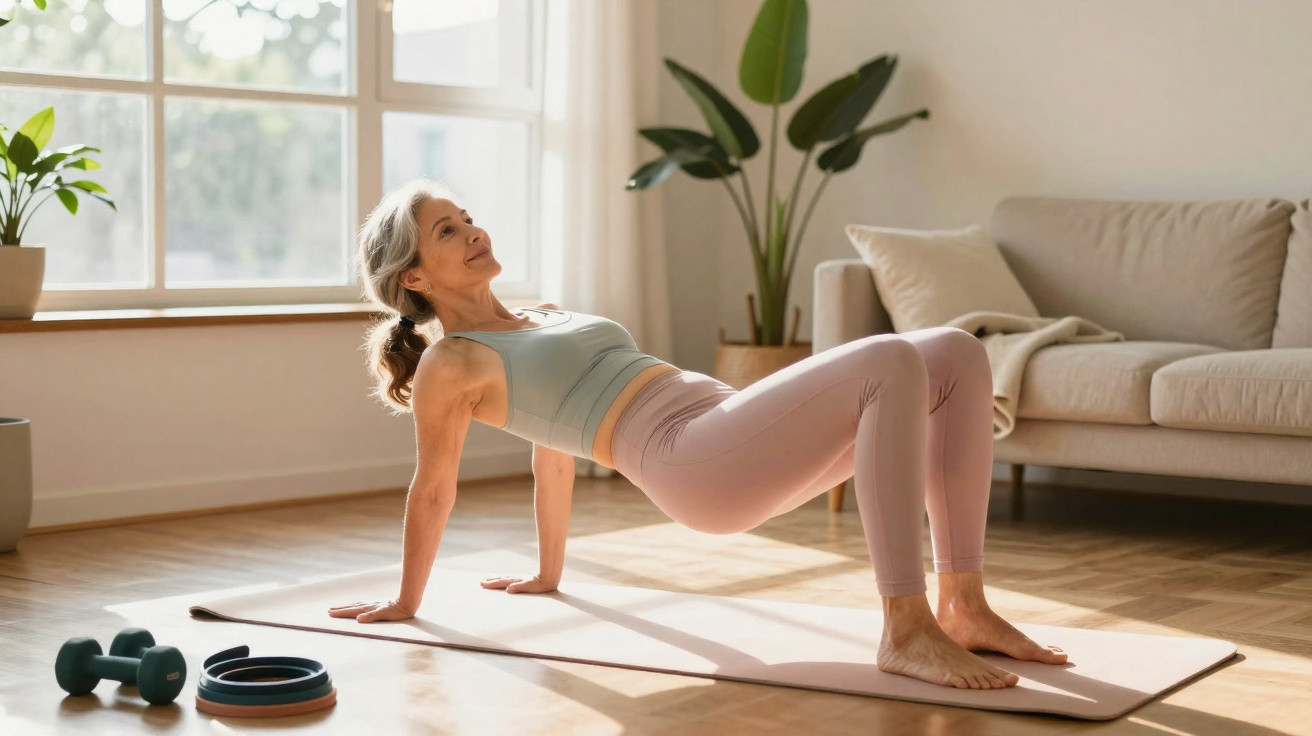
The exercises to maintain strength after 60 are essential for protecting independence, improving mobility and lowering the risk of falls. Among the options most often recommended by specialists, Pilates stands out because it brings together muscle strengthening, balance and body control. Within Pilates, the shoulder bridge has become particularly popular as a straightforward, safe and effective movement for building strength in key areas used directly in everyday tasks.
Why does muscle strength decline after 60?
As we age, there is a natural reduction in muscle mass known as sarcopenia. This change can undermine stability, motor coordination and the ability to manage simple activities, such as standing up from a chair or carrying shopping.
The positive news is that training aimed at strength and mobility is the best support for slowing this process down. In the video below, Dr Flávio Jambo demonstrates the most suitable exercises for strengthening the body and maintaining day-to-day independence:
What are the benefits of the Pilates shoulder bridge for older adults?
The shoulder bridge is widely used in Pilates because it engages several muscle groups at the same time. When performed with control, it helps with overall stability and strengthens regions that are fundamental for movement.
According to specialists, the main benefits include:
- Strengthening of the glutes and the lower back.
- Greater activation of the deep abdominal muscles.
- Improved balance and coordination.
- Increased stability while walking.
- Support in helping to prevent falls.
How to do the shoulder bridge correctly at home
One of the biggest advantages of this exercise is how easy it is to do. You can practise it at home using only an exercise mat or another comfortable, firm surface.
To perform the movement safely and effectively, follow these steps:
- Lie on your back with your knees bent.
- Keep your feet flat on the floor, about hip-width apart.
- Rest your arms by your sides.
- Slowly lift your hips until you create a straight line from your knees to your shoulders.
- Hold the position for a few seconds.
- Lower back down gradually to the starting position.
Do exercises to maintain strength after 60 really boost confidence?
Yes. As the body becomes more stable and stronger, everyday activities can be done with less effort and with greater safety. Walking, going up stairs, lifting objects and even staying on your feet for longer periods become more comfortable.
Alongside the physical improvements, regular practice also helps build self-confidence. Feeling able to move safely reduces the fear of falling and encourages a more active routine. With consistency and appropriate guidance, simple exercises such as the shoulder bridge can make a meaningful difference to quality of life, mobility and independence after 60.
Comments
No comments yet. Be the first to comment!
Leave a Comment