
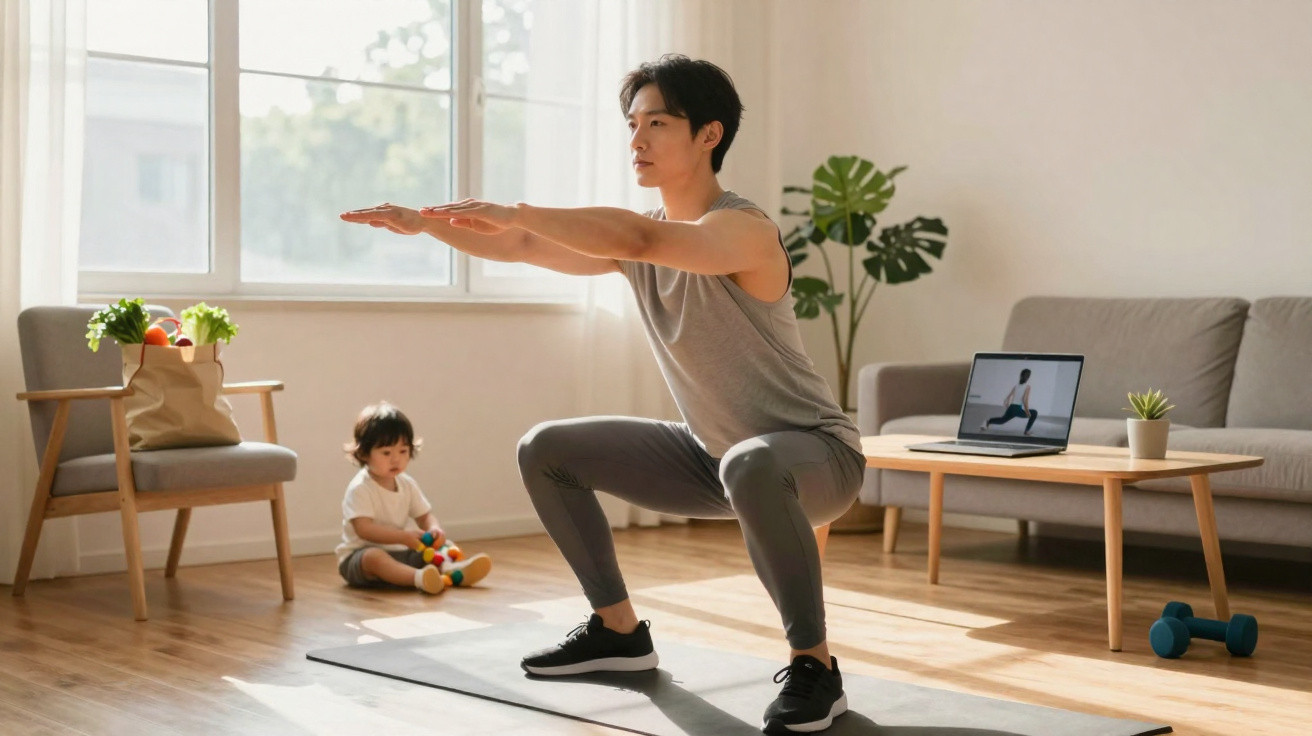
Squats are seen by coaches as a cornerstone exercise because they mirror everyday actions: sitting down, standing up, climbing stairs and picking items up from the floor. They train the quadriceps, glutes, hamstrings, calves, hips and core, supporting long-term strength, balance and overall body stability.
Why are squats so important?
Squats involve several joints working together at the same time - mainly the hips, knees and ankles. Because these joints must coordinate, the movement is highly functional: it reinforces patterns you use outside the gym, especially when rising from a chair or lifting and carrying weight safely.
They are also time-efficient. Rather than targeting a single muscle in isolation, a squat demands teamwork between the legs, torso and abdomen, helping to build a stronger base for walking, running, going up steps and maintaining posture during everyday tasks.
Which muscles work during the movement?
Squats are best known for strengthening the lower body, but they do more than train the legs. As you lower and stand back up, you must stabilise the spine, keep the knees controlled and distribute your weight evenly through the feet.
- Quadriceps, at the front of the thighs.
- Glutes, responsible for hip extension and driving power on the way up.
- Hamstrings, which help control the lowering phase.
- Calves and ankles, important for balance.
- Core, which stabilises the torso, lower back and pelvis.
How to do squats safely
A sensible starting point is the bodyweight squat. Stand tall with your feet about shoulder-width apart, keep your chest open, and lower as if you were sitting back into a chair - sending the hips backwards without letting the heels lift off the floor.
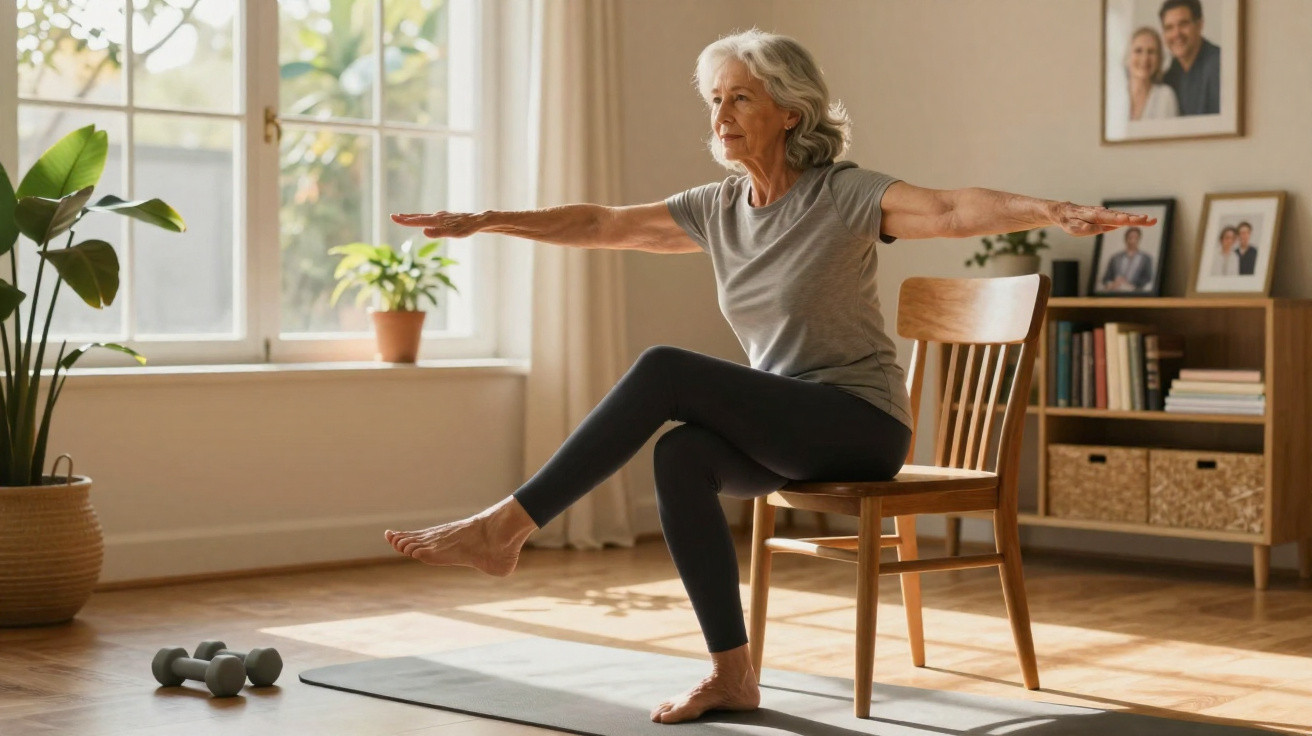
Rise under control by pushing the floor away with your feet, and avoid letting the knees collapse inwards. If you feel pain in the knees, hips or lower back, or if balance is a challenge, begin with a chair behind you. This reduces the range of motion until you build confidence and control.
How to adapt the exercise for different levels
Squats can be adjusted depending on strength, age, mobility and experience. The aim is not to go as low as possible on day one, but to repeat the movement with control, good alignment and steady breathing.
- Beginners can practise a sit-to-stand using a sturdy chair.
- If balance is limited, you can place your hands on a wall or worktop for support.
- More experienced people can add dumbbells, a resistance band or a goblet squat.
- If you want more power, include pause variations or a faster ascent.
- If you feel discomfort, reduce depth and revisit technique.
How to include this exercise in daily life
Squats tend to work best when they become a simple, consistent part of your routine. Doing a small number of well-executed repetitions a few times per week can help maintain leg strength, hip mobility and confidence for day-to-day activities.
For a more rounded approach, pair squats with walking, gentle stretching, balance drills, and strengthening work for the back and arms. That way, the squat becomes more than a gym movement - it supports independence, posture and the ability to move well every day.
Comments
No comments yet. Be the first to comment!
Leave a Comment