
Healthy life expectancy shifts the conversation about longevity after the age of 70: it is not enough simply to add more birthdays - what matters is keeping autonomy, balance, strength and day-to-day functional ability. The principle specialists emphasise is straightforward and practical: living longer only has real value when someone can get dressed, walk, climb stairs and take part in their usual routine safely.
Why has healthy life expectancy become a priority?
Life expectancy tells you how many years a person may live. Healthy life expectancy looks at how many of those years are lived with independence, mobility and less reliance on help for basic tasks.
After 70, the gap between the two becomes much easier to spot. Two people can be the same age yet have very different levels of balance, mobility, coordination, practical memory and confidence to leave the house.
What does balance tell us about independence?
Physical balance is not just about the legs. It relies on muscles, joints, eyesight, the inner ear, nerves and the brain working together to keep the body steady while standing, walking or changing direction.
- Standing up from a chair without using support points to strength and good control through the trunk.
- Walking without shuffling the feet lowers the chance of tripping.
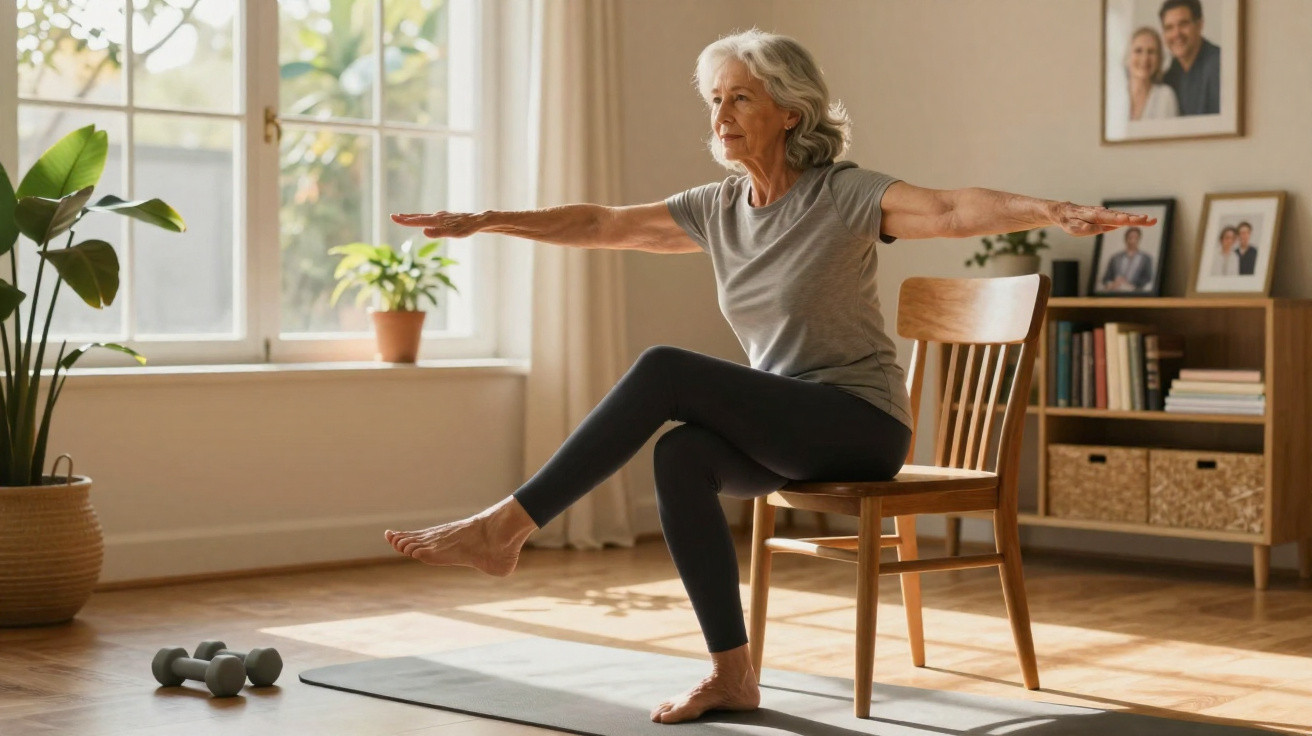
- Holding a one-legged stance for a few seconds checks stability and coordination.
- Turning the body without losing steadiness supports everyday actions such as cooking, showering and crossing the road.
Why should falls not be treated as isolated accidents?
A fall is often the last sign of a decline that started earlier: reduced strength, shorter steps, fear of walking, poorly corrected vision or slower reactions to obstacles. That is why specialists see balance as a marker of functional health.
When someone feels unsteady, they often move less. Too much rest then weakens the legs further, reduces coordination and increases anxiety about going out - creating a cycle that undermines healthy life expectancy.
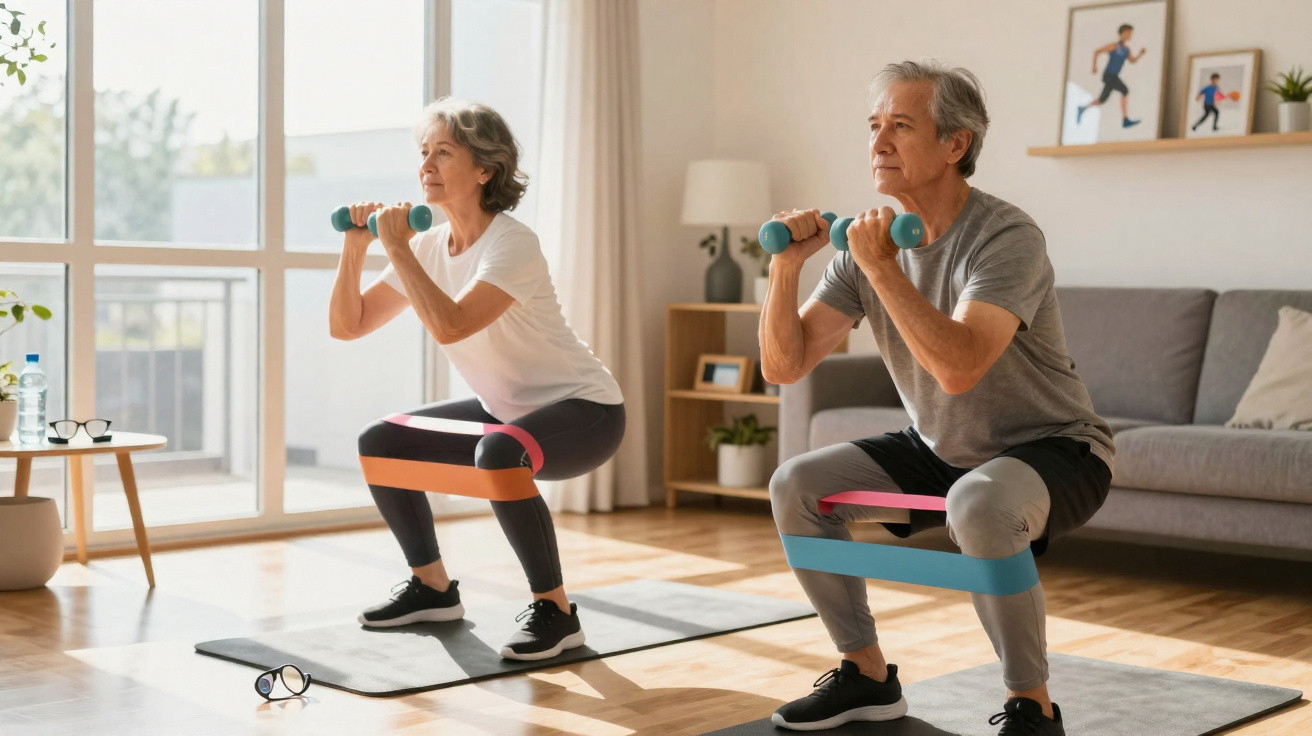
How can you train balance and function without equipment?
Training should be straightforward, safe and adjusted to the person’s ability. It is best to begin near a wall, a sturdy worktop or a heavy chair so there is something to hold if dizziness appears or balance slips.
- Shift your weight from one leg to the other for 1 minute.
- Rise onto your tiptoes and lower slowly, holding on to a support.
- Walk in a straight line indoors, using slow, controlled steps.
- Stand up and sit down from a chair 8 to 10 times, without dropping back into the seat.
- Practise standing on one leg for a few seconds, always with support close by.
Healthier ageing starts with staying able to keep doing
Healthy life expectancy puts the right question at the centre: not only “how many more years can I live?”, but “how can I keep my body able to meet what everyday life demands?”. This shift gives priority to balance, strength, mobility and prevention before functional loss begins to restrict simple choices.
After 70, small daily habits can help protect independence: walking regularly, practising getting up from a chair, keeping appointments up to date, reviewing medicines with professional guidance and looking after eyesight. Longevity gains meaning when the body stays involved in life, rather than merely watching time pass.
Comments
No comments yet. Be the first to comment!
Leave a Comment