
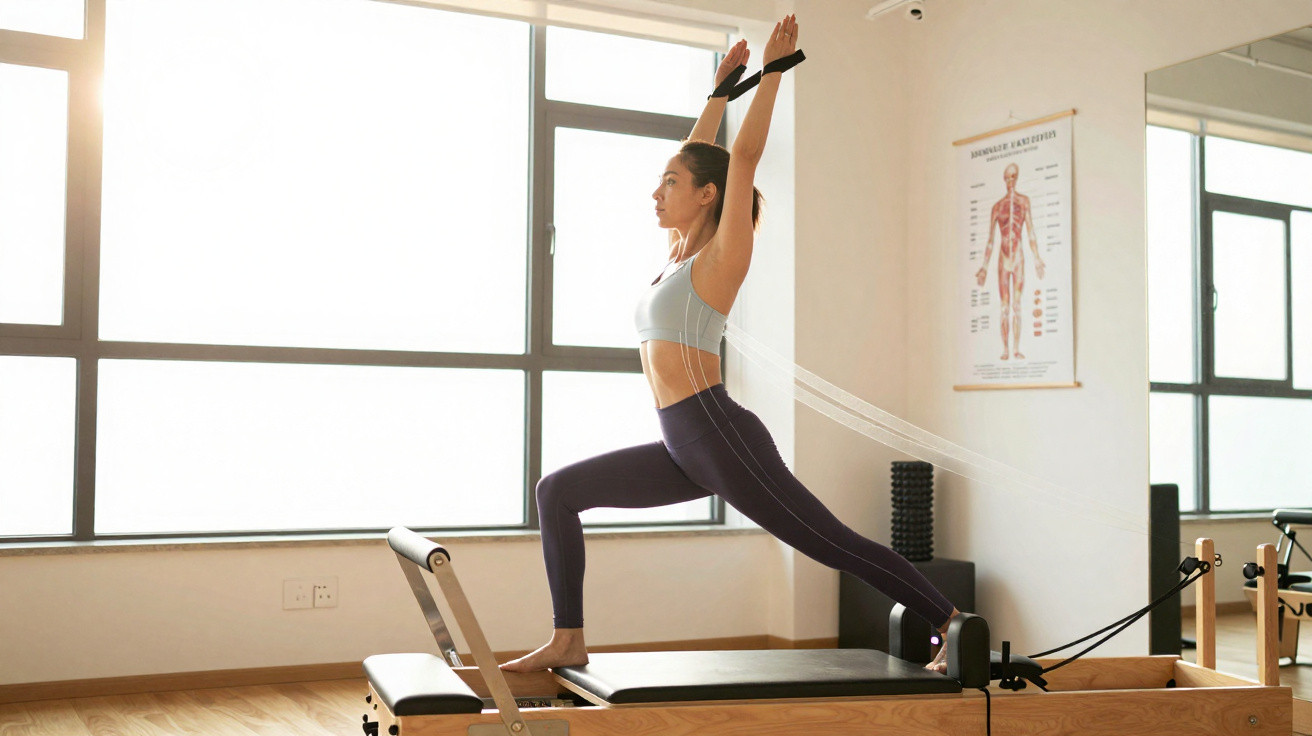
Pilates has been carving out a strong presence in major cities as a form of exercise that blends fitness, wellbeing, and the prevention of aches and pains. In studios fitted out with dedicated equipment, sessions can be tailored to different ages and fitness levels-from complete beginners to athletes-with particular emphasis on myofascial chains in Pilates, an approach that treats the body as one connected system.
What are myofascial chains in Pilates and how do they work in the body?
Myofascial chains are best described as continuous lines linking muscles, fascia, and supporting structures. Rather than focusing on a single muscle in isolation, Pilates with a myofascial emphasis considers how each area interacts with the rest of the body during actions such as walking, squatting, pushing, or pulling.
With this in mind, tightness in one spot can influence other regions along the same chain, leading to compensations and extra strain. Classes typically prioritise flowing sequences with coordinated breathing, active stretching, and whole-body strengthening, helping to re-organise the body as a unit and make everyday movement feel more efficient.
Watch a video on the Metas Pilates YouTube channel about daily habits corrected by Pilates and exercises that improve flexibility:
https://www.youtube.com/watch?v=gT5q6-F1j_c
How does the reformer enhance myofascial chains in Pilates?
The reformer is a bed-like apparatus with springs, straps, and supports that lets you fine-tune resistance, range of motion, and the direction of movement. It is not a passive piece of kit: it can either assist or challenge you, making it possible to connect the arms, trunk, and legs within the same movement, across different planes.
Because it is so adaptable, an instructor can calibrate the workload with real precision-whether someone is recovering from injury or an advanced sportsperson looking for a greater training stimulus. To clarify what this equipment can offer, here are some practical ways the reformer is used within routines focused on myofascial chains:
- Supported work for those in rehabilitation or just starting out with exercise;
- Increased challenge for well-conditioned practitioners aiming for performance;
- Multiple set-ups: lying down, seated, kneeling, or standing on the apparatus;
- Added focus on balance, coordination, and breath control throughout the movement.
Who can do Pilates with a myofascial chains focus?
Pilates with myofascial chains suits a wide range of people, from those who are inactive to athletes using it to complement their main training. It is often sought out by people with back discomfort, recurring tightness, or a persistent sense of stiffness, as well as by those returning to movement after injuries and wanting to rebuild safely.
Sessions can be adapted for adults, older people, and teenagers, either one-to-one or in small groups. The process usually follows a clear structure, with straightforward but essential stages:
- Initial assessment: posture review, pain history, and current fitness;
- Goal setting: injury prevention, improved mobility, and whole-body strength;
- Class plan: a progressive sequence on the mat and on equipment such as the reformer;
- Regular re-assessment: adjusting load and varying the stimulus as you progress.
What are the main benefits of Pilates with a myofascial approach?
When practised consistently under guidance, Pilates centred on myofascial chains in Pilates tends to enhance body awareness, posture, and how load is shared across the joints. Many people report noticing unhelpful habits-such as spending long periods seated with poor spinal alignment-and find it easier to correct them.
Common outcomes include whole-body strengthening with better spinal stability, increased joint mobility, and fewer compensations in sensitive areas. This approach also tends to pair well with running, strength training, and team sports, supporting muscle recovery, improving the efficiency of sport-specific patterns, and helping the body feel more organised and functional for day-to-day demands.



Comments
No comments yet. Be the first to comment!
Leave a Comment