
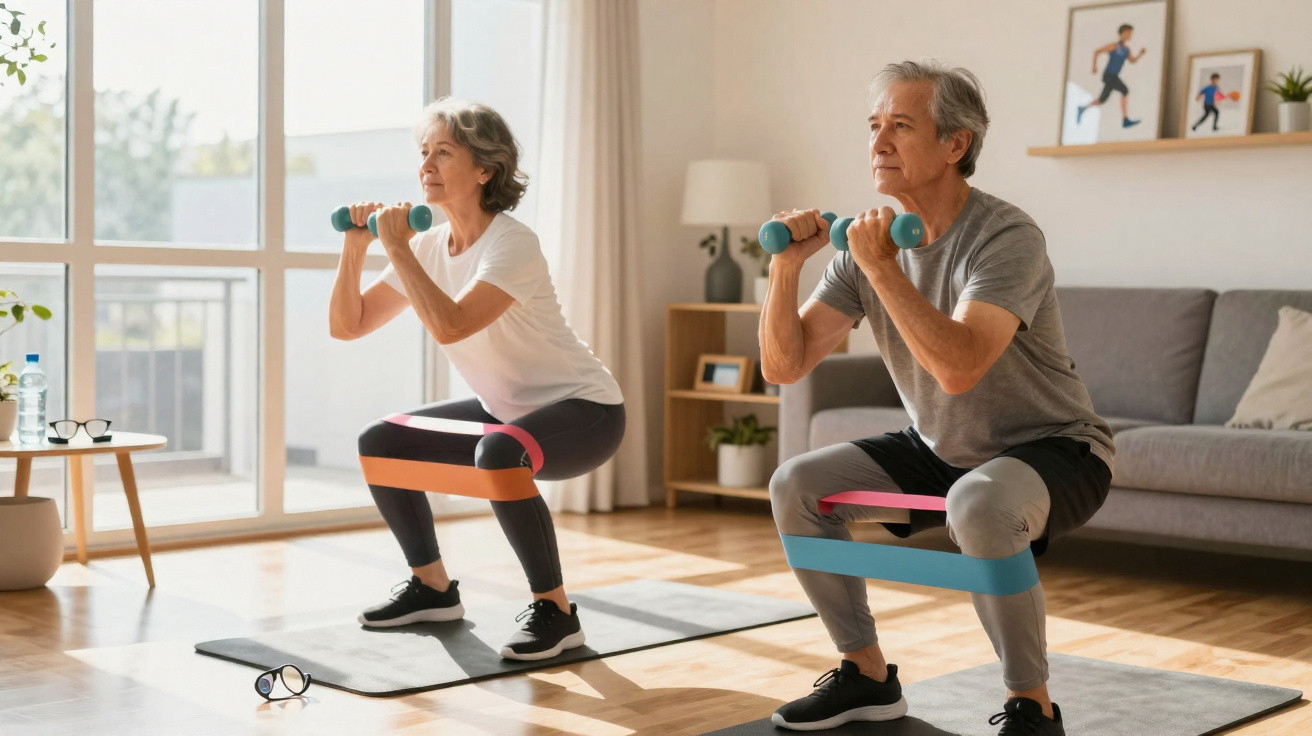
Staying independent for as long as possible, getting up the stairs without being out of breath, lifting your grandchildren, enjoying travelling - the aim is straightforward. Cardiologist and sports scientist Professor Martin Halle says this isn’t reserved for the young. What matters is how we train over the decades - and, above all, that we challenge our muscles on purpose.
Why ageing is primarily a muscle problem
If we don’t counter it, our muscles get smaller year by year. Specialists call this sarcopenia - age-related muscle loss. From the mid-30s onwards, the body gradually sheds muscle mass, and the fast-twitch fibres responsible for strength and explosiveness are the first to decline.
"If you want to get up powerfully in later life, carry shopping and walk safely, you have to treat your muscles like a bank account: pay in regularly."
Professor Halle is clear: wrinkles aren’t the real issue - the continuous drop in strength is. If you only “go for a bit of a walk”, you may slow the process, but you won’t stop it. To do that, you need targeted strength training - in every stage of life, adjusted to the body you have at that point.
Five life stages, five training priorities
The sports physician divides life into five phases. In each one, he shifts the focus so the body can stay resilient for the long haul - right into advanced age.
Childhood and adolescence: variety instead of early gym culture
Up to around the age of 20, the body develops almost automatically. During this period, so-called satellite cells in the muscles are particularly active - think of them as repair and growth helpers for muscle fibres.
Halle’s message is that children don’t need to become mini bodybuilders. More important are:
- Plenty of everyday movement (playing, running around, sprinting, climbing)
- Sports that build coordination and speed, such as gymnastics, ball sports or athletics
- No hard, heavy strength training while growth plates are still open
Anyone who learns in their teens how to use their body builds a kind of “movement memory” that still pays off decades later.
20 to 35: make the most of the golden phase
In your twenties and early thirties, the body is at peak capacity. Heart, lungs and muscles all respond extremely well to training. Halle calls this a true “investment phase”.
His recommendations:
- At least two to three strength-training sessions per week
- Regular endurance training, such as running, cycling or swimming
- Staying active in daily life: stairs instead of the lift, bike instead of car, walking short journeys
This is the phase when you can build a particularly large number of muscle fibres. Every session functions like a deposit into your “strength account” - one you can still draw on at 50, 60 or 70.
35 to 55: going on the offensive against muscle loss
From the mid-30s, the direction of travel changes. Without countermeasures, the body loses several per cent of muscle mass each decade, especially in fast fibres. You notice it as dwindling explosive power: stairs start to feel tougher, and sprinting becomes more draining.
"If you do nothing now, you’ll get the bill at the latest when simple everyday tasks suddenly become exhausting."
Halle advises short, challenging sessions that deliberately recruit the major muscle groups. Typical foundational exercises include:
- Squats (using body weight or moderate additional load)
- Press-ups, including easier versions against a wall or table
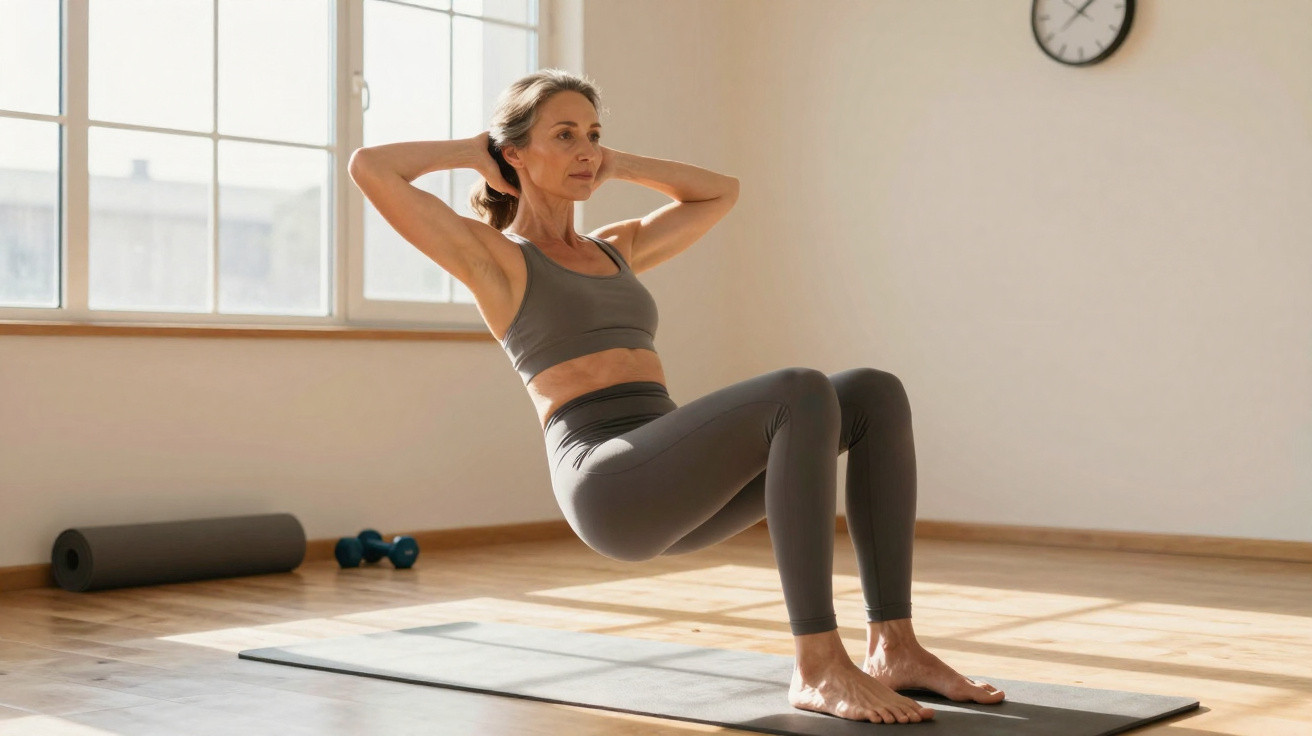
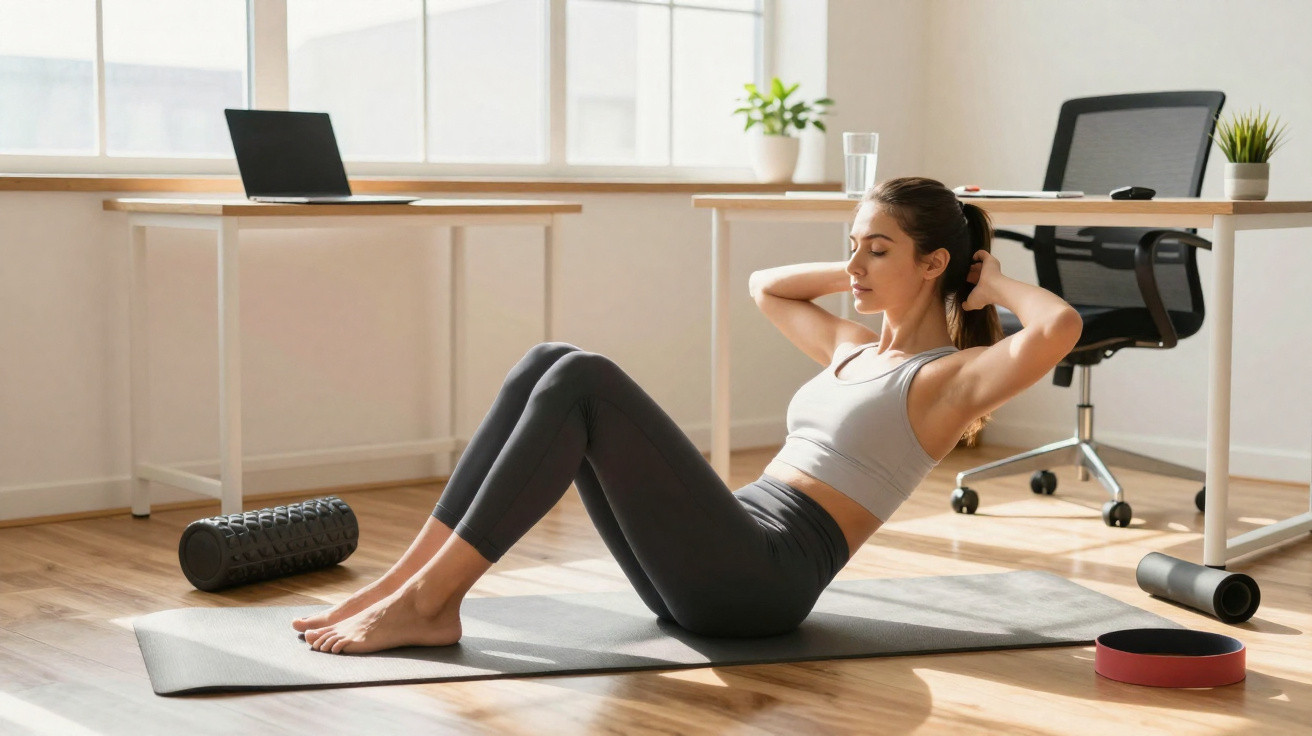
- Planks and other core exercises for abdominals and back
- Lunges for legs and glutes
The key is that the muscles must have to work - but not be pushed beyond their limits. Even people recovering from a heart attack can benefit, once medically cleared, from moderate strength and interval training that strengthens the heart and circulation and rebuilds confidence in their own body.
55 to 75: muscles as the key to independence
In this phase, it often becomes clear whether someone will remain self-reliant in older age or need help early. The muscles’ responsiveness to training does decrease - but it certainly doesn’t disappear.
The objective shifts: less “build at all costs”, more preserving what’s already there. Halle favours training that is hard enough for the individual yet remains safe. Options include:
- Targeted machine-based strength training in a gym or rehabilitation centre
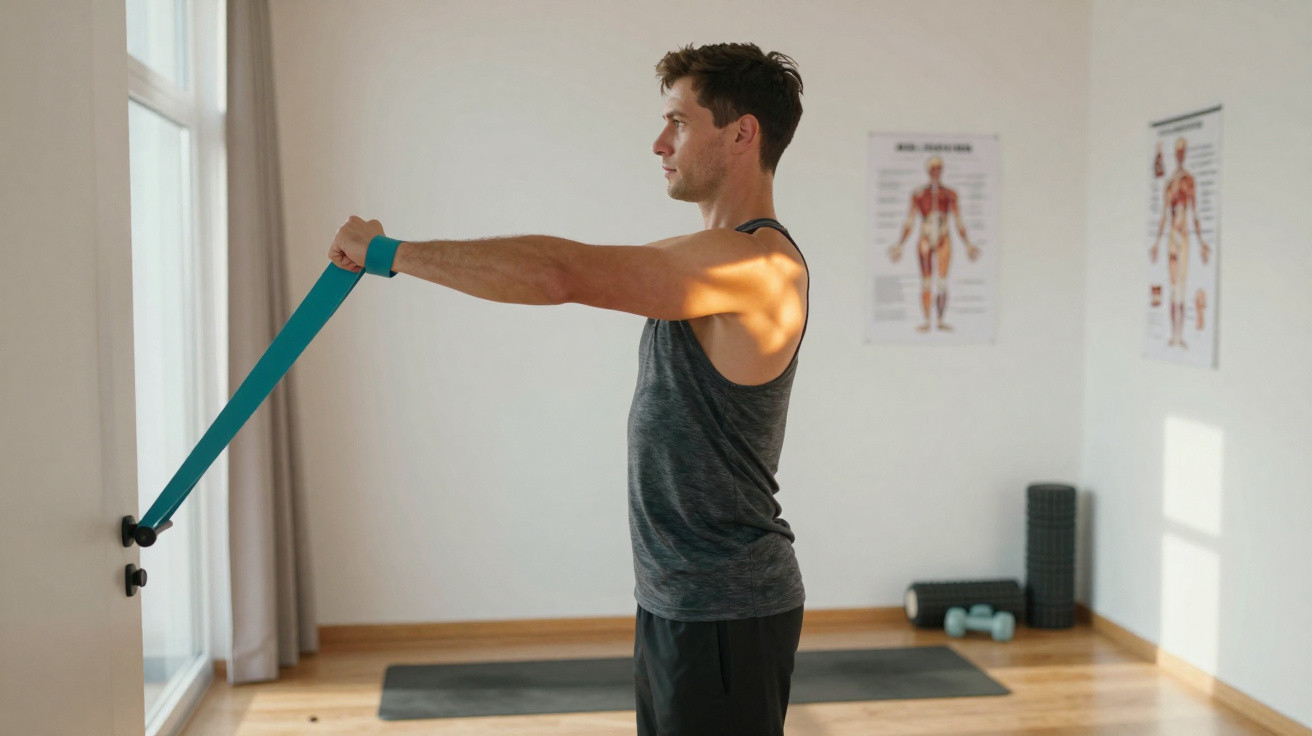
- Strength routines at home using resistance bands and body weight
- Blending strength with balance, such as standing drills on one leg
Alongside reducing fall risk, strength training brings additional benefits: metabolism runs more efficiently, blood sugar levels stabilise, and organs such as the heart, liver and bones benefit as well.
Over 75: movement as a life-extender
If you’re over 75, you don’t have to accept the armchair as your main address. Studies show that even at this age, people can measurably increase strength through targeted muscle training - and therefore stay independent for longer.
Sports educator Christine Joisten recommends dancing as an ideal mix of enjoyment and training. It challenges legs, core and balance, stimulates the brain and creates social connections. For many older adults, that combination is exactly what keeps motivation high.
A crucial guideline: every bit of movement counts. Short walks, light strength work with water bottles or simple exercise bands, or practising a one-leg stand while brushing your teeth - the more frequently the body gets stimuli, the better it holds up.
How often, how long, how intense?
The precise plan always depends on health and day-to-day life. However, the basic framework is similar for most age groups. A sensible weekly outline:
| Age | Strength training | Endurance |
|---|---|---|
| 20–35 | 2–3 sessions of 45–60 minutes | 2–3 sessions, moderate to brisk |
| 35–55 | 2–3 sessions of 30–45 minutes, somewhat more intense | 2 sessions, one of them a bit more intense (e.g. intervals) |
| 55–75 | 2 sessions of 20–40 minutes, performed with good form | Several easy sessions, e.g. brisk walking |
| 75+ | 2 short sessions of 15–30 minutes, strongly adapted | Daily movement, e.g. a walk, dancing, everyday journeys |
As a rule of thumb: the final repetition of an exercise can feel properly demanding, but it shouldn’t be painful.
Technology helpers: what fitness trackers can do
If you like keeping an eye on progress, fitness trackers and smartwatches can help. They count steps, measure heart rate, and some even record an ECG or oxygen saturation. For many people, a device like this acts as a small motivation coach on the wrist: the step count nudges you to move, and resting heart-rate charts reveal training gains.
Models such as Garmin Vivoactive, Huawei Watch Fit and Fitbit Charge cater to different user needs - from basic step monitoring to detailed training planning. What matters isn’t the logo, but whether you actually wear the watch and whether it fits your habits.
Common mistakes - and how to avoid them
Many people who want to “finally get back into exercise” get stuck for the same reasons. Three classic pitfalls:
- Doing too much at once: starting daily training after months or years off - overload and frustration are almost guaranteed.
- Only endurance, no strength: hours of walking but never squats or core work. The heart benefits, but the muscles remain weak.
- Inconsistency: two weeks at full throttle, then three weeks off. Muscles respond to continuity, not occasional heroic efforts.
Halle recommends one simple approach: start small, but be dependable. Two fixed appointments in the diary each week - even if it’s only 20 minutes - will beat weekly restarts fuelled by guilt.
What “fit at 70 like at 30” realistically means
Of course, a 70-year-old won’t run a 100-metre sprint the way they did at 25. The point is everyday capability: standing up without pain, carrying a crate of water, completing a holiday hike, and not having to stop after every incline.
"If you work consistently for decades on strength, endurance and mobility, you can maintain a level of performance in older age that many much younger people never reach."
Alongside training, that also includes recovery, enough sleep and a protein-rich diet. Muscles don’t grow in the gym, but in the hours afterwards - provided the body gets the building blocks it needs.
Notably, even those who only begin at 60 or 65 can still make major progress. Studies involving previously inactive older adults show, in some cases, clear strength gains after just a few months of targeted training. Feeling able to walk and stand more securely can reshape everyday life as a whole.
Practical starter exercises for home
If you want to begin straight away, you don’t need a gym. Three simple exercises that can be adapted for almost any age group:
- Chair sit-to-stands: repeatedly stand up from a chair and sit back down without pushing off with your hands.
- Wall press-ups: stand a short distance from a wall, hands on the wall, lower your chest in a controlled way and press back up.
- Kneeling side plank: support yourself on your side with knees on the floor, lift and hold your hips - strengthens core and hip muscles.
If you feel unsure, it’s wise to agree your starting point with your GP, a physiotherapist or qualified trainers. Especially after heart issues or joint surgery, the programme can be tailored precisely without losing the benefits.
In the end, it comes down to a straightforward message: you can’t stop ageing, but you can influence how it plays out. If you take your muscles seriously and challenge them regularly, you can move surprisingly close, at 70, to how your body felt in your thirties - not in the mirror, but in daily life.



Comments
No comments yet. Be the first to comment!
Leave a Comment