
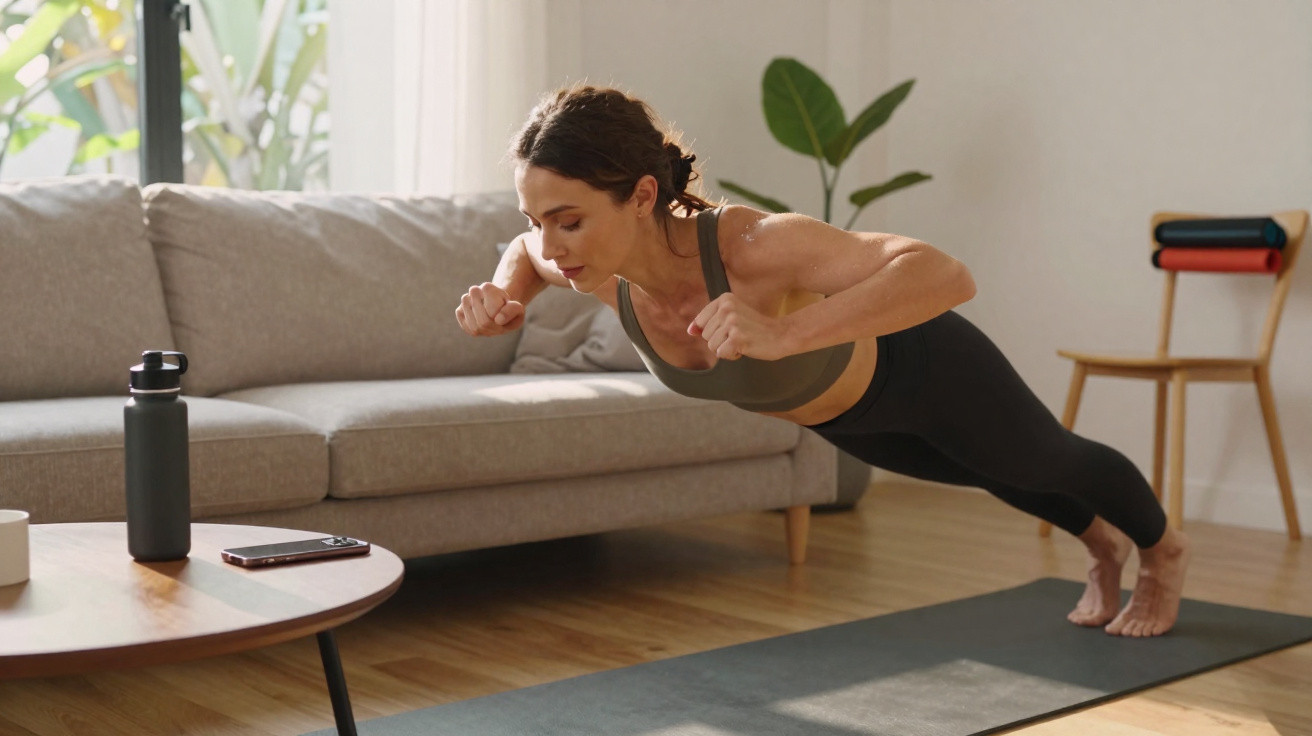
Doing arm exercises at home can be far easier than it sounds. Without dumbbells, machines or a gym, just three well-performed movements can already switch the muscles on, improve firmness, and build a routine you can realistically stick with.
Your own body already provides resistance
Your arms work whenever you push, hold yourself up, or control your body weight. That is why bodyweight drills can stimulate the shoulders, triceps, biceps and the upper-back area.
The key is to perform each movement slowly, with good posture and full attention on the muscle doing the work. What matters most is not rushing through reps, but feeling your arms actively contributing to every part of the exercise.
- Triceps: help firm the back of the upper arms.
- Control: slower movements increase body awareness.
- Practicality: you can train in the living room, bedroom, or beside a sturdy chair.
- ⏱ Consistency: short, frequent sessions usually work better than occasional long workouts.
In the living room, training starts without fuss
The first exercise is an adapted press-up, done either with your knees on the floor or with your hands on a wall. It strengthens the arms, chest and shoulders, without requiring prior experience.
The second is a triceps dip using a sturdy chair, keeping your feet on the floor while your elbows bend backwards. The third is a plank with shoulder taps, which works your arms and your core at the same time.
Three movements that wake your arms up
Weight-free exercises tend to deliver more when you pay attention to tempo. Rather than chasing high reps immediately, it is better to prioritise clean form and steady breathing.
Start gently and progress gradually
Technique comes before quantity
A solid starting target is to do 2 sets of 8 to 12 repetitions of each exercise, resting between movements.
If you feel joint pain, dizziness, or strong discomfort, stop the workout and adjust the intensity.
As you improve, progress can come from adding repetitions, lowering more slowly, or taking shorter breaks between sets. What matters is keeping your arms engaged for the entire movement.
When it is worth increasing resistance
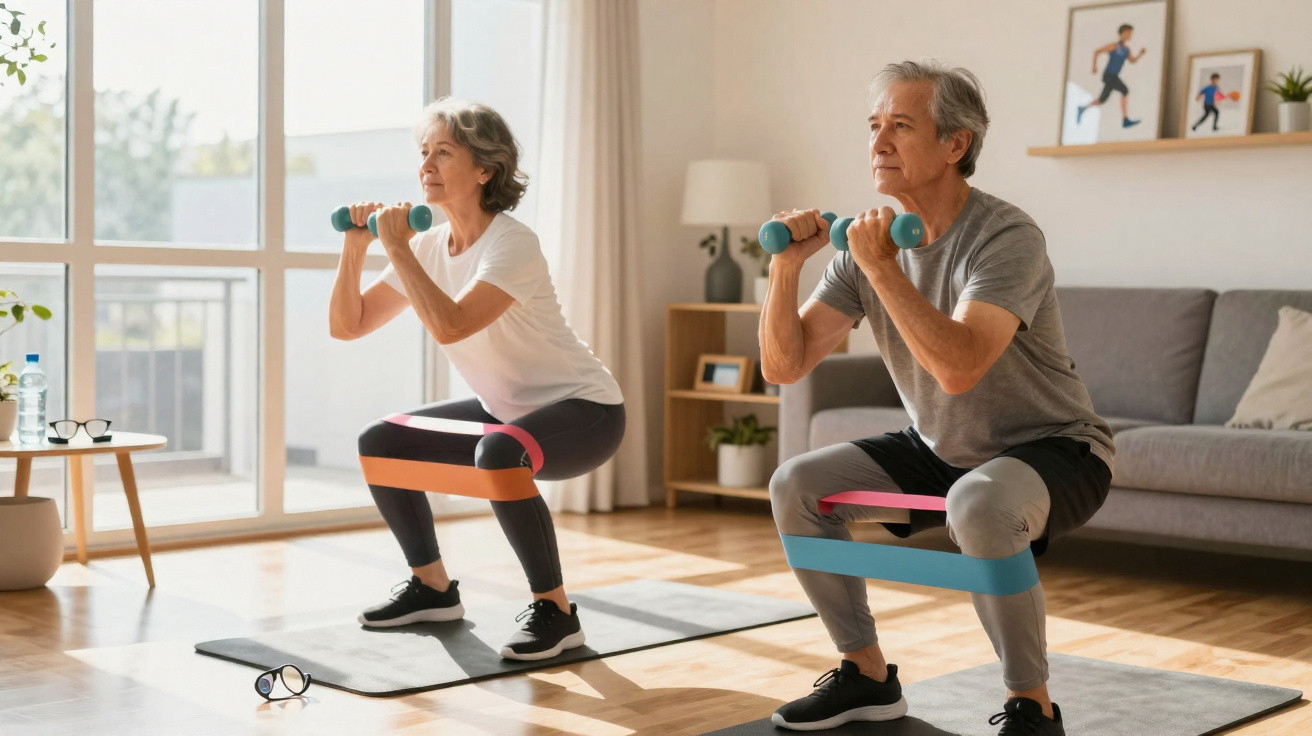
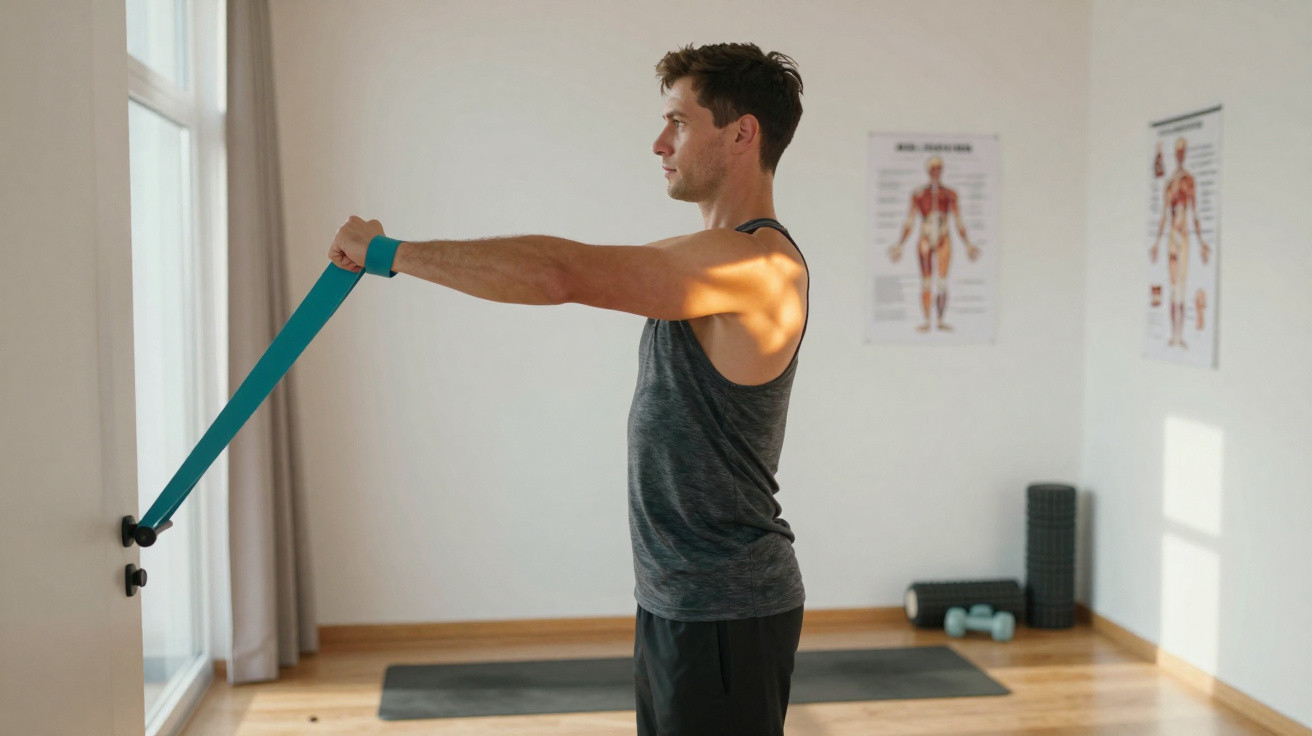
Once your arms adapt, it is normal to feel the workout has become easier. At that point, water bottles, resistance bands or small loads can be added to increase the challenge.
Even so, heavier weight is not essential at the start. At home, strong technique with bodyweight alone can already improve strength, posture and muscular endurance.
Firmness comes from the right repetition
Toning your arms does not depend on doing a perfect workout once a month. Results show up more clearly when the movements become part of your routine, even in short sessions.
In the end, arm exercises at home prove that looking after your body does not have to begin with expensive equipment. With consistency, care and simple movements, you can take the first step.
If this straightforward routine could help someone start without a gym, share it with anyone who wants to train their arms at home without using weights.
Comments
No comments yet. Be the first to comment!
Leave a Comment